Brexit Dividend
Ten years after Britain voted to leave the European Union, the most revealing aspect of Brexit is not what happened, but what did not.
The withdrawal of an artwork from Britain’s National Portrait Gallery over its portrayal of Winston Churchill’s role in the Bengal Famine of 1943 is not merely another episode in the culture wars.




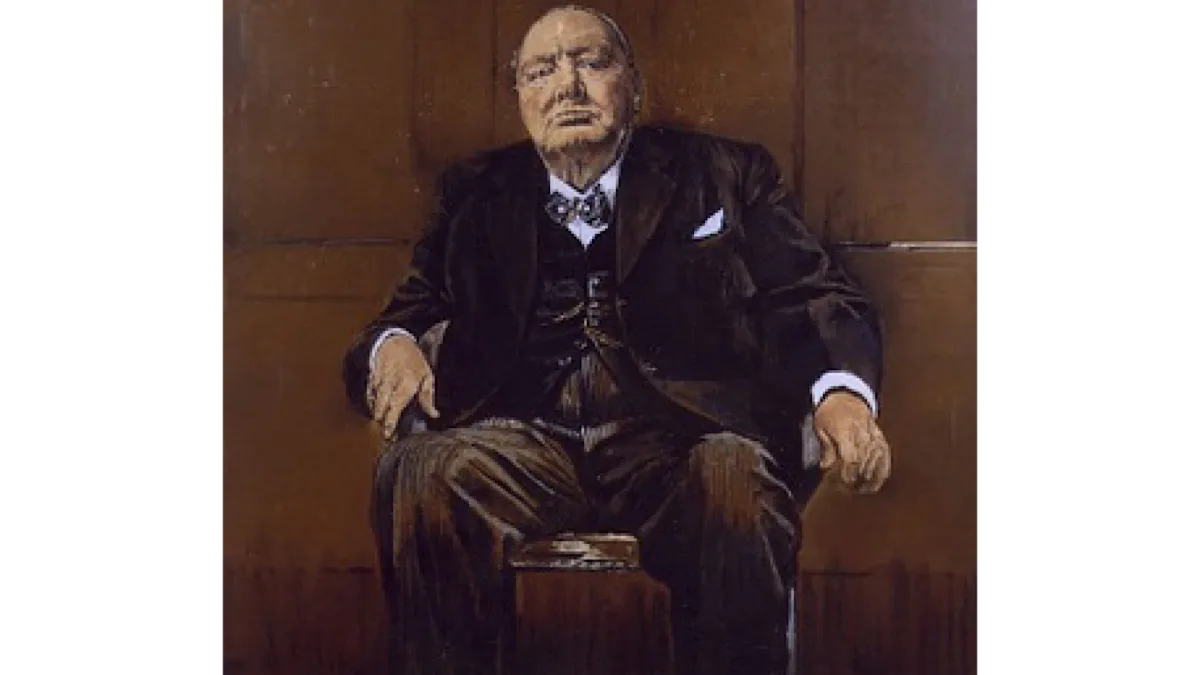
Winston Churchill
The withdrawal of an artwork from Britain’s National Portrait Gallery over its portrayal of Winston Churchill’s role in the Bengal Famine of 1943 is not merely another episode in the culture wars. It underlines an enduring truth: history is never just about the past. It is also about how societies choose to remember, reinterpret and debate their most painful experiences. For Bengal, the famine is no distant historical episode.
It remains one of the defining tragedies of the twentieth century. Millions perished, families were shattered, and memories of hunger became embedded in the region’s literature, politics and collective consciousness. The scale of the catastrophe is beyond dispute. The arguments begin when responsibility is assigned. Over the decades, historians have arrived at no single verdict. There is broad agreement that the famine emerged from a deadly convergence of wartime disruption, administrative failures, inflation, market distortions, colonial policies and environmental factors.
Advertisement
There is much less agreement on Winston Churchill’s precise role. Some scholars contend that his wartime priorities and attitudes towards India aggravated the disaster. Others argue that while British imperial governance bears undeniable responsibility, the evidence does not support reducing the famine to the actions or intentions of one man. The debate remains alive because the evidence continues to be interpreted differently. That is why the latest controversy deserves to be viewed carefully. The artist did not claim to have made a documentary, nor did the gallery present the work as an official account of history.
Advertisement
It described the installation as a personal artistic response, while the artist defended it as an exploration of history and memory rather than a definitive historical narrative. Yet public institutions cannot entirely escape the consequences of the conversations they choose to host. Their responsibility is not to police artistic opinion or shield historical figures from criticism. Equally, they should not allow political pressure to determine what may or may not be exhibited. Their role is to create space for informed engagement with difficult subjects, especially when those subjects remain matters of genuine scholarly disagreement.
The answer, therefore, is neither censorship nor unquestioning acceptance. It is context. When art enters contested historical territory, institutions should help audiences appreciate that there are competing interpretations grounded in serious research. Such an approach neither diminishes artistic freedom nor weakens historical inquiry. On the contrary, it encourages viewers to examine evidence, confront complexity and arrive at their own conclusions.
The Bengal Famine deserves remembrance that is both compassionate and intellectually honest. Art has every right to challenge accepted narratives. History has every obligation to question them. A mature society need not choose between the two. It should insist that they remain in conversation, for it is through that dialogue ~ not through silence or certainty ~ that the past continues to illuminate the present.
Advertisement