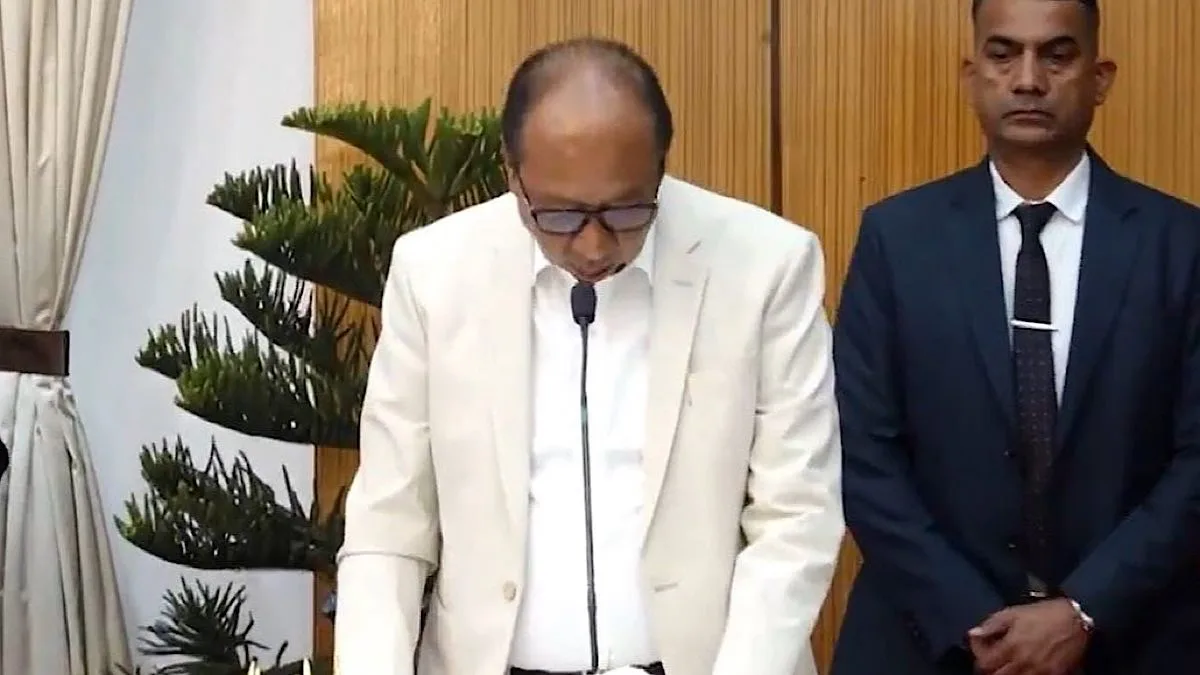
Manipur’s return to an elected government marks the end of a pause, not the end of a crisis. After months of central rule, the state now has a chief minister who inherits not just a fractured administration but a deeply wounded social fabric. The violence between Meitei and Kuki-Zo communities did more than claim lives and homes; it hardened boundaries, turned neighbourhoods into frontiers, and normalised suspicion as a way of life. In such a landscape, governance is no longer about routine policy choices. It is about whether politics can once again become a shared space.
The new chief minister’s personal story ~ rooted in sport, discipline, and a long public career ~ offers a useful metaphor. Sport teaches rules, restraint and respect for the opponent. Politics in Manipur today needs exactly that grammar: rules that apply equally, restraint in the use of power, and respect for the fears of the other side. But metaphors, like oaths, do not restore trust on their own. Trust returns only when people see that the state protects them not as members of a community, but as citizens. The early signals are mixed. A cabinet that reflects ethnic balance suggests an awareness of the state’s fault lines, yet protests and fresh incidents of violence show how thin that reassurance remains. Even more worrying is the way new frictions are emerging among other groups, reminding us that Manipur’s crisis is not a single-argument conflict but a web of overlapping grievances. Once society starts organising itself around fear, every unresolved tension becomes combustible.
Advertisement
There is also a harder political truth: peace cannot be reduced to administrative calm. Reopening of roads and functioning of offices may look like progress, but they do not answer the deeper questions of justice, accountability, and security. A durable settlement will require credible disarmament of armed groups, a visible commitment to the rule of law, and a political dialogue that does not treat any community’s concerns as an inconvenience to be managed away. If these steps are postponed, the state risks slipping back into a cycle where every lull is only an intermission. At the same time, caution is needed against solutions that promise instant relief but carry long-term risks. Demands for new administrative arrangements may feel like the only escape from insecurity, yet in a state of layered identities, such moves could trigger a domino effect of competing claims. The challenge is to make coexistence safer than separation, a task that requires imagination as much as authority.
Manipur’s tragedy is that it has long produced excellence in fields that demand discipline, teamwork, and resilience, while its politics has struggled to reflect those same virtues. The new government has a narrow window to change that. If it uses power to rebuild trust rather than merely restore order, it could begin to reverse the logic of fear. If it settles for managing tension instead of resolving it, Manipur will remain suspended between elections and peace, with neither truly secured.