Brexit Dividend
Ten years after Britain voted to leave the European Union, the most revealing aspect of Brexit is not what happened, but what did not.
The mountains, for now, survive on a stay order and a committee’s promise; the corporate ledger survives on something thinner still.




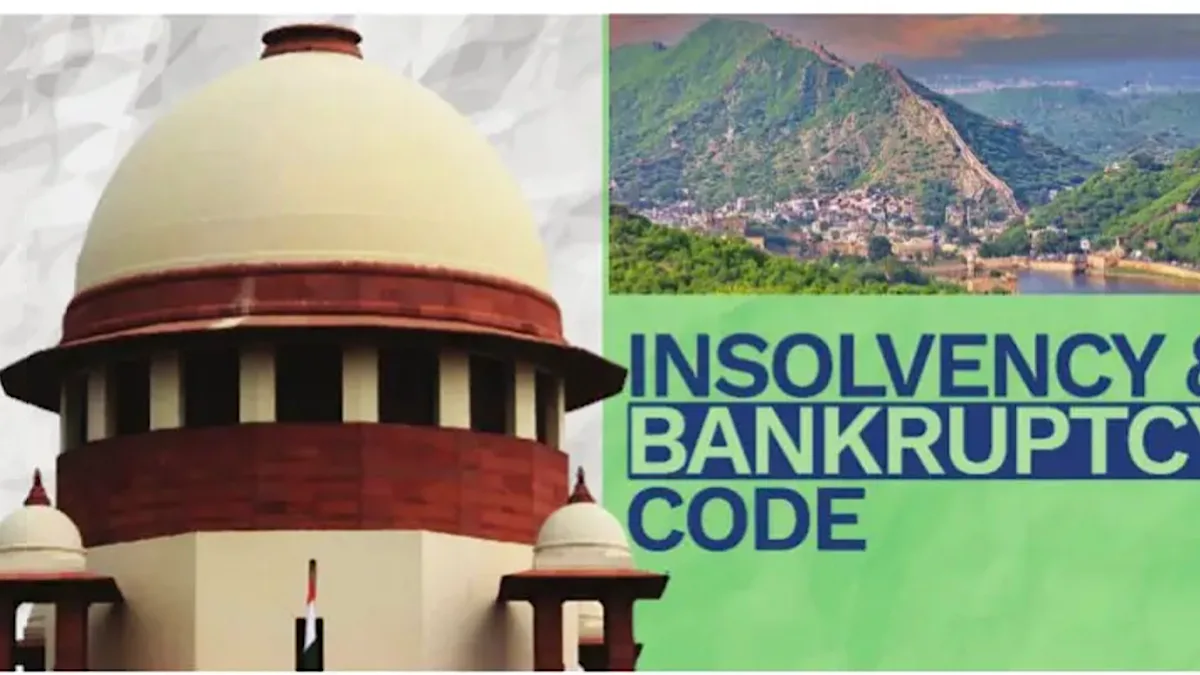
Photo:SNS
The mountains, for now, survive on a stay order and a committee’s promise; the corporate ledger survives on something thinner still. When a company that has mined a hillside into ruin finally collapses under its debts, it enters what the law calls the Corporate Insolvency Resolution Process under the Insolvency and Bankruptcy Code ~ the mechanism by which a distressed firm is handed to a committee of its creditors, restructured or sold, and returned to the market cleansed of what it owed.
This is the one occasion on which the law has the standing to reprice a company’s whole conduct, to ask not merely what it owes the banks but what it owes the land. The law does not ask. It enters through a single door marked financial default, and it leaves through the same one. Look closely at the architecture and the omission is deliberate, not accidental. The order in which claims are paid out of a failed company’s estate is fixed by statute, and environmental harm appears nowhere in that queue; the clean-slate principle that lets a buyer take over the business free of its past liabilities makes no exception for a poisoned aquifer or an unreclaimed pit.
Advertisement
The insolvency regulator has issued no instrument requiring a resolution plan to measure, price or repair ecological damage. A resolution plan may therefore satisfy every financial creditor to the last rupee and carry not one binding environmental obligation; the firm emerges solvent and the slope stays broken. Financial death and rebirth have been engineered with great care. Ecological debt simply evaporates. The landscape has no seat in the committee of creditors. And when harm is not translated into enforceable liability it does not disappear ~ it is merely transferred.
Advertisement
Creditors take haircuts; communities take dust. What the country needs is not another disclosure rule but the enforcement organ it never built, and its shape is not hard to draw. Lodge a dedicated sustainability oversight authority within the Ministry of Corporate Affairs – the ministry that already owns the conduct of companies ~ and staff it not with generalists but with forensic auditors, the professionals trained to read a set of accounts against physical fact and find the lie.
Give it a statutory definition of greenwashing to enforce, written into the Companies Act as a duty of directors rather than a footnote, so that a false sustainability claim becomes a personal liability and not a corporate inconvenience. Let it draw the assured BRSR Core data from the securities regulator, the power to prosecute from the corporate-affairs ministry, and defective assurance work ~ where the audit firm itself has signed off on a fiction ~ to the National Financial Reporting Authority, which already polices the quality of audit.
And let it certify, for any company entering insolvency, an environmental-liability statement that the resolution process must place before bidders and fold into the plan, ranking the cost of certified remediation among the claims that must be met before the slate is wiped clean. One door for detection; several doors for consequence. Three regulators and an audit watchdog already hold the pieces. None of them holds the whole. This is not a proposal shouted from outside the system. The Parliamentary Standing Committee on Finance recommended very nearly this last year: a dedicated body within the corporate-affairs ministry, armed with forensic expertise, charged with detecting fraudulent sustainability claims, and an amendment to the Companies Act making ESG a core responsibility of directors. The Ministry’s reply was to decline.
Existing provisions, it held ~ board accountability, the general duties of directors, the penalties already on the books ~ were monitoring enough. The Committee was not persuaded, and restated its recommendation in plainer words. The validation, in other words, already exists; it has been received, examined, and refused, which is a more troubling fate than mere neglect. A recommendation gathering dust can be revived by attention. One the ministry has formally rejected requires the country to argue with its own government. The argument is winnable, because the rest of the world has stopped pretending that disclosure executes itself.
The European Union now obliges large companies to report not only how the changing climate threatens their balance sheets but how their operations harm the world around them ~ a two-way test of materiality ~ and backs its due-diligence regime with penalties reaching three per cent of worldwide turnover for the gravest breaches; even after this year’s political retreat trimmed the directives’ scope, that enforcing spine survived the cull. Britain, last November, issued a professiongrade standard for the assurance of sustainability reporting, giving auditors a consistent and legally legible basis on which to test a green claim and stake their name against it. Neither system is a template India should copy wholesale; each is contested, each imperfect.
But both rest on a premise our regime still resists: a sustainability claim is worthless until someone with the power to demand the working papers, walk the site and impose a penalty has tested whether it is true. And the calendar will not wait for us to be persuaded. The BRSR Core net widens again this coming year; the management plan for the Aravallis is being drawn now, under a Court that is still watching and an expert committee that must report by the end of August; the deception, meanwhile, is documented, acknowledged by the regulator, and ongoing. A country reveals what it truly values not in what it consents to measure but in what it is willing to punish. We have learned, at last, to measure. We have not yet learned to punish.
The oldest range on the subcontinent stands today in the same dock as the boardroom that filed its faultless report ~ the hill accused of being expendable, the company accused of saying otherwise and meaning nothing by it. The Aravallis have survived a billion years of weather and a few decades of us. What is on trial is not whether they will outlast the desert. It is whether they will outlast our talent for writing rules we never meant to keep
(The writer is a practising Chartered Accountant and Vedantic Scholar and can be reached at kannan@cakt.in)
Advertisement