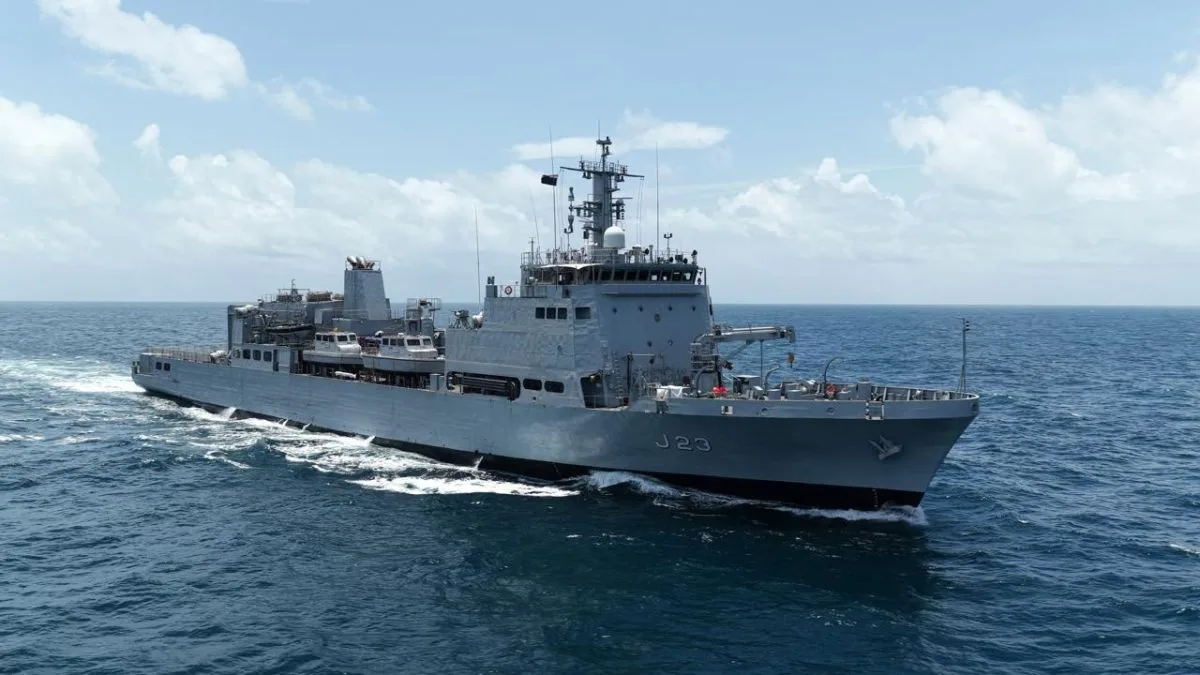
The Indian Navy’s hosting of the IONS Maritime Exercise (IMEX) TTX 2026 in Kochi marks more than a routine multilateral engagement. It signals the growing centrality of simulation-based strategic diplomacy in shaping maritime governance in the Indian Ocean Region (IOR). As security challenges become more diffuse, transnational, and unpredictable, the modalities through which states cooperate are also evolving. Tabletop exercises (TTXs), once seen as preparatory tools, are now emerging as sites of diplomacy in their own right.
Unlike traditional naval exercises that depend on costly deployments and kinetic demonstrations of power, TTXs operate in a simulated environment. This allows for wider participation, lower logistical burdens, and more frequent engagement among diverse actors. In regions like the IOR, which are characterized by asymmetries in naval capabilities and political sensitivities, this shift is particularly significant. Simulation creates a level playing field where smaller and larger states can engage as stakeholders in a shared security architecture. More importantly, TTXs enable something that conventional exercises often cannot.
Advertisement
They allow for consensus-building without escalation. By removing the pressures of real-time operational risk, participating navies can deliberate on complex contingencies such as piracy, humanitarian crises, cyber threats, and maritime terrorism in a controlled environment. This fosters collective problem- solving rather than competitive signaling. In a fragmented Indian Ocean, where strategic mistrust coexists with deep interdependence, such me chanisms are cr ucial. The participation of countries across South Asia, Southeast Asia, Africa, and beyond in IMEX TTX 2026 underscores a shared recognition that maritime security today is inherently cooperative.
No single state, regardless of capability, can unilaterally secure sea lanes, manage disasters, or counter non-traditional threats. Within this context, simulation-based engagements also serve as instruments of trust-building. Repeated interactions, even in virtual scenarios, contribute to the gradual alignment of expectations, communication protocols, and strategic cultures. Over time, this reduces uncertainty, which is one of the most destabilizing factors in maritime security. At a deeper level, these exercises reflect a form of quiet balancing in the region. Without overtly invoking geopolitical rivalries, they create platforms where states can coordinate responses, share best practices, and strengthen interoperability.
In doing so, they shap e the strategic environment without the rigidity or visibility of formal alliances. This is where the role of the Indian Ocean Naval Symposium (IONS) b e comes par tic ularly noteworthy. Rather than functioning as a traditional security bloc, IONS operates as a soft institutional counterweight that privileges dialogue, inclusivity, and functional cooperation. IMEX T TX 2026 reinforces this character by positioning IONS not as an alliance structure but as a norm-b uilding and coordination platform for the region.
The technical dimensions of the exercise further deepen its strategic significance. Information sharing, a core component of the TTX, feeds directly into enhancing Maritime Domain Awareness (MDA), which is the ability to monitor, interpret, and respond to activities across the maritime domain. In an era where threats are as likely to emerge from data gaps as from physical inc ursions, rob ust MDA is indispensable. Similarly, the fo c us on decision-making processes points to a broader objective. It aims at interop erability and doctrine alignment. When navies simulate responses together, they are not merely exchanging ideas.
They are, in effect, synchronizing operational logics. This has long-term implications for coordinated responses during real-world contingencies, including search and rescue missions and disaster relief operations. Taken together, IMEX TTX 2026 illustrates a subtle but important shift in how maritime power is exercised and negotiated. The emphasis is moving away from visible demonstrations of force toward architectures of cooperation, including protocols, networks, and shared frameworks that underpin collective security. As India prepares to assume the chairmanship of IONS for the 2026 to 2028 cycle, such initiatives acquire added significance.
They reflect India’s growing role as a maritime convenor and point to a broader strategic vision where leadership is exercised through facilitation, coordination, and institutional shaping rather than dominance. In this emerging paradigm, the future of the Indian Ocean will not be determined solely by fleets and firepower, but by the quality of interactions, the depth of trust, and the resilience of co operative mechanisms. Simulation-based diplomacy, as exemplified by IMEX TTX 2026, is fast becoming a cornerstone of that future.
(The writer is a Ph.D. Scholar in Political Science with professional experience in academic administration and the education sector, and is the co-author of Creativity and Critical Pedagogy in Education