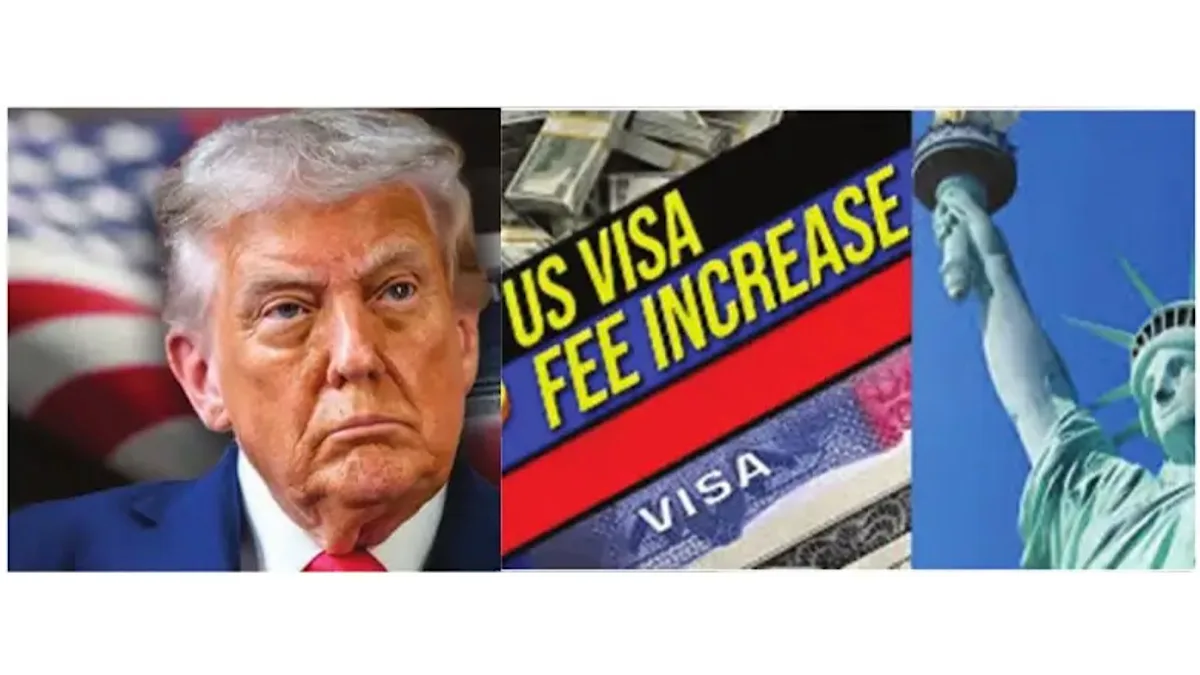
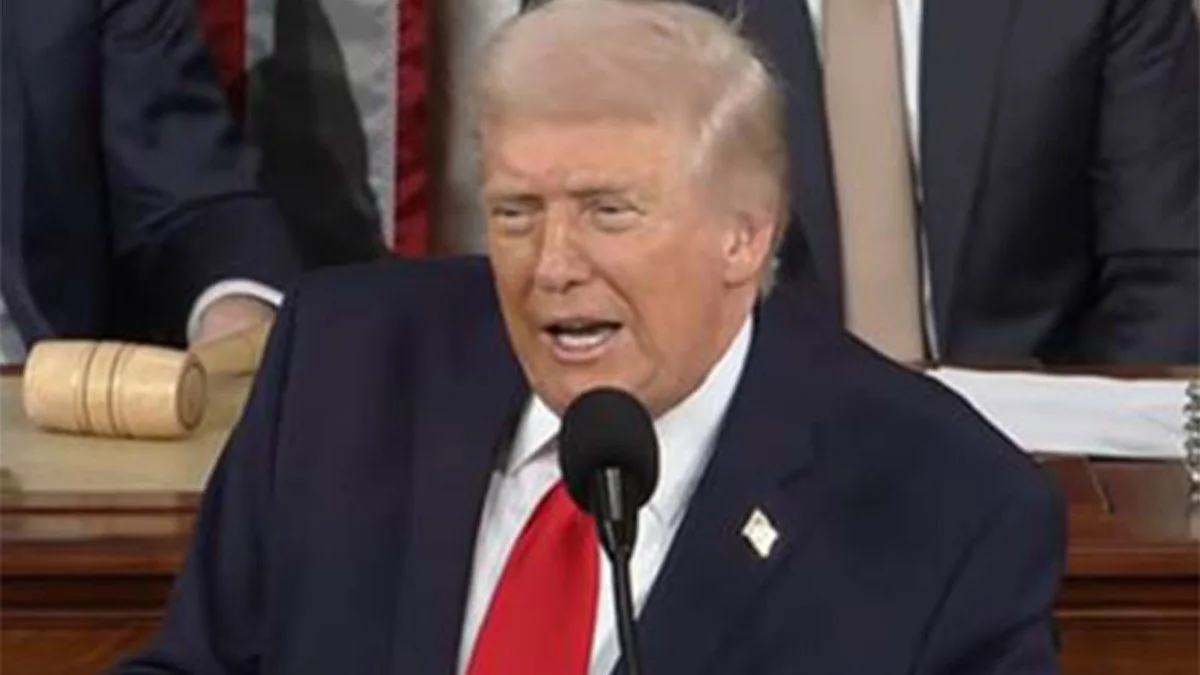
The recent decision by the United States to raise the H-1B visa fee to an unprecedented $100,000 per worker is another reminder of how disruptive economic nationalism can be when it collides with the realities of a global economy. Since Donald Trump returned to the White House for a second term, disruption has become the new normal in Washington’s engagement with the world. During this term, Trump has weaponised tariffs as a blunt instrument to penalise exporting countries and raise revenue for the United States.
India was among the major sufferers when he imposed an extra 25 per cent tariff because of Indian purchases of Russian oil. While New Delhi was still negotiating those tariffs, Trump has now targeted a different pillar of the India-U.S. economic relationship by drastically increasing the fee for H-1B visas. This time the services sector, particularly the technology industry, finds itself in the crosshairs. The logic behind Trump’s policies is rooted in the economic nationalism that fuels his “Make America Great Again” movement.
Advertisement
Tariffs, he argued, would push global manufacturers to relocate production to the United States, restoring jobs to American workers. But the experience of the past few years shows that such structural changes do not happen overnight, nor can they be engineered by presidential decree. Global supply chains are complex, and companies shift production only when conditions are suitable and costs make sense. The result of Trump’s tariff wars was not a wave of factories returning to the United States, but rather higher costs for American consumers and retaliatory measures by trading partners.
The same flawed reasoning underpins the decision to make the H-1B visa prohibitively expensive. Trump and his supporters believe that by pricing foreign workers out of the market, U.S. companies will be forced to hire more Americans. Yet the H-1B programme exists because there are not enough qualified American workers to fill many high-skill positions, particularly in technology. For decades, the United States has attracted some of the world’s best engineers, scientists, and programmers through this visa. Imposing a $100,000 fee is unlikely to create a pool of homegrown talent overnight.
Instead, it will create chaos for businesses, raise costs, and potentially drive innovation away from American shores. Even within Trump’s own political base, there is recognition of the value that H-1B visa holders bring to the U.S. economy. Elon Musk, who has often been sympathetic to the MAGA movement, has publicly supported the programme, describing it as a crucial way to attract global talent. Tech entrepreneurs know that the vibrancy of Silicon Valley and other innovation hubs depends on the ability to recruit the best minds, regardless of nationality.
Making it prohibitively expensive for companies to sponsor these workers risks undermining one of America’s greatest competitive advantages. The proclamation, which took effect on September 21, raises the annual H-1B fee from the current $2,000-5,000 to an extraordinary $100,000. Initially, the sudden announcement sparked panic among Indian professionals, who account for roughly 70 per cent of H-1B beneficiaries. Families worried whether loved ones would need to rush back to the United States to avoid paying the new fee. Companies scrambled to assess the potential financial burden and consider emergency filings. Airlines reported a surge in last-minute bookings as workers sought clarity on whether they needed to re-enter the country before the deadline.
In India, opposition parties criticised the government for failing to secure exemptions, while industry groups warned of massive disruptions to ongoing projects. Fortunately, a senior U.S. administration official has clarified that the new fee applies only to fresh petitions, not to existing visa holders or renewals. This reassurance has calmed immediate fears of families being separated or professionals facing unexpected costs during travel. Indians currently holding H-1B visas, including those visiting India, do not need to rush back before the rule takes effect. Yet even with this clarification, the damage has already been done. Companies will need to rethink their hiring strategies, and the psychological shock of such a steep increase will weigh heavily on future planning.
For Indian IT firms such as TCS, Infosys, Wipro, HCL, and LTIMindtree, as well as U.S. technology giants like Amazon, Microsoft, Google, and Apple, the cost implications are staggering. These companies are among the largest users of H-1B visas, with thousands of approvals each year. The new fee represents a massive increase in the cost of employing skilled foreign workers. Analysts warn that this will inevitably lead to higher project costs, fewer petitions, and perhaps a shift toward greater offshoring of work to India and other countries. Instead of encouraging the hiring of Americans, the measure may encourage firms to expand operations abroad, where talent is abundant and costs are lower. The Indian government has responded with measured concern.
The Ministry of External Affairs has directed its missions to assist Indian nationals travelling back to the United States and is studying the full implications of the measure. Indian industry bodies have begun consultations to develop a coordinated response. Both Indian and U.S. businesses have a shared interest in sustaining the flow of talent and maintaining the innovation ecosystem that has benefited both economies for decades. The United States has long been a magnet for Indian professionals, and Indian IT services have helped U.S. companies remain competitive in a globalised economy. Disrupting this partnership risks undermining a relationship that contributes significantly to growth and technological advancement on both sides.
The broader economic impact may ultimately hurt the United States more than India. Global trade experts predict that U.S. companies will face talent shortages, higher operational costs, and slower innovation, while Indian firms may respond by expanding offshoring and investing more heavily in domestic capabilities. In the long run, this could accelerate the very trends that Trump claims to oppose, as high-value work migrates outside the United States to avoid punitive fees. History shows that attempts to wall off an economy from global talent and trade rarely succeed in making it more competitive. The humanitarian dimension cannot be ignored either. Even though existing visa holders are exempt, the uncertainty created by such sudden policy shifts takes a toll on families.
Decisions about careers, education, and travel become fraught with anxiety when rules can change overnight. Indian professionals who have built lives in the United States on the expectation of a stable immigration system now face the unsettling reality that their status can be thrown into doubt by the stroke of a presidential pen. Trump’s move also carries geopolitical implications. The H-1B programme has long been a symbol of the deep people-to-people ties between India and the United States, ties that underpin a broader strategic partnership. Cooperation in technology, trade, and defence has been strengthened in recent years by the flow of skilled workers and the innovation they bring.
By creating barriers to this exchange, the United States risks alienating a key partner at a time when both countries share common concerns about China’s rise and the need for a free and open Indo-Pacific. Ultimately, the decision to impose a $100,000 fee on new H-1B visas is a political gesture aimed at appeasing a domestic audience rather than a sound economic policy. It reflects a misunderstanding of how talent markets operate and how innovation thrives. The United States became a global leader in technology and entrepreneurship precisely because it welcomed the world’s best and brightest.
Closing the door, even partially, undermines that legacy. For India, the episode is a reminder of the importance of diversifying opportunities for its skilled workforce and strengthening domestic innovation ecosystems. For the United States, it should serve as a cautionary tale: policies designed to make America great can backfire if they sacrifice the openness that has long been the true source of American greatness.
(The writer is Associate Fellow, Manohar Parrikar Institute for Defense Studies & Analyses)