Task Based Learning as a Method
Sunday mornings at my home were a little different. When we reached middle school, my father started providing tuition in Mathematics.
While reading a piece of news, I was suddenly reminded of my Class Five half yearly examination. I was first in class, yet had scored only 59 in Mathematics.




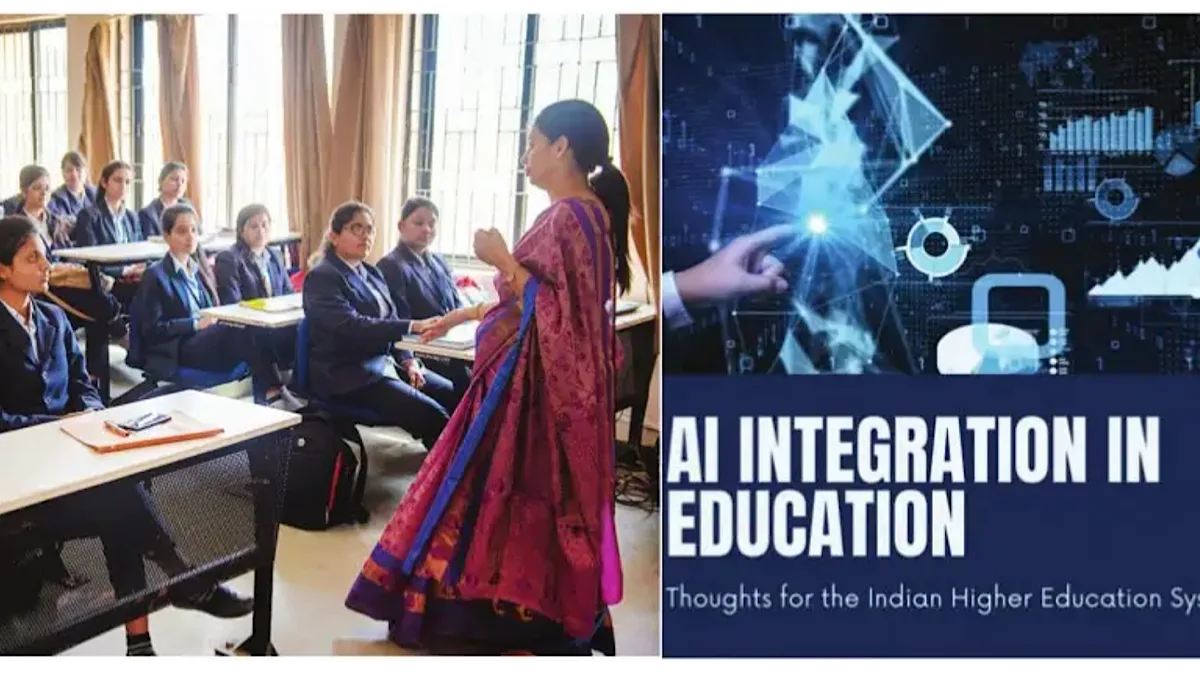
Photo:SNS
While reading a piece of news, I was suddenly reminded of my Class Five half yearly examination. I was first in class, yet had scored only 59 in Mathematics. I was devastated. Our maths teacher, Murali Babu, comforted me saying, “You were in too much of a hurry. Made some silly mistakes. Don’t lose heart. Maybe your score will flip in the annual exam.” That reassurance worked like magic. It gave me strength. In the annual exam, I really scored 95 in Math. Another memory comes to mind.
I was then a postgraduate student. I had written an answer on a short essay by Orwell and went to my teacher, professor Rama Kundu, to see if the answer was correct. While discussing the errors in my answer, she delved deep into the world of Orwell’s writings ~ works I hadn’t yet read. Our syllabus included only one essay by Orwell. But just by showing her one answer written on a question that might come in the exam from that essay, I ended up learning about novels like Animal Farm and 1984. Had I been taught by AI, would I ever have had such experiences? That’s what I was wondering while reading the news that has expressed concern about college and university teachers soon becoming redundant because of AI.
Advertisement
The apprehension has actually been expressed by Sanjeev Sanyal, an economist and a member of the Prime Minister’s Economic Advisory Council. He has warned universities that artificial intelligence (AI) has the potential to upend higher education itself. In a recent podcast hosted by the Indian School of Business (ISB), Sanyal has said that AI would replace traditional undergraduate lectures by providing high-quality, individualised education at scale, frequently for free. “You could just as easily learn from AI instead of spending four years in college,” Sanyal has maintained. He has further said, “AI is capable of giving lectures, responding to enquiries, translating information into any language, and even certifying you.” The majority of undergraduate and many graduate programmes rely on standardised content, which AI can now manage efficiently, according to San – yal. He has said: “The traditional lecture format is obsolete. AI doesn’t just teach ~ it engages, tests, and certifies. In many cases, it does all of this better than humans.”
Advertisement
Sanyal has emphasised that universities need to reinvent themselves in order to remain relevant in the present context. He has admitted that some professions, like medicine, will continue to need practical, handson training, “You can’t use AI to cut a cadaver.” However, AI has the potential to significantly increase the affordability and accessibility of post-secondary education for the majority of theoretical fields. He thinks that this change will significantly close the gap between regional colleges and prestigious universities. Additionally, students could be giv en the flexibility to create multidisciplinary courses and study at their own speed, which is something that traditional universities frequently find difficult to provide. It is true that AI can now easily teach the core subjects taught in graduate courses all over the world.
From one perspective, this is a stark caution to colleges/universities as well as teachers to change themselves immediately. In countries such as India, for example, university curricula are rarely updated, and when they are, undergraduate courses hardly ever include new subjects. Teachers frequently have a great deal of discretion over what they decide to teach in the classroom. They often teach those areas that they are comfortable with. University curricula here, that’s why, often fall short of meeting the demands of the job market. It is true that AI can assist a student in quickly and efficiently gaining the exact knowledge required for employment. That does not, however, imply that AI will soon be able to completely replace undergraduate teachers. For example, many were concerned that human anchors would soon become outdated when a few Indian TV channels began presenting news with AIgenerated anchors.
That has not happened. Similarly, different YouTube channels have long been providing a range of undergraduate courses; however, despite their widespread use, YouTube educational channels have not usurped the place of formal education. They continue to be a supplement to rather than a replacement of the mainstream. Even the once-popular online tutoring apps have lost some of their appeal in recent years. It is a fact that despite countless experiments with various teaching me – thods, no substitute approach has been able to completely replicate the experience of sitting in front of an actual teacher in a physical classroom.
The close bond that develops between a teacher and a student during classroom teaching is the primary cause of this. This connection is frequently silent and conveyed solely by eye contact. No other technique has been able to reproduce this relationship. An undergraduate student might be able to gain the required academic knowledge from AI. AI can take tests, provide prompt answers, and clarify the doubts of the students. However, many students find that the amount of concentration and focus needed to spend hours studying from AI is just too much. Will AI also be able to teach texts unasked for as did my teacher professor Rama Kundu? AI, again, is no match to a teacher’s congratulatory gesture when a student completes an exam successfully or correctly answers a question. It can praise the achievements of a student but the warmth and passion of a human voice will be absent in a machine’s praise. Because of their emotional impact, a teacher’s brief words of encouragement can sometimes transform a student’s life.
AI just can’t do this. AI can never be my class-five math teacher Murali Babu. There is another, more profound factor to take into acco – unt. A teacher and a student have a living, breathing relationship. Teachers frequently get involved in their students’ personal lives. In times of crisis, they provide direction, occasionally even assuming the role of a psychologist/counsellor. AI is incapable of doing this. Let me give the example of one student of mine who tried talking to AI on a regular basis to cope with her depression. However, she discovered that AI repeatedly used different words to express the same concerns. In the end, she decided to tell her teacher the causes of her depression. We should not forget that transferring knowledge and skills is only one aspect of the college/university education system.
Above all, it is a human process. Thus, despite Sanyal’s insistence, AI will never be able to fully replace teachers at the undergraduate level. However, it would be a serious mistake for teachers to use this as an excuse to become complacent and think that they don’t need to change or adapt to the times. We, in our country, now badly need curricula that are much more inquiry-driven, interdisciplinary and focussed on employment than they currently are. Teaching strategies must also evolve. If using AI is necessary to make classrooms more engaging, then so be it. In fact, that is the main challenge that college and university teachers in a country like ours will face in the near future.
(The writer is Professor, Department of English and Culture Studies and Director, Centre for Australian Studies, the University of Burdwan)
Advertisement