It is meaningless to set out to identify the one culprit who has brought about the abject fall of the CPI-M in Kerala but there are two broad categories that may be identified. The first set of offenders are the intellectuals who constantly sing praises of the leadership which wears a cloak of Left ideology. Their ‘services’ are an eloquent testimony to their own careerism. They are the ones who have contributed majorly to such a precipitous fall of the left, progressive movement in Kerala.
The second set of culprits are the party cadres and followers who adhere to the party in the hope of securing all manner of favours. Cadres are selected from the branch level to the higher committee level on the basis of the Leninist organizational principles. In reality, they constitute “the new class” as described by Milovan Djilas, the Yugoslavian Communist who later became a votary of Democratic Socialism. Communist leaders the world over, with autocratic tendencies, have always made use of the Leninist organizational system of democratic centralization to crush democracy underfoot. Such a phenomenon did not take place on a large scale in Russia during Lenin’s time solely because his democratic instincts trumped his desire for complete control.
Advertisement
But when Stalin assumed power, the situation changed drastically. The subsequent events which unfolded in the Soviet Union were such that they provoked a highly relevant question: “How far is Stalinism from Fascism?” What we saw in many Communist nations that crumbled in the 1990s were ‘Ceaușescus’ who reveled in luxury behind the façade of authority. The ghost of Nikolae Ceaușescu seems to have finally reached Kerala. If in a democratic state we see a leader who remains unquestioned amid his band of sycophants, one can well imagine what the condition would have been in Communist countries ruled by a single party. Small wonder they collapsed under the weight of the ire of the masses. It is only a matter of time before a similar phenomenon takes place in Kerala.
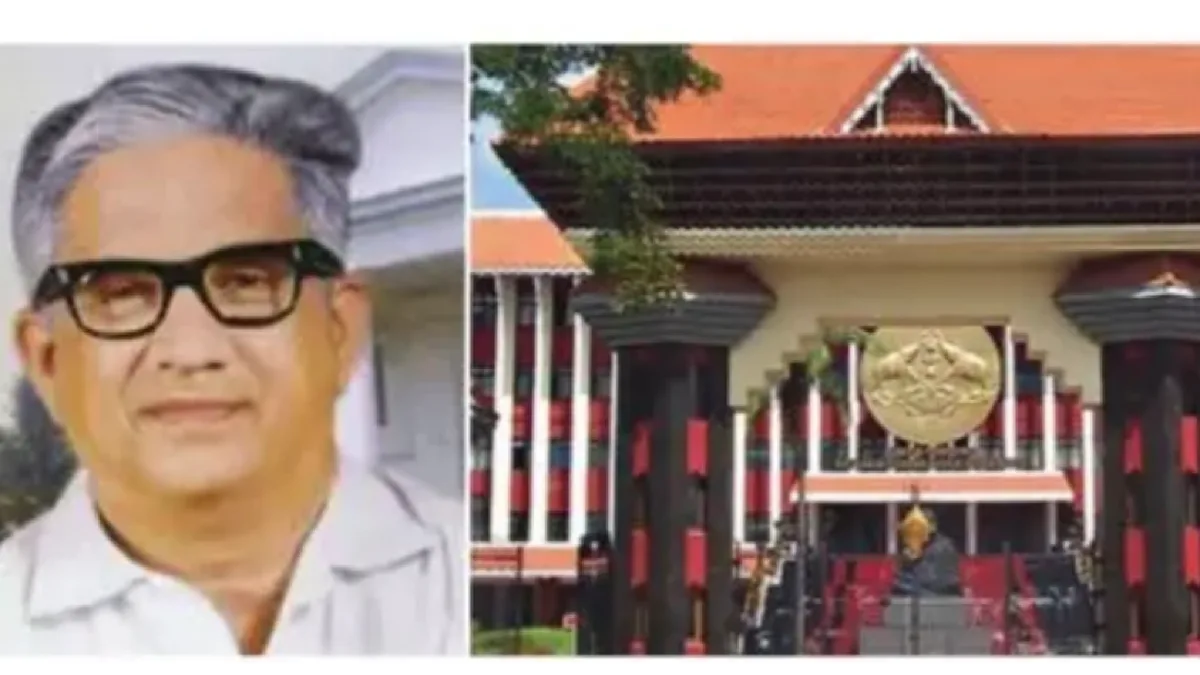
In 2021, I too worked to bring the Pinarayi government back to power in the name of commitment to the Left Front. However, in 2026, while continuing to be a Left supporter, I do not want the government to remain in power. The first mistake the Pinarayi government committed in its second term was that the very party which always condemned the Congress for its penchant for dynastic rule, moved along similar lines in Cabinet formation. It is telling that since then, no CPI-M leader in Kerala has uttered a single word about family dominance and/or nepotism. It would be pertinent at this point to allude to an anecdote narrated by a prominent Communist journalist, the late TV Krishnan (TVK), about C. Achutha Menon during the latter’s tenure as the Chief Minister of Kerala.
Dr V. Ramankutty, Achutha Menon’s son and a medical practitioner, wished to book an apartment under the Housing Board Chairman’s quota, in a residential complex that was about to be built by the State Housing Board. As he had qualms about doing so without seeking permission from his father, Dr Ramankutty requested TVK to raise the issue with the Chief Minister. The reply was: “Tell my son that as long as I’m on this chair, it’s impossible.” Nobody expects such a level of integrity these days. But it is more than one allegation that has been made against the present Chief Minister and his family. The CPI-M, which should have taken corrective measures in such circumstances, has instead kept them safe under its protective umbrella.
Things have come to such a pass that the reputation of many CPI-M leaders has come under the cloud in the Sabarimala gold-looting case. But the party continues to build a defensive fortress around them. Is that the role of the party? What is the responsibility of the leaders? It is a classic case of the fence itself eating the crop, much like what happened to the CPI-M in Bengal. No one can escape being held accountable for the disintegration of the party. Recently, the news of a few CPI-M comrades destroying the statue of Gandhiji made waves in Kerala. This has happened earlier, and will happen in the future too. In his autobiography, Mohit Sen, a prominent CPI leader and Marxist thinker, ridicules the Communists’ denigration of Gandhi as the result of their anger towards a leader who had hijacked their revolution.
By 1964, the CPI had overcome this attitude to a considerable extent. But the CPI-M continues to fuel antipathy towards Gandhi and Nehru to this day. An instance from Kerala itself will serve to prove this point. It concerns an incident that CK Chandrappan and NC Mammootty Master, a CPI leader from Kannur, narrated to me several years back. Not long after the party split of 1964, a state meeting of the students’ federation took place at the Town Hall in Thalassery. The repercussions of the split had not reached the feeder organizations yet. Pandit Nehru had died a little earlier. Chandrappan and Antony Thomas were the main organizers of the AISF in the state. (It must be remembered that the AISF, as a revolutionary students’ organization was brought into being at Lucknow in 1936 at a meeting presided over by Nehru himself.)
When Antony Thomas introduced a resolution expressing condolences on the demise of Nehru, a section of student leaders hollered, “Offering condolences at his death will not be permitted at this meeting!” and rushed to throw Chandrappan and others out from the hall, before announcing that they had seized the organization. This was where the Students’ Federation of India (SFI) took root. Is it any wonder that CPI-M comrades of today destroy the statue of Gandhi? After all, Gandhi was the leader who conducted a revolution which the Communists were supposed to! The wars they wage today are the result of the brainwashing they have undergone in such camps decades ago. A group of historians led by Dr Bipan Chandra whose research work was done under the aegis of a JNU project in the 1980s, attempted to give a sense of direction to left historians of India in their study of the Indian nationalist movement.
As a part of his mission to record the history of the Indian freedom struggle from a fresh perspective, Dr Chandra and some of his colleagues came to my house in Kanhangad to interview my father and Communist leader, K. Madhavan. One of the questions he asked on that occasion is relevant even today. “Comrade Madhavan, how did Mahatma Gandhi become the common enemy of the extreme right and the Indian Communist movement?” It is a question that should even today send both the CPI and the CPI-M leaderships of Kerala into introspection mode. In the course of the interview, Dr Chandra shared an interesting experience. While interviewing Ravinarayan Reddy, a prominent Communist leader in Andhra Pradesh, he asked Reddy the reason why the Indian Communist movement had failed to reach its goal. The reply: “I’m not a religious believer.
If I were, I would say it’s because God cursed the Indian Communist movement for having crucified Gandhiji!” By the end-1960s, the CPI bade a temporary goodbye to its anti-Congress political stand. As a result, India’s first Congress-Communist ministry under the leadership of C. Achutha Menon came into existence in Kerala. The political ideology that propelled the alliance was the conviction that the extreme right and neo-imperialism constituted the common enemy of the nation. But what the CPI-M attempted to do was to drown the 1970-77 Achutha Menon state government ~ one of the best that independent India has seen ~ in blood. The violent strikes it led during that time loudly proclaimed its blind opposition to the CPI-Congress alliance as well as its Stalinist attitude.
The strikes that the CPI-M engineered during that time in Kerala were the most undemocratic means ever seen in the country of torpedoing a democratically-elected government. One single instance ~ when a KSRTC bus with four passengers was burnt to ashes in Mattannur ~ is sufficient to throw light on the demonic nature of this agitation. As part of the measures taken to register its protest, it also set fire to tractors in paddy fields and newly-installed electricity transformers, severed telephone cables and even dismantled the foundations of houses built for the poor under the Lakshamveedu project [One-lakh housing scheme] under the cover of darkness. CPI-M cadres excelled in the art of physically attacking their political opponents, especially members and sympathizers of the CPI.
CPI-M stormtroopers, under the leadership of MV Raghavan, did not hesitate to rough up even the self-sacrificing Communist leader, Kanthalot Kunhambu. When the CPI-M set out to settle scores with its opponents through physical rather than ideological means, many began to seek refuge in the RSS. This intolerant attitude cultivated by the CPI-M towards its political adversaries was one of the major reasons for the RSS taking deep root in Malabar. There are plenty of examples that underscore the negative stand driven by a pathological hatred for the Congress that the CPI-M has been taking since 1964. Kerala is never likely to forget EMS Namoodiripad’s notorious statement that the party will not hesitate to even sup with the devil in order to crush the Congress to death.
(The writer, a Left sympathizer, is former member, Kerala Public Service Commission)