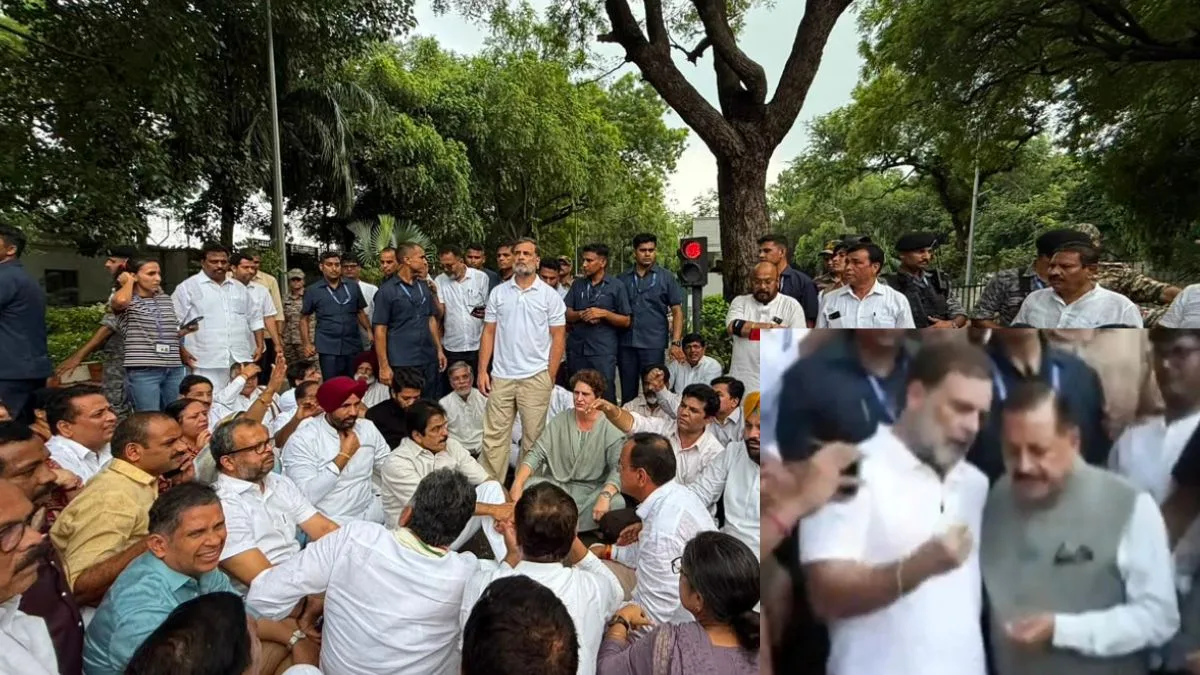
Mamata’s call for anti-BJP unity at Martyr’s Day rally junked by Congress, Left
Bengal BJP president Samik Bhattacharya said Mamata Banerjee should first focus on uniting her own party before attempting to forge an opposition alliance.
India’s expanding piped natural gas network is often presented as a quiet urban success story ~ cleaner kitchens, cheaper transport fuel, and a gradual shift away from cylinders and liquid fuels.




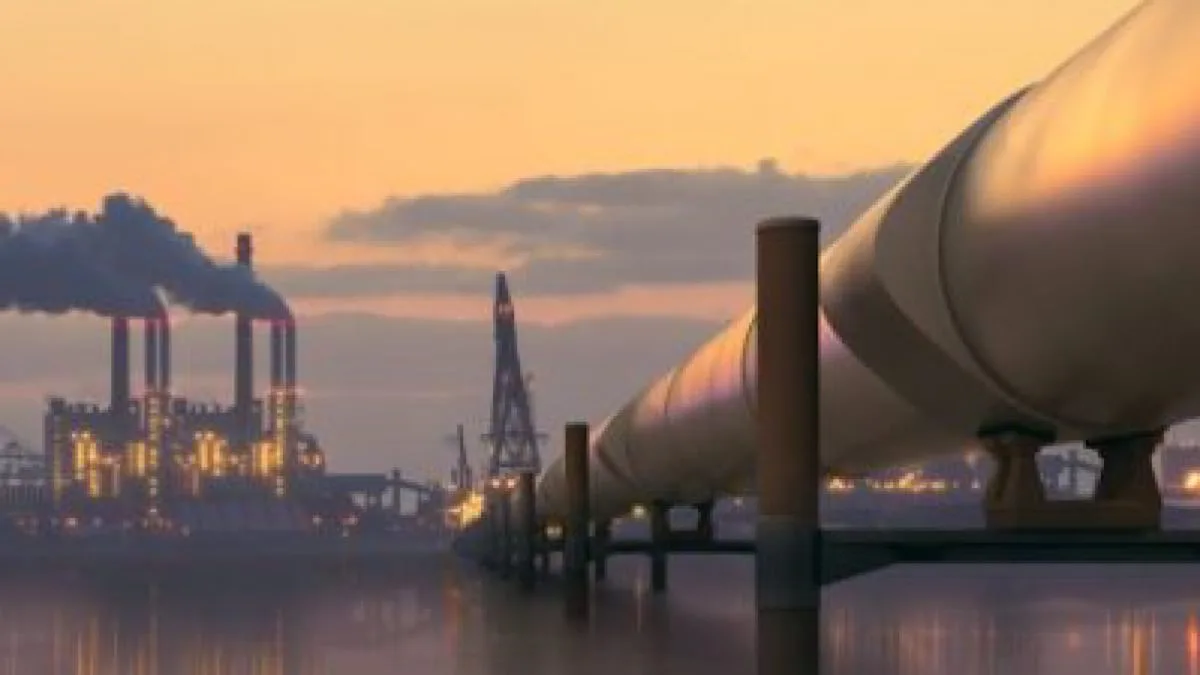
Gas pipeline (Photo:IANS)
India’s expanding piped natural gas network is often presented as a quiet urban success story ~ cleaner kitchens, cheaper transport fuel, and a gradual shift away from cylinders and liquid fuels. But beneath this narrative lies a more fragile reality: India’s gas system is not built for resilience, only for prioritisation. In times of external disruption, such as tensions around the Strait of Hormuz, the system does not distribute pain evenly ~ it redistributes it strategically.
Households and transport, politically sensitive and highly visible, are protected. The burden is pushed downward, onto sectors less visible but far more foundational: fertiliser, industry, and power generation. This hierarchy is not accidental. It reflects a policy choice that privileges consumption stability over production continuity. The consequences of that choice are now becoming clearer. Natural gas is not just another fuel in India ~ it is a critical industrial input. Nowhere is this more evident than in fertiliser production, particularly urea, where gas serves as feedstock rather than energy. When supply tightens or prices rise, fertiliser plants face a double squeeze: reduced allocation and higher costs. The government can cushion this through subsidies, but only at growing fiscal expense. The real risk emerges further down the chain.
Advertisement
Fertiliser is the backbone of India’s agricultural productivity. Farmers, especially in high-yield regions dependent on nitrogen inputs. Any disruption ~ whether through reduced output, delayed supply, or higher prices ~ translates directly into pressure on farm economics. Margins shrink, sowing decisions change, and yields can suffer. This is where the energy shock becomes invisible but consequential. Urban consumers may continue to cook with piped gas, largely insulated from immediate shortages. But the cost of that insulation is borne elsewhere ~ in more expensive fertiliser, stressed farm budgets, and the creeping risk of food inflation. Industry, meanwhile, adapts in ways that carry their own costs. Factories switch to fuel oil or coal, raising emissions and eroding efficiency. Gas-based power plants, already underutilised, cut back further.
Advertisement
What appears as a contained energy adjustment is, in reality, a broader economic distortion. India’s dependence on imported liquefied natural gas deepens this vulnerability. With a significant share of supplies routed through a single maritime corridor, and with limited storage capacity at home, the system operates on a just-in-time logic ill-suited to geopolitical shocks. Unlike crude oil, there is no meaningful strategic buffer. This raises a larger question for policymakers. Should energy security be defined narrowly as uninterrupted supply to end consumers, or more broadly as stability across the production economy? The current model answers that question implicitly.
It protects the visible and defers the structure. But over time, that trade-off may prove costly. If disruptions persist, India will not face a dramatic energy collapse. Instead, it will experience something subtler: rising costs, shifting burdens, and stress accumulating in the sectors that sustain growth and food security. That is the real energy crisis ~ one that does not announce itself in empty kitchens, but in strained fields and slower factories.
Advertisement