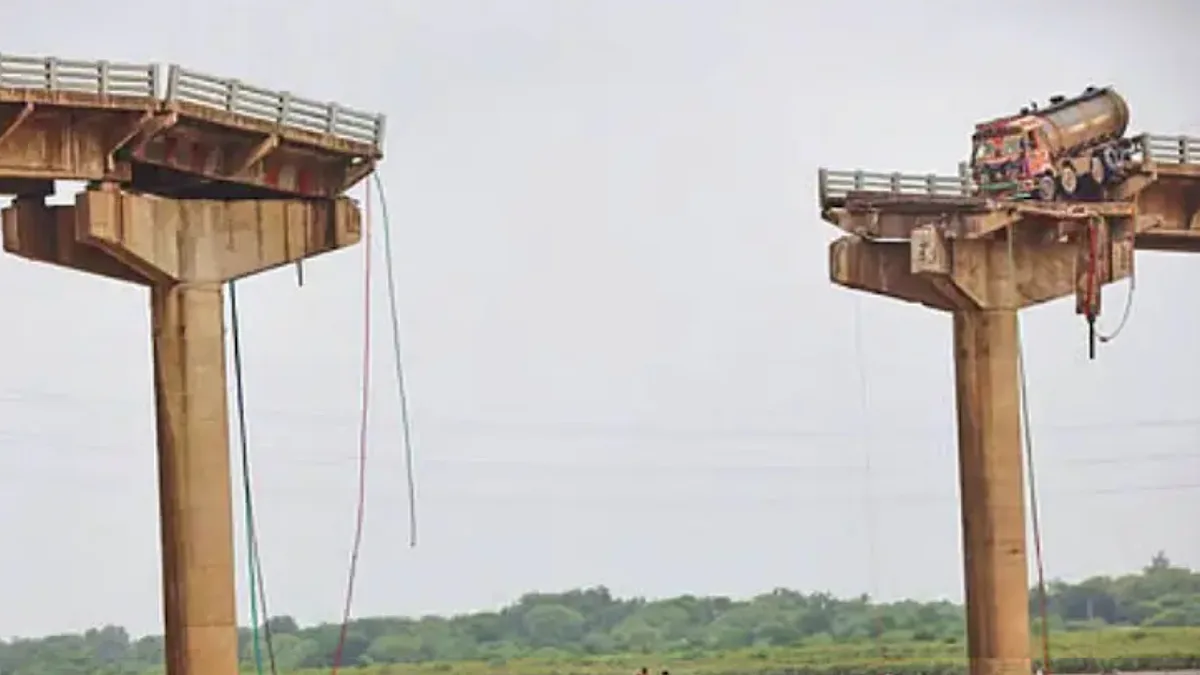
The collapse of the Gambhira Bridge in Gujarat on 9 July was not just a tragic accident – it was a stark reminder of a long-neglected truth: that old buildings and bridges, if not properly maintained and monitored, become silent threats lurking in our everyday lives. The bridge, constructed in 1985 over the Mahi river in Vadodara’s Padra taluka, had already outlived its expected lifespan when it suddenly gave way, sending vehicles and people plunging into the river below.
At least sixteen lives were lost, and many more were injured or traumatized. What makes this tragedy even more painful is the fact that it was entirely preventable. Reports suggest that structural engineers had flagged the bridge’s deteriorating condition as early as 2021, warning that it would not survive for long without urgent repairs. These warnings, however, were buried in bureaucratic files, ignored by those responsible, and ultimately, allowed to fade into irrelevance – until disaster struck. This incident underscores the critical and urgent need for the upkeep and maintenance of old infrastructure.
Advertisement
India, a country racing toward rapid urbanization and infrastructural expansion, also harbours within its landscape a vast number of old bridges, buildings, and flyovers – many of which were built several decades ago using the materials and engineering standards of their time. These structures were not meant to endure forever without attentive care. Over time, the natural processes of wear and tear – weather, corrosion, seismic vibrations and increasing vehicular loads – gradually erode their structural integrity.
Unless these factors are identified and addressed in time, they render even the most majestic structures dangerous. A bridge, no matter how well-built, cannot be expected to withstand decades of neglect and overuse. The Gambhira Bridge had been marked in reports as structurally unsound, but no repair or maintenance action was taken. The result was not just the loss of a bridge but the irreparable loss of human lives and trust. Maintenance of old infrastructure is not merely a matter of engineering but of governance, accountability, and foresight.
Time and again, we have seen how oversight is treated as an afterthought, and warnings from technical experts are dismissed or shelved in the face of budgetary constraints or administrative apathy. The fact that the contractor responsible for the collapsed bridge was reportedly blacklisted yet still managed to secure work through loopholes or influence only adds a bitter twist to the tale. These are not just lapses; they represent deep-rooted flaws in the system. When bridges collapse, they don’t fall alone – they bring down with them the credibility of institutions that failed to act. Citizens who pay taxes and depend on public infrastructure for daily life deserve better than to live under the shadow of preventable tragedies.
The Gambhira collapse is sadly not an isolated incident. Gujarat has witnessed a worrying number of such disasters in the past five years. In 2022, the Morbi suspension bridge collapse killed over 140 people, most of them families and children enjoying a holiday. That bridge had been recently renovated and reopened with fanfare, but post-incident investigations revealed that the steel cables had rusted and the renovation was more cosmetic than structural. In both cases, what failed was not merely concrete and steel, but the commitment to public safety.
These incidents paint a grim picture: one where infrastructure is increasingly seen as a symbol of development and achievement, but not treated with the care and seriousness it requires after the ribbon-cutting ceremony is over. There is an urgent need to shift focus from building new infrastructure to maintaining what already exists. Regular, systematic inspections must be institutionalized with transparency and follow-up action. Advanced monitoring technologies such as real-time sensors, drone inspections, and digital stress mapping should become standard practice, especially for older structures. But technology alone is not enough. There must be a clear chain of responsibility, accountability for inaction, and legal consequences for negligence.
Public audits, third-party reviews, and open reporting to citizens are essential steps toward restoring faith. It is not acceptable for critical warnings to be ignored because of administrative delays or political considerations. Furthermore, the budgeting system itself needs reform. Infrastructure maintenance often takes a back seat to the more glamorous projects of new construction. Yet, the cost of ignoring aging bridges and buildings is far greater than the cost of maintaining them. This is not just about money – it is about human lives, social trust, and civic responsibility.
Every time a bridge falls or a building collapses, it affects not just those directly involved but the broader psyche of a community that begins to feel unsafe in its own environment. Maintenance must be viewed as a non-negotiable part of the infrastructure lifecycle, not as an optional expense. The collapse of the Gambhira Bridge should be a turning point. It should lead to a national audit of all aging infrastructure, especially in regions where inspections have been inconsistent. State and central governments must coordinate to set up protocols and regulatory bodies that are empowered, independent, and efficient. A cultural change is needed – one that places as much value on safety and sustainability as it does on growth and speed. Engineers and urban planners must be allowed to speak and be heard without fear or suppression.
Political leaders must be held to a higher standard of accountability when it comes to public safety. We, as a society, must remember that infrastructure is not eternal. Like the human body, it needs regular check-ups, timely intervention, and responsible caretakers. The victims of the Gambhira collapse, like those of Morbi and other such tragedies, deserved better. The least we can do now is to ensure that their loss is not forgotten. The dead cannot return, but their memories can urge the living to build a safer, more conscientious future. Maintenance may seem mundane, but in it lies the promise of safety, the preservation of life, and the quiet strength of civilization itself.
(The writer is a Thrissur-based accountant and freelance contributor.)