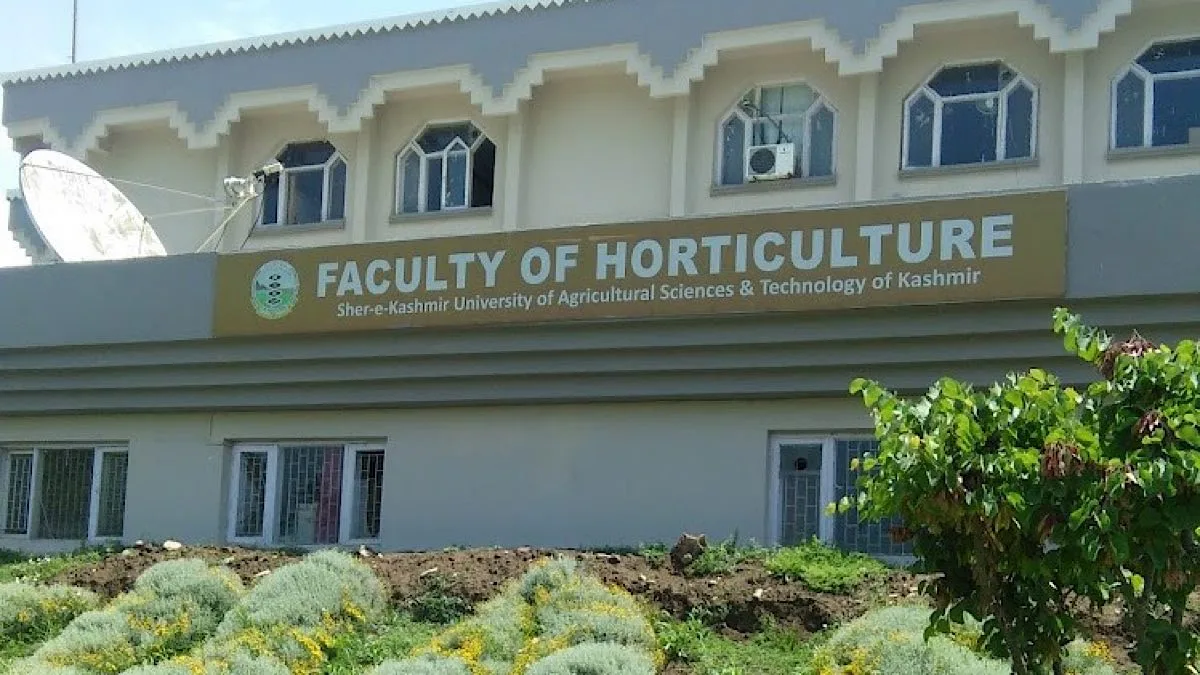
India has quietly crossed a scientific threshold in its northernmost region. At a state agricultural university in Kashmir, researchers have successfully developed the country’s first gene-edited sheep – an animal that has now completed a year of monitored growth with normal health indicators and improved muscle development. The achievement has not triggered headlines or public debate. Yet its implications extend well beyond the laboratory in which it was born.
Developed at Sher-e-Kashmir Agricultural University in Srinagar, the project reflects years of publicly funded research that has advanced quietly, without the regulatory attention such breakthroughs usually demand.The sheep was developed using precision gene-editing techniques that alter an organism’s existing DNA rather than inserting foreign genetic material. By disabling a gene knownto limit muscle growth, scientists have demonstrated measurable gains in body mass without observable physiological stress.This is not experimental tinkering for novelty’s sake. The research emerged from a region that consumes far more mutton than it produces, under conditions of shrinking pasture, water stress, and rising demand.What makes this development consequential is not the animal itself, but the policy vacuum surrounding it.
Advertisement
India has, in recent years, signalled openness to gene-edited crops, approving varieties developed through similar techniques.Livestock, however, remains in regulatory limbo. There is no clear guidance on whether gene-edited animals will be treated as natural variants, subjected to transgenic regulations, or evaluated under an entirely new framework. This uncertainty effectively caps progress, regardless of scientific success.Globally, countries have begun to resolve this dilemma by focusing on outcomes rather than methods – assessing food safety, animal welfare, and environmental impact ratherthan the mere presence of gene editing Some have allowed gene-edited animals into the food chain under defined safeguards. Others remain cautious but are actively revising their rules. Indias hesitation, by contrast, appears less philosophical than procedural.
Ethical concerns surrounding animal biotechnology are legitimate and should not be minimised. But ethical governance requires clanty, not silence.A regulatory architecture that includes transparent approvals, traceability, animal-welfare standards, and post-deployment monitoring is not an endorsement of unchecked innovation. It is an assertion of state responsibility. There is also a strategic dimension India cannot ignore. Protein availability, especially affordable animal protein, is becoming a structural challenge.Climate constraints and land limitations make conventional expansion models increasingly unsustainable. Technologies that improve yield efficiency per animal are not indulgences; they are potential stabilisers in a stressed food system. India’s past food security breakthroughs were not accidental. They were the result of timely decisions to align science with policy. even amid uncertainty. Gene-edited livestock presents a similar moment. Scientific capability has arrived quietly: What remains to be seen is whether regulatory resolve will follow. For now, the sheep thrives in controlled conditions. Whether its promise survives beyond them depends entirely on the choices nolicymakers make next