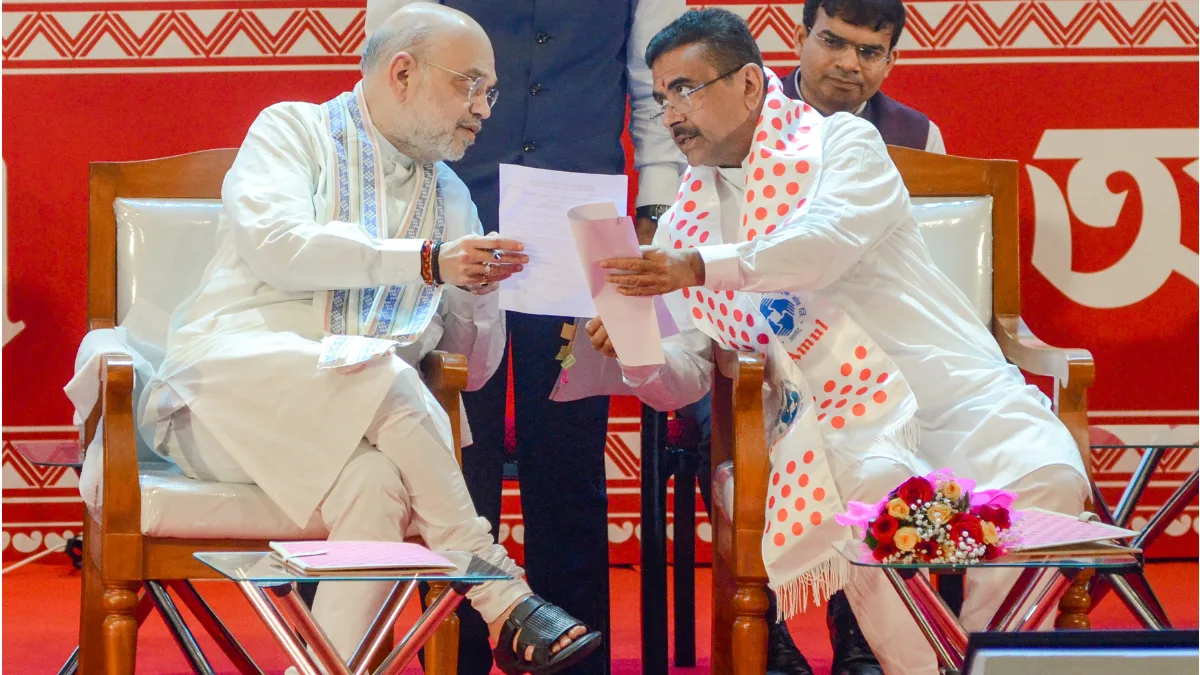
CM Yogi gives children the message of self-discipline and hard work through Japan’s example
Uttar Pradesh Chief Minister Yogi Adityanath gave students the mantra of self-discipline and hard work by citing the example of Japan.
In recent years, many advanced economies from the United States and Britain to France and Japan have taken on ever larger public debts, fuelled by generous welfare commitments, ageing populations and chronic budget deficits.




Photo: IANS
In recent years, many advanced economies from the United States and Britain to France and Japan have taken on ever larger public debts, fuelled by generous welfare commitments, ageing populations and chronic budget deficits. What is striking now is not just the scale of the borrowing, but the growing sense that inflation may become the easiest, if most destructive, way out of it. When governments are trapped between rising spending needs and voter resistance to higher taxes, letting prices drift upward becomes the silent escape route. Inflation in this context is not merely an economic symptom but a political decision. It functions as a stealth tax, eroding savings, punishing creditors, and redistributing wealth from the cautious to the indebted.
When public debt reaches or exceeds the size of a nation’s economy, as in Japan or Italy, the temptation to let inflation nibble away at real debt burdens becomes strong. But the cost is borne disproportionately by those on fixed incomes, from pensioners in Britain to middle-class savers in America, who find their purchasing power eroded and their sense of financial security shaken. The comforting belief that technology-driven productivity will save the day is also misplaced. Artificial intelligence may boost output, but in welfare states such as France, Germany and the Nordic economies, higher incomes automatically trigger higher pension and health-care costs.
Advertisement
Even the United States, which prides itself on fiscal flexibility, faces soaring interest payments that now rival defence spending. Productivity alone cannot offset the structural weight of ageing societies and the political unwillingness to cut entitlements. As governments lean on debt to finance political promises, they risk turning fiscal complacency into a moral hazard, where future growth is mortgaged for short-term popularity and electoral gain. Inflation, once unleashed, alters behaviour in ways that deepen the crisis. Workers demand higher wages, firms pre-emptively raise prices, and central banks respond by tightening monetary policy, raising the cost of servicing debt. The result is a feedback loop: more debt leads to more inflation, which leads to higher rates and still more debt pressure. Japan’s decades of ultra-low yields may not survive such a cycle; Europe and America are already feeling its strain. The only responsible exit lies in political candour.
Advertisement
Governments must admit that sustained deficits are not harmless, and that controlling inflation will demand unpopular trade-offs, whether higher taxes, spending reforms, or a rethinking of pension promises. Central banks must resist the pressure to quietly monetise public debt. And citizens, particularly the middle class, must brace for an era where real returns on savings are uncertain and the social contract less secure. If inflation becomes the chosen cure for debt, it will erode not just money’s value but public trust itself. The world’s richest democracies should be aware: the easy way out of debt may prove the hardest to live with.
Advertisement