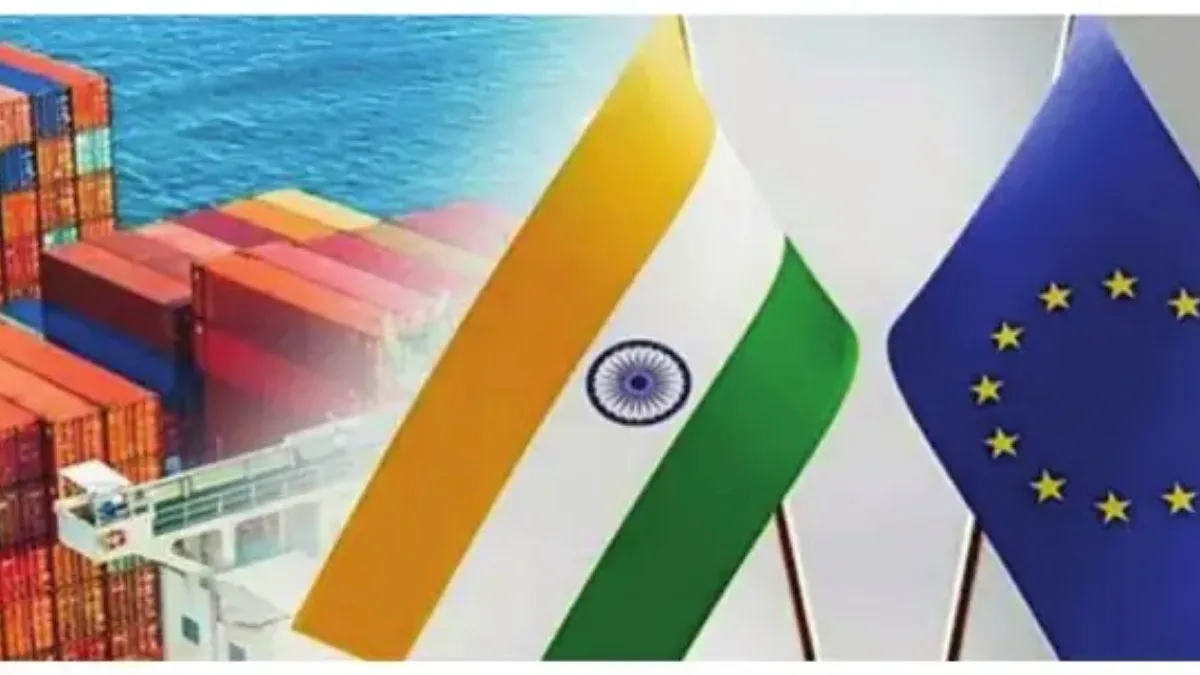
The conclusion of the India-European Union free trade agreement comes at a moment when the global trading system is under severe strain, shaken by geopolitical rivalries, economic nationalism and the increasingly unpredictable use of tariffs as political weapons. Since Donald Trump’s return to the White House, the world economy has been grappling with renewed instability.
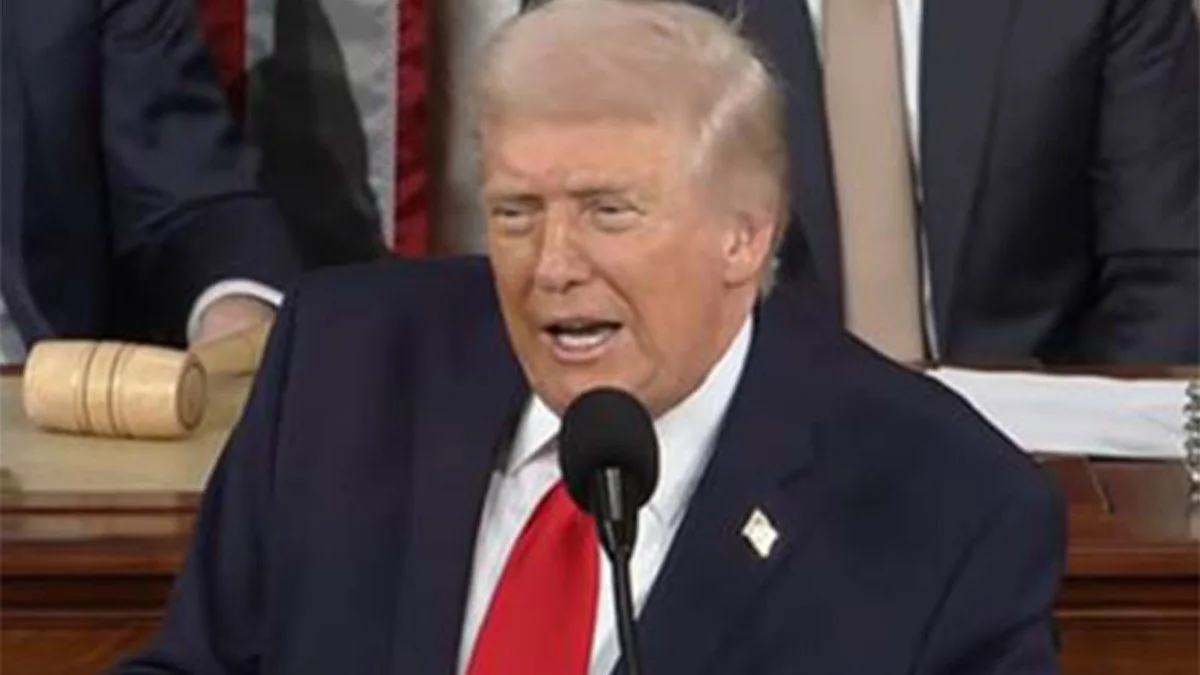
His aggressive “America First” trade posture, marked by sweeping tariff hikes against allies and competitors alike, has disrupted supply chains, fuelled inflation, and injected uncertainty into global markets. Ironically, the very countries Trump seeks to pressure ~ India and members of the European Union ~ have responded not by retreating inward, but by deepening cooperation with each other. In that sense, the India-EU FTA is not merely a trade deal; it is a strategic statement about how major democracies intend to navigate an increasingly fractured world.
Advertisement
Trump’s weaponisation of tariffs has had consequences far beyond his intended targets. While he promised American voters cheaper goods and economic revival, the reality has been rising costs of living within the US itself, as tariffs pushed up prices and invited retaliation. India and Europe have both found themselves at the receiving end of this approach. Washington imposed a punishing 50 per cent tariff on Indian goods, including a 25 per cent penalty linked to India’s purchase of Russian oil, despite New Delhi’s insistence that it has significantly reduced such imports. Europe, meanwhile, has been subjected to relentless pressure, including threats of tariffs and even extraordinary demands such as pressuring Denmark over Greenland.
Against this backdrop of coercive economics, the India-EU FTA appears as a deliberate attempt to reclaim agency and stability. Although Indian officials publicly deny that US pressure played a role, it would be naïve to ignore the catalytic effect of Trump’s policies. Negotiations between India and the EU had dragged on for nearly two decades, stalled by disagreements over market access, standards, and sensitivities. Yet the urgency created by a hostile and unreliable trade environment clearly concentrated minds on both sides.
Trump may not have intended it, but his approach seems to have pushed India and Europe to accelerate a deal that had long been stuck in diplomatic limbo. Economically, the agreement is massive. Once implemented, it will link nearly two billion people and cover roughly a quarter of the global economy. For India, the deal represents a decisive shift toward high-standard trade agreements with major developed markets, moving beyond smaller or regionally limited pacts. Nearly all Indian exports to the EU will enjoy reduced or zero duties, while European exports to India will see significant tariff cuts, albeit phased and calibrated to protect sensitive sectors.
The immediate gains are most visible in labour-intensive industries, which have long struggled under tariff disadvantages in Europe. Textiles and apparel stand out as perhaps the clearest winners, even if they attract less headline attention than automobiles or alcohol. From day one, EU duties that once went as high as 12 per cent will drop to zero for Indian textile and garment exports. This change corrects a long-standing imbalance that left Indian producers at a disadvantage compared to competitors such as Bangladesh, Vietnam, and Turkey, all of which enjoyed preferential access to the European market. The scale of opportunity is enormous.
The EU’s textile and apparel import market is worth over $260 billion annually, yet India’s share has remained stubbornly low. With improved market access, industry estimates suggest Indian exports could multiply several times over, replicating the kind of success Bangladesh achieved under similar conditions. Beyond numbers, the social impact is just as significant. The textile sector employs tens of millions of Indians, many of them women, migrants and workers in small and medium enterprises spread across hundreds of districts.
From Tiruppur and Surat to Panipat and Varanasi, the benefits of increased exports will be widely dispersed, strengthening regional economies and supporting livelihoods. Unlike capital-intensive sectors, gains here translate quickly into employment and income, making the FTA particularly valuable at a time when job creation remains a pressing challenge. Other labour-heavy sectors, such as leather, footwear, gems and jewellery, and processed food products, also stand to gain substantially. Duty-free or preferential access to the European market will help offset slowing demand in the United States and diversify India’s export destinations. At the same time, India has been careful to protect politically sensitive areas, especially agriculture.
Dairy, cereals, and poultry remain shielded from disruptive imports, reflecting a pragmatic recognition of domestic vulnerabilities and farmer concerns. For Europe, the benefits are equally compelling, though structured differently. The phased reduction of tariffs on automobiles, auto components, wines and spirits opens one of the world’s fastest-growing large markets to European producers. While this has raised concerns among Indian carmakers and liquor companies, the gradual nature of liberalisation allows time for adjustment and competitiveness upgrades. More broadly, the EU gains a reliable economic partner in Asia at a time when dependence on both the US and China is increasingly seen as a strategic risk. The geopolitical implications are perhaps the most consequential aspect of the deal.
By strengthening economic ties, India and the EU are signalling a shared commitment to a more multipolar trade order, one less vulnerable to unilateral pressure. This inevitably complicates Washington’s strategy. Unsurprisingly, the agreement has not been warmly received in the US, with senior officials criticising Europe for indirectly benefiting from Russian energy through Indian refining. Yet such criticism also exposes the contradictions in US policy, which demands strict compliance from partners while itself resorting to blunt economic coercion. Ultimately, the India-EU FTA is not about sidelining the United States, nor is it an anti-Trump alliance in any formal sense.
Rather, it reflects a broader recalibration underway in global trade. Countries are seeking resilience, diversification, and predictability in an era where traditional anchors appear increasingly volatile. By choosing cooperation over confrontation, India and Europe have demonstrated that strategic autonomy does not require isolation. The real test will lie in implementation. Legal vetting, regulatory alignment and domestic political buy-in will determine whether the promise of the deal is fully realised.
But even at this stage, its symbolic value is undeniable. At a time when tariffs are used as threats and trade as leverage, the India-EU agreement stands out as an affirmation that economic integration, when carefully negotiated, can still be a force for growth, stability and shared prosperity. In a world unsettled by daily crises triggered from Washington, that may be its most important contribution of all.
(The writer is Associate Fellow, Manohar Parrikar Institute for Defence Studies and Analyses)