Sanjay Raut heads to Delhi amid reports of defection among Uddhav Sena MPs
According to reports, Uddhav-led Shiv Sena MPs will form a separate group.
Not every wonderful breakthrough in science and technology was created intentionally. A chance discovery or invention is an unexpected realization and insight that occurs without direct intention.




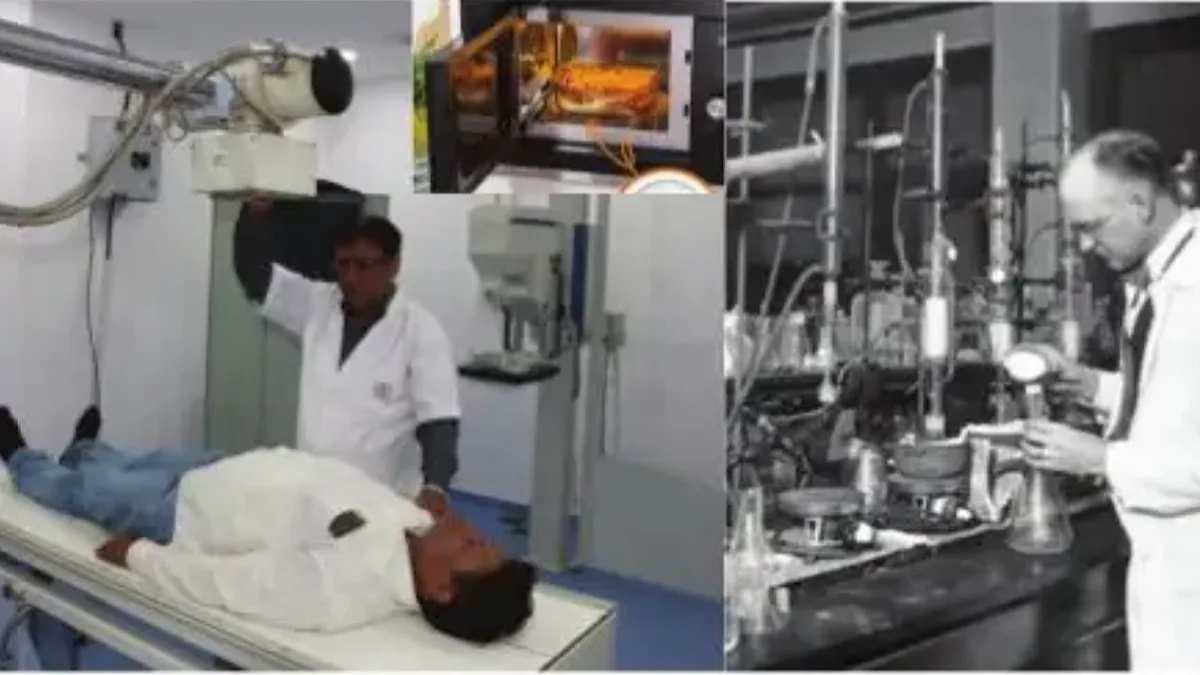
Photo:SNS
Not every wonderful breakthrough in science and technology was created intentionally. A chance discovery or invention is an unexpected realization and insight that occurs without direct intention. In the Oxford Advanced Learner’s Dictionary, the word “chance” has been defined precisely as a suitable time or occasion to do something. The role of chance in science comprises all ways in which unexpected inventions and discoveries are made. Psychologist Kevin Dunbar estimated that between 30 and 50 per cent of all scientific breakthroughs are accidental in some sense.
Louis Pasteur’s famous maxim reads: “Chance favours only the prepared mind,” which Steven Johnson modified to “Chance favours the connected mind”. The discovery of gravity by Sir Issac Newton was not a pure chance discovery. In Newton’s time, there were several theories about the nature of gravity. To explain the discovery of laws of gravitation by Newton, Swami Vivekananda commented that the fact of gravitation already occupied the mind of Newton before the fall of the apple he witnessed. Indeed, the fall of the apple was a pivotal moment that catalyzed a period of intense thought and groundbreaking work on his theory of universal gravitation.
Advertisement
When one apple fell, Newton was disturbed and the event favoured his prepared mind to frame the laws of gravitation. Many major advancements ~ from life-saving antibiotics like penicillin and medicine for heart disease, to everyday modern items such as Teflon, corn flakes and even Coca-Cola ~ are products of chance discoveries or serendipity. Other world-changing breakthroughs includes X-rays, the microwave oven, the artificial sweetener Saccharin, and even the discovery of radioactive elements and dynamites, all of which originated from unexpected results in labs or from unusual observations. The list of items mentioned here is only a selection of breakthroughs so far.
Advertisement
The discovery of penicillin, one of the world’s first antibiotics, marks a true turning point in human history ~ when doctors finally had a tool that could completely cure their patients of deadly infectious diseases. As the story goes, Dr. Alexander Flemming, the bacteriologist at St. Mary Hospital, enjoyed a two-week long summer vacation having left out a petri dish containing staphylococcus. Upon return, Dr. Flemming discovered that the staphylococcus had developed a layer of mold called penicillium notatum.
After placing the dish under his microscope, he was amazed to find that the mold prevented the normal growth of staphylococcus. His conclusion turned out to be phenomenal: there was a factor in the penicillium mold that not only inhibited the growth of the bacteria but, more importantly, might be harnessed to combat bacterial infection. Fourteen years later, in March, 1942, Anne Miller became the first patient on the death-bed to be successfully treated with penicillin. Dr. Flemming was awarded the Nobel Prize in physiology or medicine in 1945. In the 1920s, cattle and sheep that grazed on moldy sweet clover hay began to suffer from internal bleeding.
A Canadian veterinarian, Frank Schofled, guessed that the moldy hay contained an anticoagulant that was preventing blood from clotting. In 1940, scientists at the University of Wisconsin, led by biochemist Karl Lank, had isolated the anticoagulant compound in moldy hay. A particularly powerful derivative of the compound was patented as warfarin, named after the Wisconsin Alumni Research Foundation (WARF). Before it was used to treat heart disease, it was used for killing rats. It is used to prevent and treat thromboembolic events, as well as conditions such as myocardial infarction and arterial fibrillation. It is noteworthy to mention that in September 1955, when US President Dwight Eisenhower suffered a heart attack, he was treated with warfarin. It was in 1938, while working as a chemist for DuPont that Dr. Roy J. Plunkett was assigned to synthesize non-toxic refrigerants. One day, the chemist and his assistant were experimenting with one such alternative refrigerant, tetrafluoroethylene (TFE), a colorless and flammable gas. They prepared around 100 pounds of TFE and stored the gas in small cylinders.
When the valve of one cylinder was opened, nothing came out. Dr. Plunkett investigated the fate of TFE by cutting the cylinder and noticed that the gas inside had got polymerized into a waxy white powder. He conducted additional tests on the newly-found substance and identified four unique properties: TFE turned slippery, chemically stable, non-corrosive, and gained a very high melting point. DuPont patented the substance, and today we know it as Teflon, the coating on our cooking pan that keeps pancakes from sticking.
In 1894, Dr. John Harvey Kellog worked as superintendent of the Battle Creek Sanitarium in Michigan where he and his brother were trying to prepare wholesome and vegetarian food to feed the patients. They made a breakfast dough of wheat flour, oats, and cornmeal which they baked and pounded into small pieces. The invention of corn flakes involves a happy incident. One day in 1898, someone left out a batch of breakfast cereal dough for too long, and it began to ferment. A person rolled the moldy dough into thin sheets, and then baked them at high temperature until they became crispy. This resulted in flakes a person could easily break apart and enjoy with milk.
In 1892, John Pemberon, a Civil War veteran turned pharmacist was on a quest to find a cure for headaches. He was working on a concoction made of cola nuts and coca leaves One day, his lab assistant accidently mixed two ingredients with carbonated water. The mixture resulted in one of the world’s most popular drinks, Coca-Cola. X-rays were discovered accidently by German physicist Wilhelm Conrad Rontgen in 1895 while he was experimenting with cathode-ray tubes. He noticed that a fluorescent screen in his lab began to glow when the tube was completely covered with heavy black paper. Investigating further, he found that a new, invisible form of radiation was passing through the paper and opaque objects, creating a shadow-like image on a photographic plate.
This led him to produce the first X-ray image, a picture of his wife’s hand. And he named the phenomenon “X-rays” because their nature was unknown. Microwaves are a modern convenience. The microwave was invented by accident in 1945 when the self-taught engineer Percy Spencer was working on an active radar set at Raytheon. He noticed that a chocolate bar in his pocket melted while he was working with a magnetron, a vacuum tube used in radar. He realized that the magnetron was generating microwave radiation that could heat the chocolate bar by exciting water molecules contained therein.
Intrigued, he developed a metal box to contain the microwave energy and demonstrated its effectiveness by popping popcorn and cooking an egg. This led to the development of the first microwave oven, called the “Radarange” in 1946. Saccharin was discovered in 1879 by chemists Constantine Fahiberg and Ira Remsen at John Hopkins University while they were researching coal tar derivatives. Falberg noticed a sweet taste on his hands after leaving the lab, which he traced back to the benzoic sulfamide had been working with.
This discovery led to the creation of the world’s first artificial sweetener, an inexpensive and calorie-free sugar substitute. One of the most famous accidental breakthroughs in the field of physics happened in 1896 when French physicist Henri Becquerel accidentally discovered radioactivity while investigating phosphorescent materials, which emit light only after exposure to sunlight. He noticed that a uranium salt, placed on a photographic plate, spontaneously emitted penetrating rays that darkened the plate even on cloudy days. He found the same result by placing uranium salt on photographic plate wrapped with black paper.
Becquerel realized that uranium salt emitted invisible and penetrating rays that affected photographic plates, even without sunlight exposure. He concluded that the spontaneous radiation was an intrinsic property of uranium itself. The phenomenon was termed by him as “spontaneous radioactivity”. Indeed, this discovery was the key moment in physics and led to the discovery of other two radioactive elements named polonium and radium by Marie and Pierre Curie. Henri Bacquerel was awarded the Nobel Prize in physics along with Marie and Pierre Curie in 1903. Many inventors were overjoyed by their accidental inventions, but not all of them.
The unlikely path that led to the invention of dynamite horrified one of its creators, who never intended for its explosive ingredient to be used. In 1847, Ascanio Sobrero, the Italian chemist, prepared dynamite by combining glycerol, nitric acid and sulfuric acid. The product seemed to be more volatile and explosive than gunpowder. Sobrero was opposed to its being use as an explosive. But his lab-mate Alfred Nobel saw its potential for creating profitable explosives. In 1867, Nobel invented dynamite, which stabilized nitroglycerine through the addition of silica powder – though not before blowing up his factories twice in the process.
Sobrero lamented: “When I think of all victims killed during nitroglycerine explosions, and the terrible havoc that has been wreaked, which in all probability will continue to occur in the future, I am almost ashamed to admit to be its discoverer.” A chance is an event, which might be rare and uncertain but is significant for decision-making in the dynamic environment. Since the birth of the first human, events of chance have ensured his survival. We know that science and technology often rely on calculated risks and precise planning. Yet, as in all areas of life, things do not always go to plan. Many accidental discoveries have gone undiscovered, but successes and breakthroughs are happening all the time. It is up to us to spot them. In the words of Bob Richards: “Ingenuity, plus courage, plus work, equals miracles.
The writer is a retired IAS officer
Advertisement