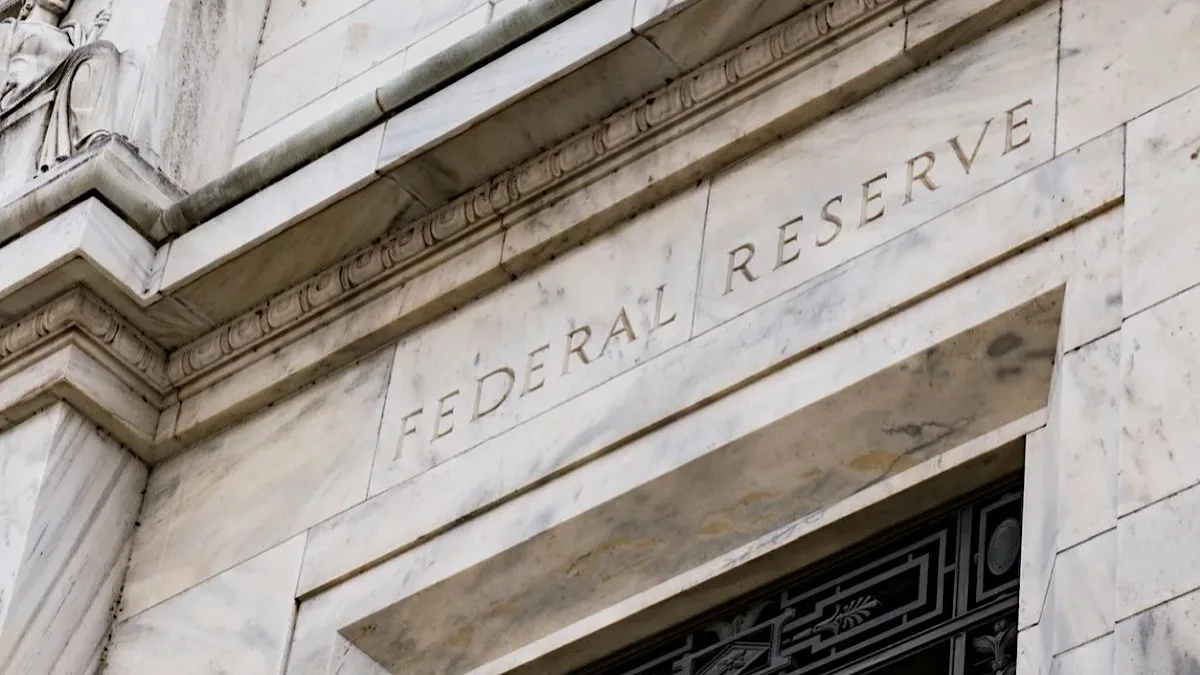
The US Federal Reserve’s decision to hold interest rates steady is less a mark of confidence than an admission of constraint. Policymakers are confronting a familiar but uncomfortable scenario: inflationary pressure driven not by domestic demand, but by geopolitical shock. The Iran conflict has pushed oil prices upward, and with them, the cost structure of the global economy. In such a moment, monetary policy begins to look like a blunt instrument. Under chairman Jerome Powell, the Fed has chosen caution. That caution is understandable.
Inflation, which had been gradually cooling, now risks re-acceleration due to energy costs and the lingering effects of tariffs introduced by President Donald Trump’s administration. Yet, the labour market remains relatively stable, and growth forecasts have not collapsed. This leaves the central bank caught between two incomplete signals: prices are rising again, but the economy is not clearly faltering. What makes this moment more complex is the nature of the inflation itself. Oil shocks are historically resistant to interest rate policy. Raising borrowing costs will not increase crude supply from the Gulf, nor will it ease shipping disruptions or geopolitical risk premiums.
Advertisement
At the same time, cutting rates to pre-empt a slowdown could entrench inflation expectations, particularly if energy prices remain volatile. The Fed is, in effect, responding to a supply-side problem with demand-side tools. This uncertainty is already visible in financial markets, where rate-cut expectations are being repeatedly pushed back, signaling that investors themselves are unsure whether inflation or slowdown will dominate the months ahead. This mismatch explains the current pause. It is not indecision so much as recognition that any decisive move could be counterproductive. The central bank’s projections ~ slightly higher inflation, steady unemployment, modest growth ~ suggest a narrow path where the economy absorbs the shock without tipping into recession. But such projections rest on fragile assumptions: that oil prices will stabilise, that tariffs do not amplify cost pressures further, and that consumer sentiment holds. There is also a deeper structural shift at play.
The global economy is entering an era where geopolitical risk is no longer episodic but persistent. Conflicts in energy-producing regions, trade fragmentation, and tighter migration policies are all reshaping supply conditions. In this environment, central banks may find their traditional playbook increasingly inadequate. The tools designed for managing cyclical demand are less effective against recurring external shocks. The Fed’s current stance, therefore, is best understood as strategic restraint. It is buying time ~ waiting for clearer data, for oil markets to settle, and for inflation trends to reassert direction. But this waiting game carries its own risk. If inflation proves more durable, delayed action could force sharper tightening later. If growth weakens suddenly, the Fed may find itself behind the curve. The real conclusion is stark: monetary policy alone cannot stabilise an economy buffeted by geopolitical forces. The Fed is not just pausing; it is operating at the edge of its relevance.