30 dead, 75 burnt: Five reasons why Bangkok pub fire was so deadly
Pub and club fires across the world have proved to be deadly, the most recent incident from India being the one from Goa.
The renewed fighting between Thailand and Cambodia is a reminder that ceasefires, when imposed rather than earned, rarely outlast the pressure that produced them.




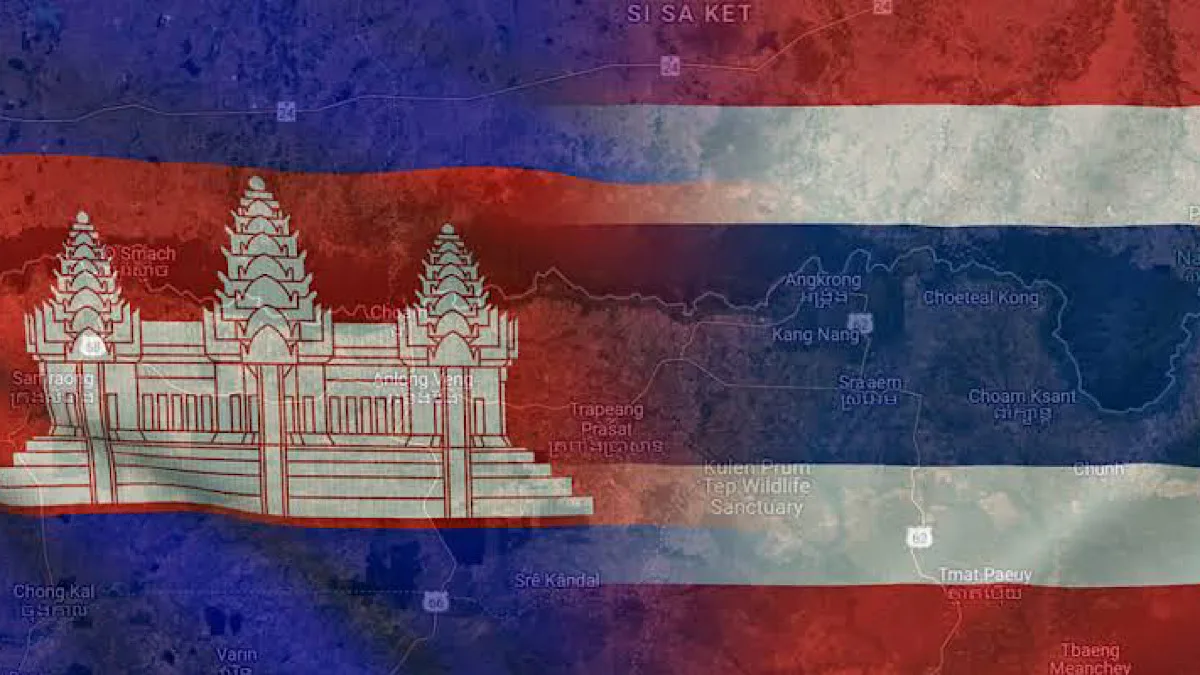
Thailand and Cambodia flags (Photo:X)
The renewed fighting between Thailand and Cambodia is a reminder that ceasefires, when imposed rather than earned, rarely outlast the pressure that produced them. The truce pushed on to the two countries earlier this year offered a temporary lull, but not a settlement. It quietened artillery yet deepened resentment, and the relapse into hostilities was only a matter of time. What is unfolding along the border between the two countries is not a war over land so much as a war over legitimacy.
The terrain itself is insignificant ~ tiny, uninhabited pockets of scrub and stone. What matters is who gets to define the national narrative. For Thailand’s military, defending these slivers is a ritual affirmation of sovereignty, almost a sacred duty. For Cambodia, standing firm against a stronger neighbour serves both national pride and the political choreography of its leadership circle. The latest escalation, triggered by a minor incident involving a Thai engineering team, might once have been defused through quiet negotiation. But diplomatic muscle memory has atrophied.
Advertisement
In its place lies a widening gulf of mistrust. Thailand believes Cambodia continues to act in bad faith, particularly with new land-mines maiming Thai soldiers and a provocative leak of a confidential phone call that toppled a Thai government. Cambodia insists it is the aggrieved party, boxed in by a more powerful neighbour determined to impose its will. Domestic politics on both sides have aggravated the conflict. In Thailand, a fragile minority government has ceded broad autonomy to the military, which now views the border as a laboratory for proving its indispensability. Public opinion, already inflamed by casualties and political humiliation, overwhelmingly backs a tough approach. Cambodia’s leadership, meanwhile, remains shaped by the long shadow of its former strongman, whose behind-the-scenes manoeuvring often intensifies tensions rather than calming them.
Advertisement
International pressure may once again push the two sides towards a ceasefire, but external leverage cannot substitute for political will. Previous interventions froze the conflict without resolving the drivers of escalation. Another hurried truce may simply reset the clock for the next round of clashes. True de-escalation will require steps neither side appears ready to take: verifiable cessation of land-mine deployment, a mutual halt to provocative troop movements, and the rebuilding of direct diplomatic channels that have been deliberately severed. Most importantly, leaders in both countries must be willing to let go of the temptation to convert border skirmishes into symbols of nationalist righteousness.
Until that happens, the cycle is likely to persist ~ a pattern of brief silences punctuated by sudden bursts of artillery, of families fleeing and returning and fleeing again, of political leaders treating a volatile frontier as a stage for their own power struggles. What is at stake is not territory, but trust. And without trust, no ceasefire, however forcefully arranged, can hold.
Advertisement