At post-Budget webinar, PM calls for innovation-driven growth and holistic health
The webinar was the fourth in a series organised by the government to deliberate on the effective implementation of key announcements made in the Union Budget.
The Union Budget for 2025-26 offers no fireworks for those chasing populist handouts or headline-grabbing sops. Neither does it add any extra burden on the taxpayer.




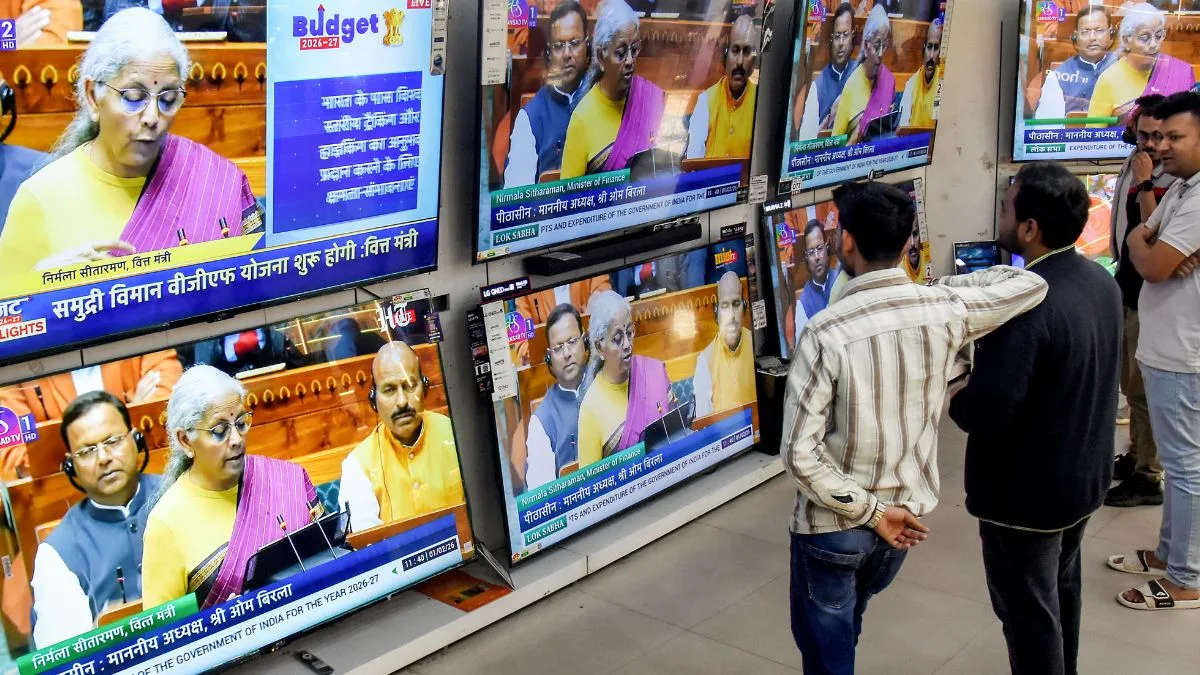
The Union Budget for 2025-26 offers no fireworks for those chasing populist handouts or headline-grabbing sops. Neither does it add any extra burden on the taxpayer. Instead, it speaks quietly to those who grasp the deeper rhythms of governance.
This is a budget built on the conviction that India’s ascent is not a matter of if, but of how steadfastly we stay the course—through policies that are deliberate, unglamorous, and unyielding in their consistency. This clarity is what makes FM Nirmala Sitharaman’s ninth budget a distinctly unambiguous capacity building Budget that would serve as a crucial catalyst in attaining India’s larger economic goals.
Advertisement
Accelerating and Sustaining India’s Economic Growth
Advertisement
India’s vision of becoming a Viksit Bharat depends on its ability to grow fast and grow steadily in a world marked by uncertainty and change. This recognizes that growth today is not just about producing more, but about producing better: with higher productivity, stronger competitiveness, greater resilience, and strategic self-reliance.
The Union Budget outlines a clear six-part strategy to achieve this. At its heart is a strong push for manufacturing in key strategic sectors. From building India into a global biopharma hub through the ₹10,000 crore Biopharma SHAKTI initiative, to strengthening semiconductor capabilities under ISM 2.0, the focus is on making India a trusted global production partner.
Expanded support for electronics, chemicals, rare earths, capital goods, containers, and textiles further strengthens this manufacturing backbone. At the same time, the Budget seeks to revive traditional industrial clusters and help MSMEs grow in global champions.
Infrastructure forms the most visible pillar of this growth strategy. With a record public capital expenditure of ₹12.2 lakh crore, new freight corridors, waterways, and coastal shipping incentives, the government signals its belief that roads, rails, ports, and logistics are the foundation of long-term prosperity.
This budget also looks ahead by investing in energy security and sustainability. The ₹20,000 crore commitment to carbon capture technologies reflects India’s intent to balance economic growth with climate responsibility. Finally, the development of City Economic Regions and high-speed rail corridors connects cities, markets, and people—unlocking the power of urban clusters and regional integration.
Fulfilling Aspirations by Building Human Capacity
If economic growth powers a nation forward, it is people who provide the energy. This budget places India’s citizens at the heart of development by investing in education, health, skills, sports, tourism, and the creative economy areas that shape aspirations and define national strength in a services-driven world.
The Budget outlines a clear four-part focus: creating skilled professionals, strengthening education, building a strong sports ecosystem, and unlocking tourism-led jobs. At the center of this approach is a high-level Education to Employment and Enterprise Committee, reflecting a major shift from degrees to real-world skills, and from learning to livelihoods.
A key priority is preparing professionals for the future. In healthcare, the plan includes training 100,000 allied health professionals over five years and 1.5 lakh caregivers in the coming year, alongside the creation of regional medical hubs and new Ayurveda institutes. Rural livelihoods are strengthened through expanded veterinary education and infrastructure, ensuring better animal healthcare and food security.
Education reforms go beyond classrooms by linking learning with industry. New University Townships near industrial corridors will foster innovation and entrepreneurship, while girls’ hostels in every district will improve access and inclusion. Investments in advanced scientific facilities signal India’s ambition to lead in knowledge and research, not just supply talent.
Sports also receive long-term attention through a renewed Khelo India Mission, which aims to build talent pipelines, modern coaching systems, sports science support, and competitive leagues.
Tourism complements this people-first strategy by combining heritage with employment. A strengthened hospitality institute, trained tourist guides, and the development of iconic archaeological sites will turn India’s cultural wealth into sustainable livelihoods and global soft power.
Ensuring Equitable Access and Meaningful Participation
Economic growth and human capacity matter most when they touch everyday lives. This gives real meaning to the idea of Sabka Saath, Sabka Vikas by ensuring that every family, community, region, and sector can genuinely participate in India’s development journey.
At its heart, this budget focuses on improving farmer incomes and strengthening rural livelihoods. Agriculture, fisheries, and animal husbandry, lifelines for millions are supported through better water resources, stronger value chains, and entrepreneurship-led growth.
From developing reservoirs and boosting fisheries to promoting high-value crops like coconut, cocoa, cashew, and nuts, the aim is to make farming more resilient, profitable, and future-ready. Digital tools like Bharat-VISTAAR bring technology directly to farmers, offering customized advice and improving productivity.
Women’s economic participation is another key pillar. Through SHE-Marts, women-led self-help groups are supported to move beyond subsistence and become confident market players, embedding entrepreneurship into the rural economy.
It also places strong emphasis on inclusion. Programmes for Divyangjan focus on skills, livelihoods, and access to assistive devices reinforcing that inclusion is about empowerment, not charity. Mental health and trauma care receive long-overdue attention through new and upgraded institutions, recognizing that social well-being is as important as economic opportunity.
Regional balance is addressed by focusing on Purvodaya states and the North-East. Industrial corridors, tourism development, e-mobility, and cultural circuits such as the Buddhist Circuit—are designed to unlock local potential while preserving regional identity. Supporting this inclusive vision are financial sector reforms and ease-of-doing-business measures that improve access to capital, encourage investment, and maintain fiscal discipline. By keeping the fiscal deficit on a stable path, the Budget balances social inclusion with economic stability.
Together, these segments ensure that development is not just measured in numbers, but felt in villages, towns, cities, and communities. It reminds us that true national progress is achieved when everyone has the opportunity to participate and prosper. In an era that rewards spectacle ,such restrained, long haul leadership may well be the most demanding form of statecraft.
Advertisement