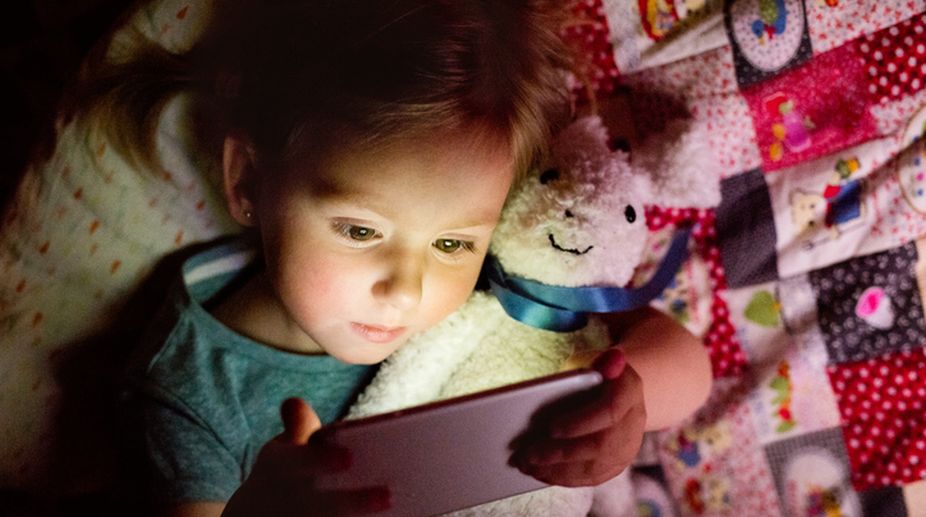
If your kid is regularly in the habit of playing games on smartphones before going to bed, he or she may face an increased risk of becoming obese, warns a study.
The findings revealed that children who used digital devices such as watching TV or playing games on smartphones before going to bed got an average of 30 minutes less sleep than those who did not.
Advertisement
This lack of proper sleep not only caused fatigue and attention problems in school, but also disrupted their eating habits. This leads to higher body mass indexes (BMI).
Advertisement
“We saw technology before bed being associated with less sleep and higher BMIs,” said Caitlyn Fuller, researcher at the Pennsylvania State University in the US.
“We also saw this technology use being associated with more fatigue in the morning, which circling back, is another risk factor for higher BMIs. So we’re seeing a loop pattern forming,” Fuller added.
The study, published in the journal Global Pediatric Health, examined the sleep and technology habits of 234 children, aged between eight to 17 years.
According to the recommendations from the American Academy of Pediatrics (AAP), parents should create boundaries around technology use, such as requiring their children to put away their devices during meal times and keeping phones out of bedrooms at night.
Police have invoked Section 125 of the Bharatiya Nyaya Sanhita against the anaesthetist following a complaint by the child's family, even as the hospital says an unexpected cardiac arrest occurred despite standard treatment protocols.
Once regarded as a journey marked by prolonged recovery, considerable discomfort, and months of rehabilitation, knee replacement surgery is entering a new era of precision and faster healing.
“Doctor, will my face ever go back to the way it was before?" The question sounds simple, but for many people living with Systemic Sclerosis, it carries an ocean of fear, uncertainty, and silent emotional trauma.