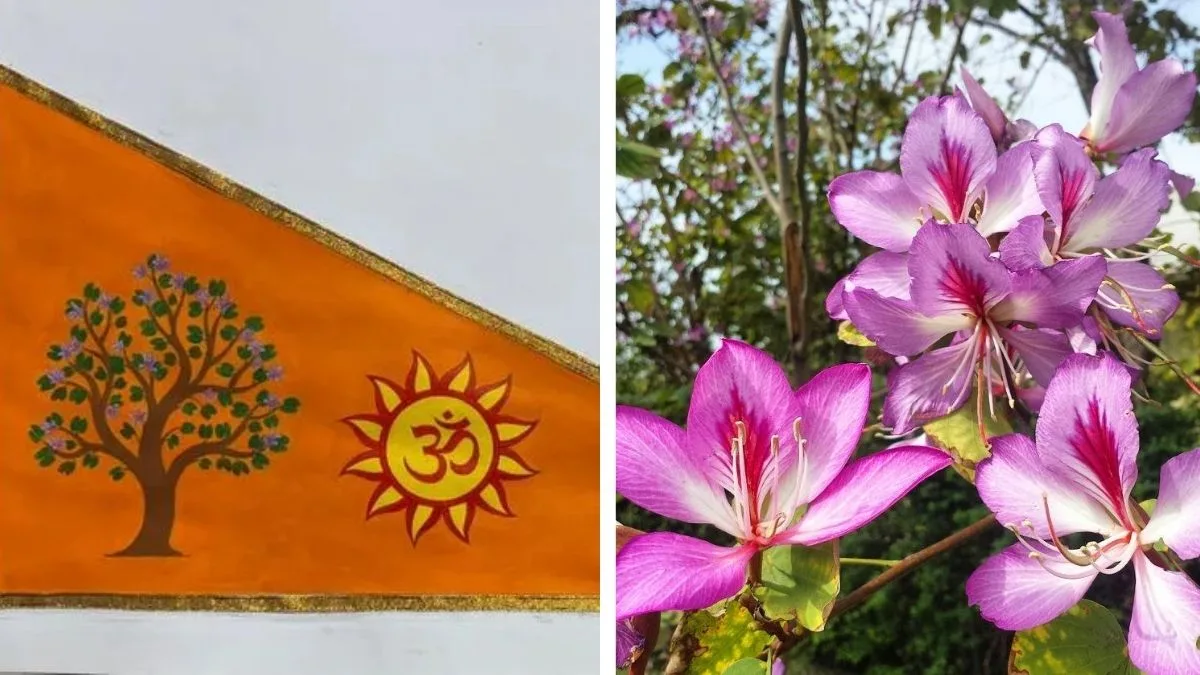
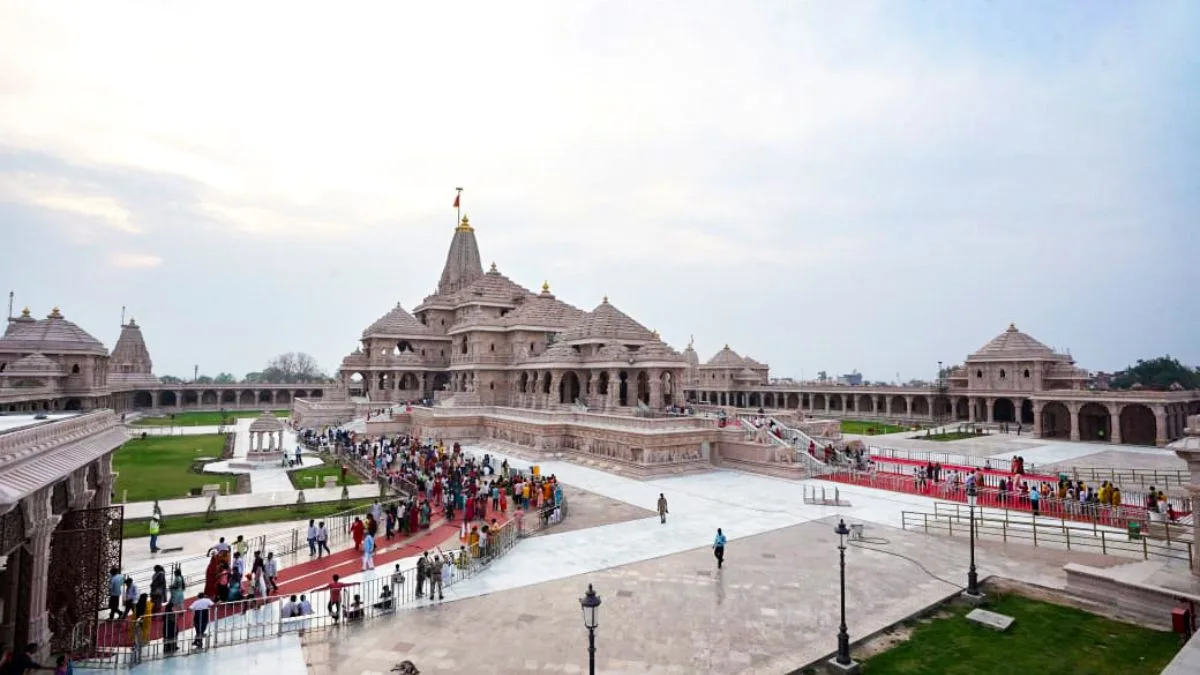
The Kovidara tree has suddenly become the talk of the town in a moment that captured the attention of the entire nation. Google searches for this mysterious tree are going through the roof, and everybody seems curious-what is the Kovidara tree and why is it trending now? The interest escalated just after Prime Minister Narendra Modi, along with RSS Chief Mohan Bhagwat, hoisted the sacred “Dharma Dhwaj” atop the Shri Ram Janmabhoomi Temple in Ayodhya. This historic moment came after prayers at the Ram Darbaar and instantly hit the headlines across India.
The flag with Kodivara tree
The flag is no ordinary banner but a right-angled triangle with 22 feet length and 11 feet width. It bears three sacred symbols, namely Om, the Sun, and the Kovidara tree-all representing three core values of Sanatan Dharma, India’s ancient spiritual tradition. Though Om and the Sun are relatively known symbols, it is that of the Kovidara tree which has captured everybody’s imagination.
Advertisement
It is said that the Kovidara tree is considered a hybrid of Mandar and Parijat trees created by the sage Rishi Kashyap. It adds a touch of spirituality and a dash of history to the flag-raising ceremony (Dharma Dhwaj) at AYodhya Ram Temple.
What is the Kovidara tree?
Botanically, this tree is known as Bauhinia variegata Linn and belongs to the family Caesalpiniaceae. According to Ayurveda, it is called Kovidara. In ancient times, during the Vedic and Samhita periods, they called it Kancanara. The tree holds spiritual significance but has equally been a part of traditional medicine for years. Its stem bark forms part of the Ayurvedic Pharmacopoeia of India, where it is indicated to be used for treating lymphadenitis and goiter.
The Kovidara tree has many names in various parts of India:
– Mountain Ebony, Buddhist Bauhinia
– Hindi: Kancanar
– Kannada: Kempumandara
– Malayalam: Mandaram, Chuvanna Mandaram
– Tamil: Singappu Mandarai
– Telugu: Devakancanamu
– Marathi: Koral
– Sanskrit: Kancanarah, Kovidarah
Ayurvedic Significance of Kovidara tree
The Kovidara tree has a remarkable therapeutic profile. Its flowers, bark, roots, seeds, and leaves are all used for various health benefits. Here’s a breakdown:
– Buds and Flowers: Used in piles, tumours, menorrhagia, and haematuria. Flowers are mildly laxative.
– Root: It aids digestion and relieves flatulence.
– Bark: Astringent and anthelmintic; used externally for skin affections and scrofula.
– Leaves: Antifungal properties.
– Seeds: Can agglutinate human blood.
Traditional remedies also utilise Kovidara in combination with other herbs. A mixture of its bark, babul pods, pomegranate flowers can come in use for a gargle for oral issues.
How it looks: Morphology
Kovidara is a medium-sized, deciduous, erect tree. The grey bark shows longitudinal cracks, with a light-pink interior. Leaves are rigid, heart-shaped; flowers vary from purple to variegated, flowering in March. Fruit is flat, hard pod, generally maturing during the rainy season, containing 10-15 seeds. Wood is moderately hard and greyish-brown.
Where it grows
The Kovidara tree thrives in the sub-Himalayan tract from Indus eastwards. It does fine also in the dry forests of central, eastern, and southern India. Its adaptability to different climates adds to its mystique.
Chemical and therapeutic properties of Kovidara tree
The Kovidara tree contains flavonoids, kaempferol derivatives, stigmasterol, beta-sitosterol, lupeol, other bioactive compounds. These make it useful in treating conditions across various bodily systems:
– Digestive system: Astringent, mild laxative, useful in diarrhea, dysentery, piles.
– Circulatory system: It acts as a haemostatic by diminishing lymph node inflammation.
– Respiratory system: This helps in coughs and cold.
– Urinary system: Supports management of diabetes.
– Reproductive system: astringent and haemostatic properties.
– Skin: For the care of wounds, inflammation, skin disorders.