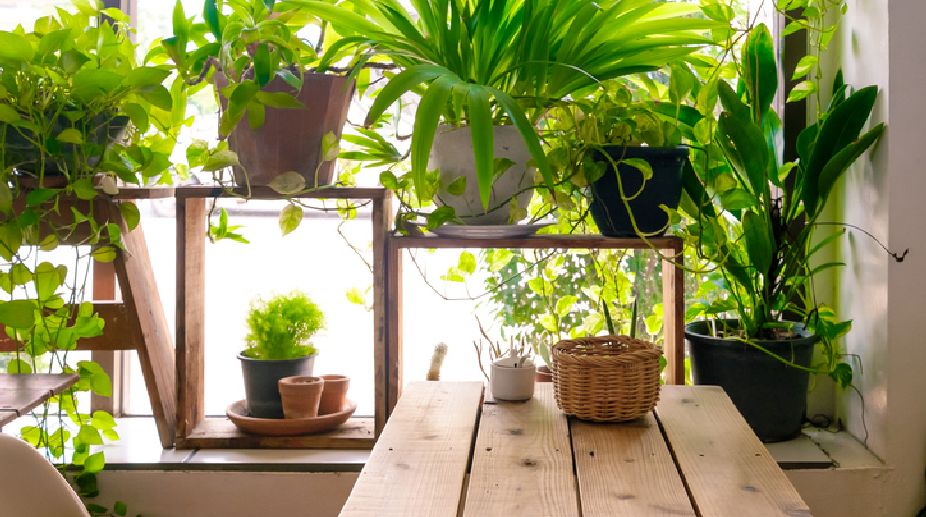
Indoor plants whether flowering or not, not only eliminate indoor air pollutants but also make your home look more attractive.
Deepa Gupta | New Delhi | January 25, 2018 5:02 pm
Photo: Istock
In the rising trend of decorating homes with the help of interior decorators, there has been a tremendous boost in bringing indoor plants to live up the homes. Do you know, some plants can eliminate 89 percent of volatile organic chemicals (VOCs) from indoor spaces.
Indoor plants whether flowering or not, not only eliminate indoor air pollutants but also make your home look more attractive.
Advertisement
Many times the indoor air is more polluted than air outside. Common VOCs are found in all indoor environments that can irritate the respiratory tract and trigger sinus congestion, fatigue, headaches or any other sickness.
Advertisement
We all spend an average of 90 percent of our time indoor, be it our home or workplace. Make ‘green living’ the mantra of your life by clearing the air around you and breathe easy.
A study conducted by National Aeronautics and Space Administration (NASA) suggests that at least one plant should be kept per hundred square feet of home or office space for efficient air cleaning. So what are you waiting for? Make your home a cleaner place by keeping as many plants as you wish at your place.
Photo: Istock
Peace lily: Peace lily requires medium to low light and less frequent watering. It filters ammonia, benzene, formaldehyde, trichloroethylene, xylene, and toluene. It is a very attractive plant to be kept at home. But it should not be owned if you are having pets at home as this plant is toxic to them.
Photo: Istock
Dracaena Marginata: This plant needs relatively bright light but not the direct sunlight. It can filter benzene, formaldehyde, trichloroethylene, xylene, and toluene. This is a very attractive plant but pet owners should keep it away as it is considered toxic to pets.
Photo: Istock
Weeping fig: This plant requires partial shade and moderate watering. It filters indoor air toxins very effectively. Don’t move its place much because it is sensitive to changing conditions.
Photo: Istock
Gerbera Daisy: The beautiful plant blooms with flowers from mid spring until they fall. It is one of the best decorative plant and most suitable for removing benzene and trichloroethylene from the air.
Photo: Istock
Philodendrons: It is a poisonous plant but excellent at removing formaldehyde. This plant needs partial shade and well-drained soil.
Photo: Istock
Baby rubber plant: Rubber plant eliminates bacteria and mold spores in the air. They absorb exhaled carbon dioxide and convert it into oxygen. Its leaves absorb air born chemicals and break them down to make them harmless.
Photo: Istock
Snake plant: This plant eliminates the majority of toxins in an excellent manner. It grows well in adverse conditions also in which other plants cannot survive.
Stock up on these few indoor plants the very time you are decorating your house with accessories.
Nurture these houseplants in your home and inhale pure air naturally as they filter it through their follicular and root system absorption of air born pollutants.
They may also remove pollutants brought in from outside by our shoes and clothing. So dream green and clean and make it a part of your healthy life.
Police have invoked Section 125 of the Bharatiya Nyaya Sanhita against the anaesthetist following a complaint by the child's family, even as the hospital says an unexpected cardiac arrest occurred despite standard treatment protocols.
The recent austerity appeal of the Hon’ble Prime Minister aligns closely with his global vision of “Lifestyle for Environment” (LiFE), which he consistently advocates on global platforms.
Once regarded as a journey marked by prolonged recovery, considerable discomfort, and months of rehabilitation, knee replacement surgery is entering a new era of precision and faster healing.