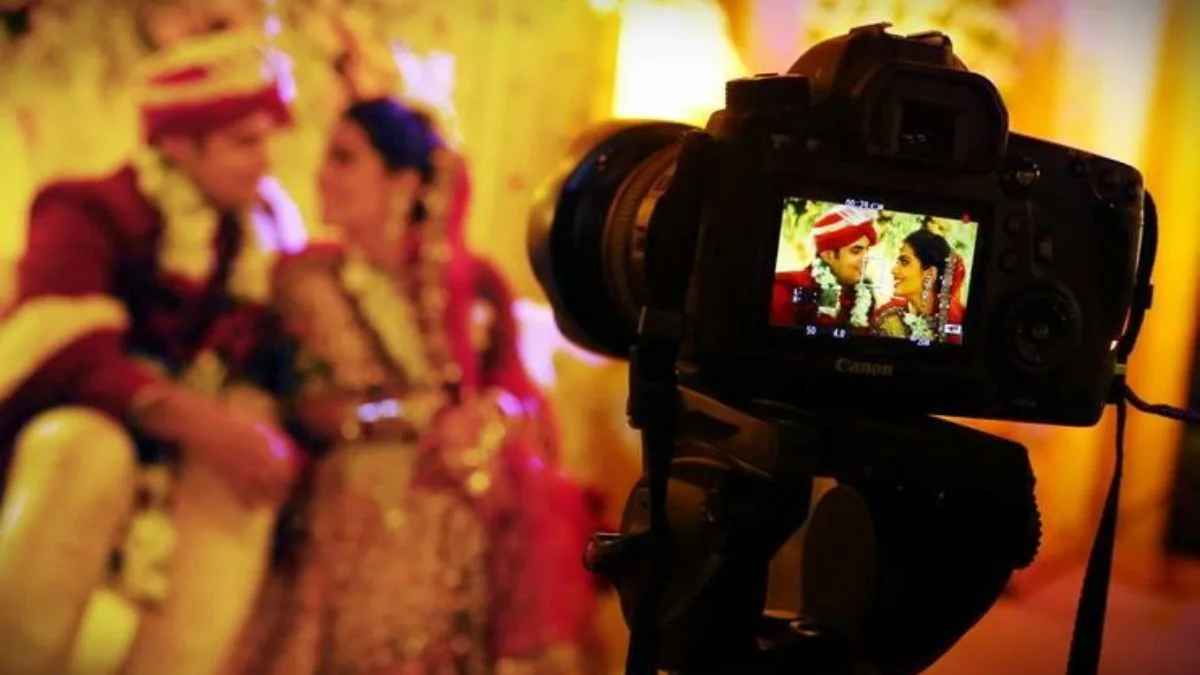
There was a time when an Indian wedding meant chaos in the best way. Cousins sleeping four to a room. Someone’s maasi crying before the ceremony even started. Phupha ji breaking into naagin dance too quick. The halwai working since three in the morning. Nobody asked whether the marigolds photographed well. The flowers just had to smell right.
That world has not disappeared. But something else has grown alongside it, loud and expensive and hungry for attention.
Advertisement
A $130 billion industry built on a single day
India’s wedding industry is now worth close to $130 billion. Let that number breathe for a second. One hundred and thirty billion dollars. Spent on flowers, outfits, venues, drone operators, choreographers, and the guy whose entire job is making sure the couple looks good from thirty feet in the air. The industry has grown faster than most sectors in the country, and analysts expect it to keep climbing. Weddings here are not just ceremonies anymore. They are economic events.
A big part of what is driving that growth is Instagram.
The platform changed how couples imagine their wedding before a single booking is made. You open the app, you scroll for twenty minutes, and suddenly you have strong opinions about draping styles, lighting setups, and whether your first dance needs a fog machine. You did not know you wanted a fog machine. Now you feel incomplete without one.
This is not accidental. The algorithm rewards visual spectacle. High production value gets shared, saved, reposted. A wedding that looks cinematic travels further than one that was simply warm and real. So naturally, more weddings start being designed with that reach in mind.
When celebrity weddings became the benchmark
Celebrity weddings poured fuel on this particular fire.
When Virat Kohli and Anushka Sharma got married in Tuscany in 2017, the pictures circled the internet for days. Every detail was clean, curated, quietly flawless. When Deepika Padukone and Ranveer Singh had their Lake Como ceremony, it looked less like a wedding and more like a fashion editorial that happened to include vows. Katrina Kaif and Vicky Kaushal, Sidharth Malhotra and Kiara Advani, Alia Bhatt and Ranbir Kapoor. Each one arriving with its own visual identity, its own hashtag, its own set of reference images that would later show up in wedding planners’ offices across the country.
The problem is not that these weddings happened. The problem is that they became a benchmark.
Nobody said out loud that your wedding should look like Deepika’s. Nobody had to. The comparison was already living inside every mood board on every couple’s phone. Plenty of families, working with a fraction of that budget, started trying to recreate the feeling. The outfits. The backdrop. The lighting. The particular way joy was presented rather than simply felt.
What the Instagram wedding actually costs
So what does the Instagram wedding actually cost?
A mid-range wedding aimed at looking good online now runs between Rs 25 lakh and Rs 50 lakh in many Indian cities. That is not the luxury tier. That is the tier trying to look like the luxury tier. Within that budget, the venue alone can swallow a significant portion, particularly if it has a garden, a view, or any quality that reads as aesthetic on camera. Floral arrangements designed for photography cost more than ones designed for fragrance. A bridal makeup team with a social following charges a premium. So does a photographer who shoots in a certain style that has become trendy. Videographers now offer cinematic reels as a base package, not an add-on.
And none of this accounts for the outfits. Multiple outfit changes have become expected in certain circles. Designer lehengas. Customised sherwanis. The idea that you wear one thing for the ceremony and something entirely different for the reception, and possibly a third thing for the sangeet, is no longer reserved for film families.
At the top end, numbers get genuinely dizzying. Weddings at premium heritage properties, with international performers and flown-in florals, routinely cross the crore mark. The KPMG-backed research firm Wazir Advisors noted that the average per-wedding spend in India has risen sharply over the last decade, with urban weddings seeing the sharpest increases.
The part nobody puts in the wedding brochure
Here is the part that does not fit neatly into a wedding brochure.
All of this pressure lands somewhere. It lands on the couple. It lands on the families. It lands specifically on the people who cannot really afford any of it but feel like they cannot afford to skip it either. A 2023 survey by financial planning platform Fisdom found that a significant number of Indian families go into debt for weddings, sometimes borrowing amounts they take years to repay. The wedding ends. The loan does not.
Beyond money, there is something quieter happening. Couples who spend months planning a photogenic wedding sometimes arrive at the actual day and find themselves managing it like a production. The timeline is not about what feels good. It is about the light. The photographer needs the couple at the Mandap entrance by five-thirty because that is golden hour. The guests need to be seated before the drone flyover. The first dance needs to happen before the caterer moves the tables.
You have planned this day for fourteen months and you are essentially a location coordinator for your own marriage.
The guests are not off the hook either
The guests are not off the hook either.
Indian weddings have always had an element of performance. That is not new. But the audience has expanded beyond the people in the room. When someone at your wedding posts a reel before you have even had dinner, your event is now live on the internet. This creates a strange incentive. Guests want something worth posting. Couples want something worth posting. Everyone is, in some low-grade way, always thinking about the shot.
A wedding planner working in Delhi once said something worth repeating. She said her clients now ask two questions that nobody used to ask ten years ago. The first is whether the venue is photogenic. The second is whether the lighting will look good in a reel. Not whether the food is good. Not whether there is space for people to sit and talk. Photogenic and reel-ready.
What the camera cannot capture
None of this means that people who plan carefully do not love each other deeply. That would be a ridiculous conclusion to draw. Love and Instagram are not mutually exclusive. A well-lit ceremony can still be a genuinely moving one.
But there is a cost to orienting a deeply personal day around the reactions of people who were not even invited.
Memory does not work like a highlight reel. Ask anyone ten years out from their wedding what they remember. Nobody says the drone footage. They say their father could not stop crying. They say their best friend made a speech that started embarrassingly and ended beautifully. They say the power went out for twenty minutes and somehow that became the best part of the night because everyone laughed together in the dark.
Those moments do not need a videographer. They do not need golden hour. They just need people who are actually present, not performing presence for a camera.
The wedding that still matters
Indian weddings at their best have always been about gathering. About eating together and dancing badly and arguing about who sits where. About rituals that carry meaning even when nobody fully remembers why. About the slightly chaotic, slightly overwhelming feeling of being surrounded by everyone who has known you your whole life.
That is still possible. It requires, maybe, a conscious decision to want it. To resist the pull of the feed just long enough to look up and actually be there.
The likes will disappear from the algorithm in seventy-two hours. The people in the room will stay with you much longer than that.