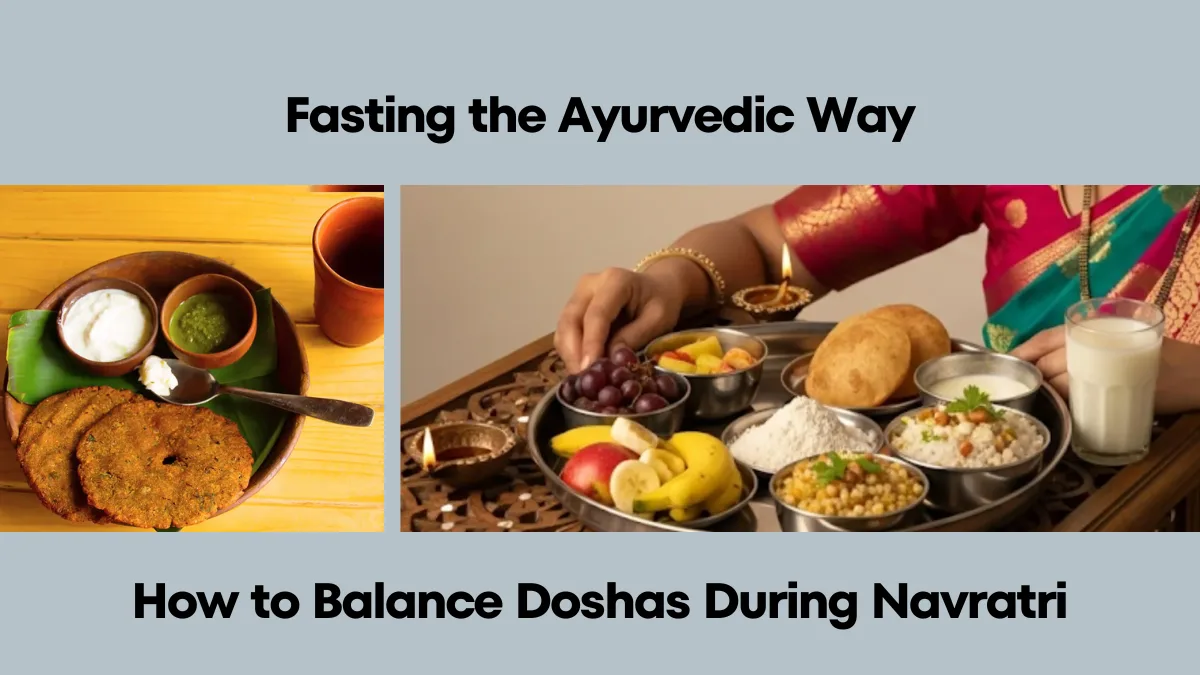
Navratri is also a time for cleansing the body and mind. Across India, many people observe fasts during these nine days. Some eat only fruits and milk. Others prepare special dishes with buckwheat flour or water chestnut flour. And, above all, many avoid grains, onion, garlic, and heavy meals.
Fasting during Navratri is seen as an offering to the Goddess. But Ayurveda gives it a deeper meaning. According to Ayurveda, fasting is a way to rest the digestive system, remove toxins, and bring balance between body and mind.
Advertisement
The way we fast, however, should depend on our body type or “dosha”. When we follow fasting practices according to our dosha, we feel more energetic, calm, and connected.
Ayurveda describes three main energies that shape our body and mind. These are called Vata, Pitta, and Kapha. Each person has a unique mix of these three. But usually one or two are stronger.
Vata is linked with air and space. It controls movement, breathing, and flexibility. People with more Vata are usually active and creative, but when it goes out of balance, they may feel anxious, restless, or suffer from constipation and poor sleep.
Pitta is linked with fire and water. It controls digestion, metabolism, and sharpness of the mind. Balanced Pitta brings energy and clarity, but excess Pitta can cause acidity, anger, skin rashes, and irritation.
Kapha is more about earth and water. It controls stability, immunity, and strength. A Kapha person is usually calm, strong, and steady. But if Kapha becomes too high, it can lead to laziness, weight gain, congestion, or feeling dull.
When we fast without keeping our dosha in mind, we may feel weak, irritated, or uncomfortable. But when fasting is done according to our dosha, it becomes easy, healthy, and joyful.
How to fast for Vata Dosha?
For people with Vata dominance, fasting can sometimes feel difficult. They may feel weak, light-headed, or restless if they do not eat for long hours. Ayurveda suggests that they should not stay hungry for very long. Instead, they should eat small, warm, and grounding meals.
Fruits like banana, mango, or papaya are good. Warm milk with a little ghee is very nourishing. Root vegetables such as sweet potato or pumpkin bring comfort. Buckwheat chapatis with ghee also help to balance Vata.
They should avoid very dry foods like plain roasted makhana or too many raw salads. Cold drinks and skipping meals can disturb Vata even more. Patanjali Cow’s Ghee or Patanjali Amla Juice can be very supportive for such people. Ghee gives strength and amla improves digestion gently.
How to fast for Pitta Dosha?
People with strong Pitta usually have good digestion. But they also feel hungry quickly. During fasting, they may become irritated, angry, or suffer from acidity. For them, cooling and calming foods are the best choice.
Sweet fruits such as apples, pears, or melons help reduce excess heat in the body. Coconut water keeps them refreshed. Milk and paneer are good options when eaten in small amounts. Preparations made from water chestnut flour or sabudana khichdi with minimal spices also work well.
They should avoid very spicy, sour, or oily food. Skipping meals completely is not ideal because it increases acidity. Patanjali Aloe Vera Juice and Patanjali Gulab Sharbat can be very soothing during Navratri, as both are natural coolants and balance the fiery Pitta.
How to fast for Kapha Dosha?
For Kapha folks, fasting is usually easier. This is because they naturally have good reserves of energy. However, they must take care not to make their fasting food too heavy. If they eat a lot of fried snacks and sweets, they may feel lazy and dull.
Light and slightly spicy food suits Kapha. Fruits like papaya, pomegranate, or apple are helpful. Roasted makhana or baked sweet potato is better than deep-fried pakoras. Buckwheat khichdi with some spices can also keep their digestion active.
They should avoid overeating even if the food is sattvic. Too much fried food or sweets will only increase heaviness. A simple practice like taking Patanjali Honey with warm water in the morning can support Kapha balance. This also keeps the metabolism active.
General ayurvedic tips for Navratri fasting
Even if you do not know your dosha, you can still follow some common Ayurvedic suggestions during Navratri. Eating light, sattvic food is the foundation. Fresh fruits, milk, nuts, and flours like kuttu or singhara are much better than packaged or fried snacks.
Patanjali offers many pure options such as Kuttu Atta, Singhara Atta, Sabudana, and Sendha Namak. All of them are perfect for fasting.
Hydration is very important. Drink enough water, coconut water, or herbal teas. Patanjali’s herbal teas, for example ginger or tulsi, are good for digestion and also your immunity.
Eating small amounts at regular intervals is healthier than eating one big heavy meal. Rock salt, or sendha namak, should always be used instead of regular salt.
According to Ayurveda, fasting is not just about leaving food aside. It is a process of cleansing. When digestion slows down, the body uses the extra energy to remove toxins. This brings lightness, better energy, and more clarity of mind.
Navratri comes during the change of season. Nature itself supports cleansing during this time. That is why eating light food and resting the body feels so natural.
When fasting is done with awareness, it not only helps health but also brings spiritual growth among individuals.