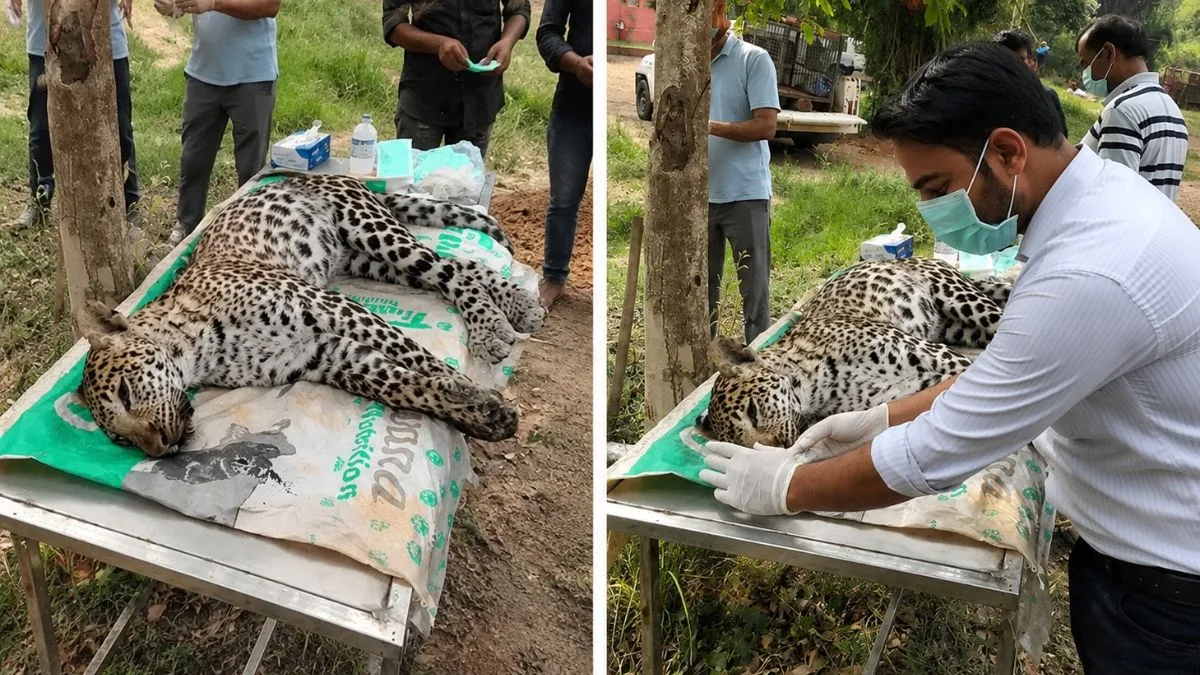
A young leopard found in the Kalesar Wildlife Sanctuary in Haryana’s Yamunanagar district has died after being rescued in a critical condition. Veterinarians suspect it may have been infected with Canine Distemper Virus (CDV), a contagious disease commonly associated with domestic dogs. Authorities, however, said laboratory tests are underway to confirm the exact cause of death.
The incident has raised concern among wildlife officials after another leopard was reportedly spotted in a weak and sluggish condition near the populated area of Rampur Khadar village two days earlier. Forest officials are monitoring the situation closely amid fears that the illness could affect other wild animals in the region.
Advertisement
According to officials, villagers from Shahzadwala, located near the sanctuary, alerted the Forest Department after noticing the leopard lying in distress at the edge of the forest. The animal was rescued and taken for treatment but died before it could recover. Residents claimed the leopard had been in the area for several days before being reported to the authorities.
A three-member panel comprising veterinarians Dr Rahul Chhachhrauli, Dr Vikrant and Dr Prashant Tiwari conducted the post-mortem examination. Preliminary findings revealed severe damage to the liver and heart, bleeding in the intestines, and abnormalities in the respiratory tract. Based on these observations, the doctors said the animal displayed symptoms consistent with Canine Distemper Virus, although they stressed that laboratory confirmation is still awaited.
Officials said tissue samples and other specimens have been sent to a laboratory in Hisar for detailed examination to determine the exact cause of death. The findings are expected to help wildlife authorities assess whether there is any health risk to the leopard population and other animals inhabiting the Kalesar forest.
Wildlife experts said animals infected with Canine Distemper Virus generally isolate themselves after falling ill, reducing the likelihood of widespread transmission within the wild population. Nevertheless, forest officials are maintaining heightened surveillance in the sanctuary as a precautionary measure.
After the post-mortem, the leopard’s carcass was disposed of in accordance with prescribed wildlife protocols. The remains were cremated and later buried within the premises of the Basantur Elephant Rehabilitation Centre. Officials from the Animal Husbandry Department said the deceased was a male leopard estimated to be between eight and 10 months old.
Spread over nearly 25,000 acres, the Kalesar National Park and Wildlife Sanctuary is believed to support a significant leopard population. The latest incident has prompted wildlife authorities to closely monitor the health of carnivores in the reserve while awaiting the laboratory report on the suspected viral infection.