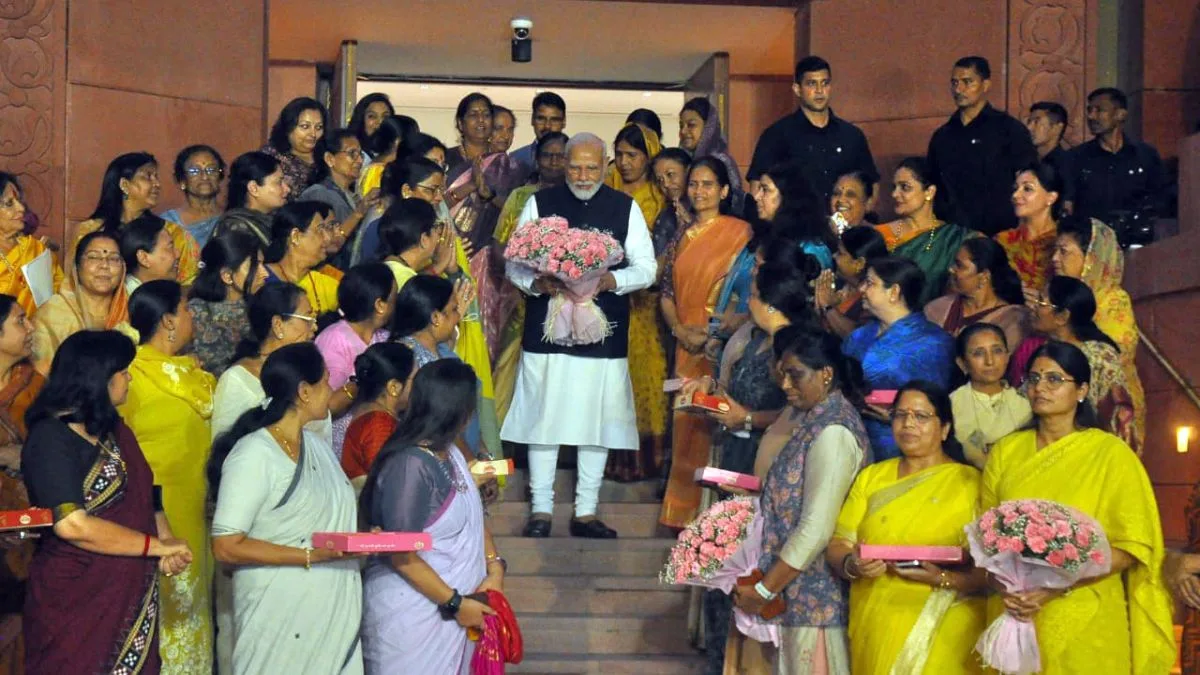
Prime Minister Narendra Modi on Thursday described the proposed rollout of women’s reservation as a “historic step” as Parliament prepares to convene a special sitting later in the day, with the Opposition raising concerns over delimitation and seat expansion plans.
The three-day special sitting of the extended Budget session is scheduled from April 16 to 18 and will focus on Constitutional amendments linked to the Nari Shakti Vandan Adhiniyam, aimed at implementing 33 per cent reservation for women in the Lok Sabha and state Assemblies ahead of the 2029 general elections.
Advertisement
In a post on X, the Prime Minister said, “Starting today, in the special session of Parliament, our country is all set to take a historic step towards women’s empowerment. The respect for our mothers and sisters is the respect for the nation, and with this very spirit, we are moving forward resolutely in this direction.”
Key Bills lined up for introduction
According to ANI, three major Bills are likely to be introduced during the session, including the Constitution (One Hundred and Thirty-First Amendment) Bill, 2026, the Delimitation Bill, 2026, and the Union Territories Laws (Amendment) Bill, 2026.
The amendment Bill is designed to enable early implementation of the women’s reservation law by shifting the reference from the 2027 Census to the 2011 Census. It also proposes expanding the Lok Sabha strength to 850 members, including up to 815 representatives from states and not more than 35 from Union Territories.
At present, the Lok Sabha has 543 members, with 530 from states and 20 from Union Territories.
Proposed changes in delimitation and population definition
The Bill also proposes redefining “population” for the purpose of seat allocation, giving Parliament the authority to decide which census data should be used. Amendments to Article 82 seek to formally assign a role to the Delimitation Commission in redrawing constituencies.
Other provisions include rotation of reserved seats in the Lok Sabha and Assemblies, and specifying the duration for which women’s reservation will remain in force, subject to parliamentary extension.
Opposition backs quota, raises red flags on delimitation
Opposition parties have reiterated support for women’s reservation but questioned the delimitation exercise.
Congress president Mallikarjun Kharge said, “We are all in favour of the Women’s Reservation Bill, but the way in which they (the government) have brought it, we have got reservations.” He added, “We all have decided that we will continue supporting women’s reservation as we did in 2010 and in 2023, as we unanimously accepted the constitutional amendment.”
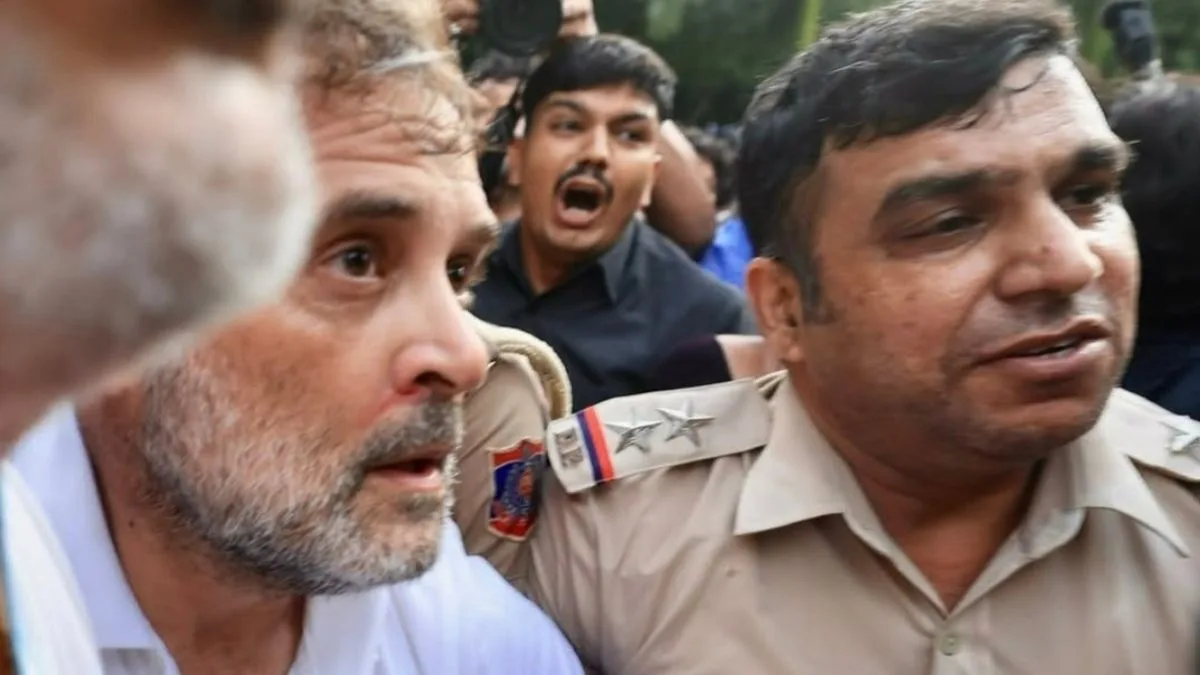
Leader of Opposition in Lok Sabha Rahul Gandhi alleged that the proposals could be used to alter electoral balance.
Congress general secretary Jairam Ramesh also termed the delimitation proposal “dangerous”, arguing that it lacks clarity on equitable seat distribution across states.
BJP hits back, calls criticism political
BJP leader Anurag Thakur accused the Opposition of obstructing a long-pending reform.
“I express my gratitude to Prime Minister Narendra Modi for his commitment to the Nari Shakti Vandan Act, so that Indian women can have their rights… Congress and other opposition parties are politicising it,” he said.
He also rejected concerns about regional imbalance, stating that “no one’s rights, no one’s seats are being reduced, rather justice is being done to everyone”.
Whips issued ahead of crucial sitting
Ahead of the session, major parties including the BJP, Congress, JD(U) and LJP (Ram Vilas) issued three-line whips directing their MPs to be present in both Houses.
Law Minister Arjun Ram Meghwal is expected to move a motion in the Lok Sabha to suspend certain procedural rules to allow the interlinked Bills to be taken up together.
The government has been seeking wider political backing for the amendments, positioning them as a key step towards enhancing women’s representation while navigating a contentious debate over electoral boundaries.