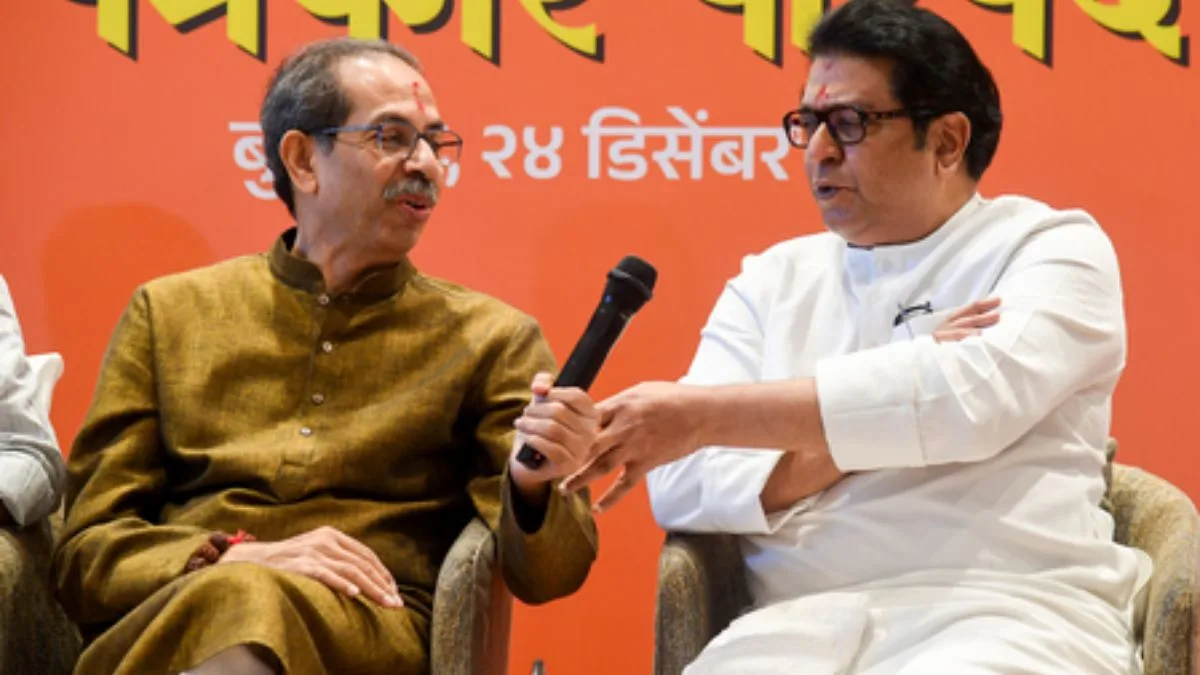
Maharashtra Chief Minister Devendra Fadnavis on Wednesday dismissed the alliance between the parties led by Shiv Sena (UBT) chief Uddhav Thackeray and Maharashtra Navnirman Sena (MNS)’s Raj Thackeray ahead of the Brihanmumbai Municipal Corporation (BMC) elections as an attempt at their own “political survival”.
Observers, too, see the tie-up as a last-ditch attempt for relevance, though some also point to a degree of “unease” within the saffron camp, particularly in the Eknath Shinde-led breakaway Shiv Sena, over its potential for Marathi polarisation.
Advertisement
Overall, the development presents an interesting—if somewhat opportunistic—political scenario. Politics, as they say, makes strange bedfellows, and such alliances are hardly unusual in a fight for survival.
The Shiv Sena (UBT) has been significantly weakened since the 2022 split led by Eknath Shinde, which eroded its traditional Marathi vote base. Raj Thackeray’s MNS, meanwhile, has been struggling electorally as a standalone force.
Announced ahead of the 2025–26 civic poll cycle, including the high-stakes BMC elections, the reunion aims to consolidate the “Marathi Manus” constituency. However, its first electoral test—the BEST Employees’ Co-operative Credit Society elections—resulted in a no-go.
The alliance’s combined performance in the Assembly elections is also nothing to write home about, though both parties continue to retain pockets of strength in municipal politics.
The fact is—BJP’s advantage among non-Marathi Hindutva voters, combined with Prime Minister Narendra Modi’s electoral appeal, added with some generous sprinkling of freebies and add-ons, is a big challenge for any political party, more so for those relegated to the sidelines. Historically, the Thackeray cousins have achieved limited success, both independently and in their early attempts at collaboration.
In the 2024 Maharashtra Assembly elections, Uddhav Thackeray’s Shiv Sena (UBT) secured 20 seats—a sharp decline from the undivided Sena’s earlier dominance—while Raj Thackeray’s MNS failed to win any seat. Municipal-level data suggests consolidation in some wards, but the real picture will only become clear once elections are held with the fractured Maha Vikas Aghadi.
With the Shiv Sena (UBT) on its own, the Nationalist Congress Party (NCP) Sharad Pawar (SP) faction, and the Congress will also all be contesting against each other in the Mumbai civic body elections on January 15.