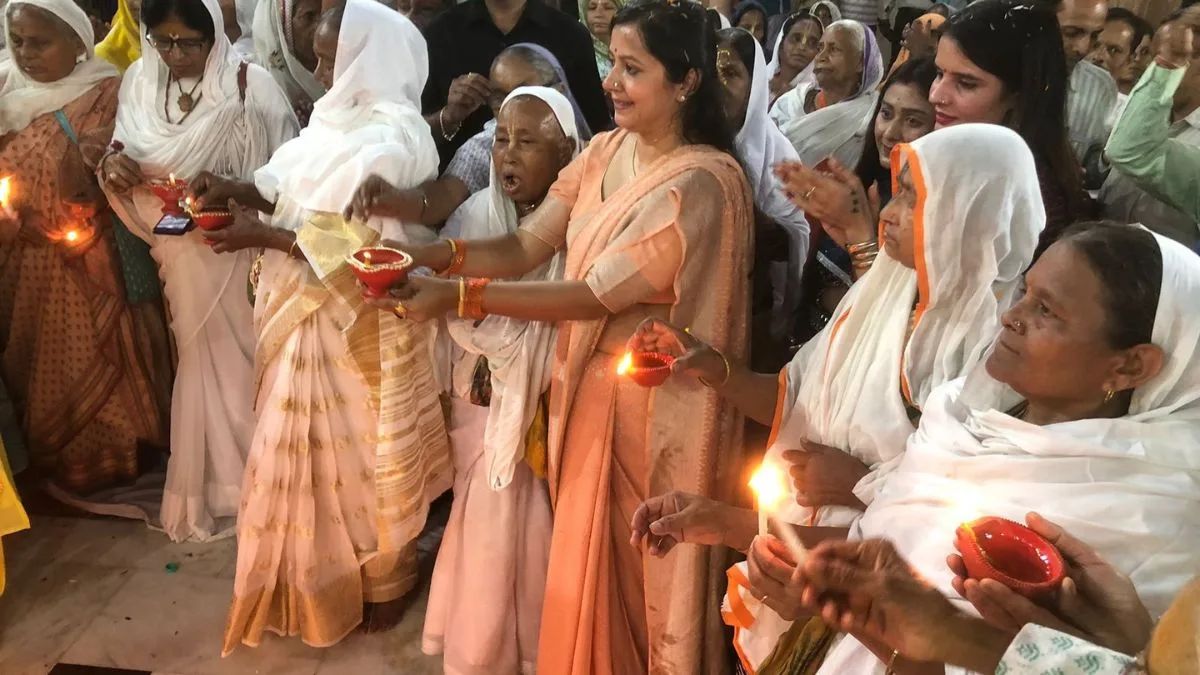
Continuing to break age-old traditions, hundreds of mothers who live in ashrams after death of their husbands once again joined the Diwali celebrations organized specially for them at the historic Gopinath Temple in Vrindavan on Wednesday evening.
The programme was organised by Sulabh International with an aim to bring widowed mothers into the mainstream of society.
Advertisement
For generations, such mothers in India were seen as “inauspicious” and were traditionally excluded from participating in festivals and other joyous occasions.
Thousands of women, mostly from West Bengal, have lived in Vrindavan for decades and they were not allowed to take part in rituals, till social organisation Sulabh extended them a helping hand, added Nitya Pathak, executive convenor of the organisation.
However, in recent years, winds of change have begun to blow through these sacred towns. The celebration at the Gopinath Temple marked not just the festival of lights but also a symbolic illumination of hope, dignity, and inclusion for these women.
Around hundred widowed mothers living in various shelter homes gathered at the historic 500-year-old Gopinath Temple and lit colourful Diyas and celebrated Diwali.
One of the widowed mothers, Devi Ghosh says, “Motivated by the series of revolutionary initiatives, widowed mothers are now happy and enjoying staying in Vrindavan.”
With an aim to bring a ray of happiness and counter the tradition of widowhood, noted social reformer late Dr. Bindeshwar Pathak, founder of Sulabh Movement, came up with this unique idea to organise the festival of lights, especially for the widowed mothers.
His organisation has been looking after hundreds of mothers living in various ashrams in Vrindavan and Varanasi since 2012.
On a routine basis, Sulabh provides them with medical facilities and vocational training besides meeting their day-to-day needs so that they do not feel left out during the twilight years of their lives, says Pathak.
It may be mentioned here that in the light of the Supreme Court’s directives, Sulabh takes care of widowed women living in various ashrams.