External Affairs Minister S Jaishankar on Wednesday took part in a high-level meeting on critical minerals hosted by the US State Department, even as India and the United States move closer to formalising a bilateral trade agreement.
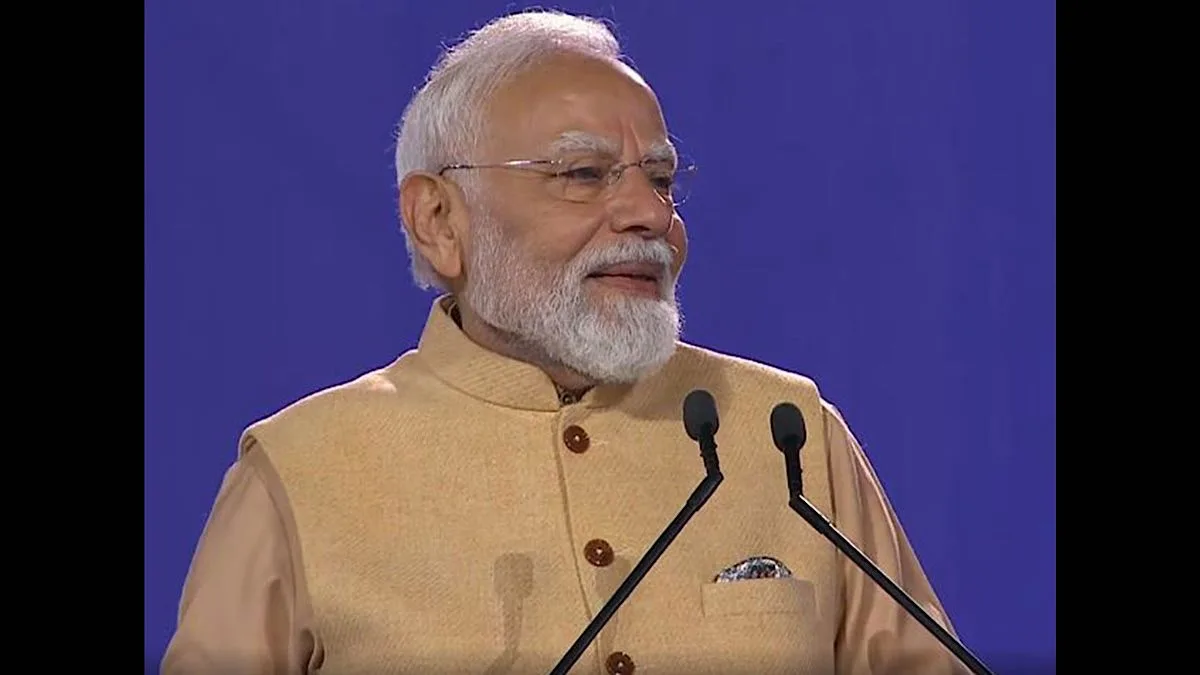
Jaishankar, who is on an official visit to the US, also met Secretary of State Marco Rubio. The visit comes at a time when negotiations between the world’s two largest democracies have entered a crucial phase, following political-level discussions between Prime Minister Narendra Modi and US President Donald Trump.
Advertisement
Officials from both sides are now working through the details of the trade framework. A joint statement outlining the agreed terms is expected in the coming days.
Trade negotiations underway, says Jaishankar
Speaking to news agency ANI on the sidelines of the Critical Minerals ministerial meeting in Washington DC, Jaishankar clarified that the trade talks are being led by Commerce and Industry Minister Piyush Goyal.
“It was not with me, because that is being handled by Commerce and Industries Minister Piyush Goyal. The Prime Minister and the US President had a conversation; some announcements came out of it. Thereafter, a detailing of the trade negotiations is underway as we speak,” Jaishankar said.
Asked about timelines, the External Affairs Minister said the commerce ministry would be better placed to provide clarity.
“It is hard for me to say, and the Commerce Minister would know it better, because he is in direct engagement with the US Trade Representative,” he added.
Earlier, Commerce Minister Piyush Goyal informed Parliament that both countries have already finalised several components of the bilateral trade agreement after months of negotiations.
He said the focus has now shifted to completing technical procedures and paperwork so that the deal can be operationalised without delay. Goyal described the framework as a landmark step in deepening India–US ties and aligning with India’s long-term development goals for 2047.
The minister also pointed out that the 18 per cent tariff rate announced by US President Donald Trump is lower than those applied to many competing nations, giving Indian exporters a relative advantage.
According to Goyal, negotiating teams from both sides worked for nearly a year across multiple rounds to arrive at a balanced outcome. Sensitive sectors were protected, he said, including India’s agriculture and dairy industries.
“The US side, too, had areas that were sensitive from its point of view. Following a nearly year-long discussion spread over many rounds, the two negotiating teams were able to narrow their differences significantly and finalise several areas of the bilateral trade agreement,” Goyal told the House.
Critical minerals take centre stage in US talks
Beyond trade, Jaishankar underlined the strategic importance of critical minerals, a key focus of his Washington visit.
He described the ministerial meeting as productive and outcome-driven, noting the launch of a new US-led initiative called FORGE, which India has supported.
“It was a very good discussion. Critical minerals are a very important subject. The US has been partnering up for some years. Today, they launched a new initiative called FORGE, which we have supported. It’s a kind of successor to the Mineral Security Partnership. Overall, to me, it was a good meeting, very productive, very outcome-oriented, and very businesslike, and that was the core reason I came,” he said.
In his address at the ministerial, Jaishankar warned that excessive concentration in global critical mineral supply chains poses serious risks. He called for structured international cooperation to reduce vulnerabilities as India deepens engagement with US-led frameworks in the sector.