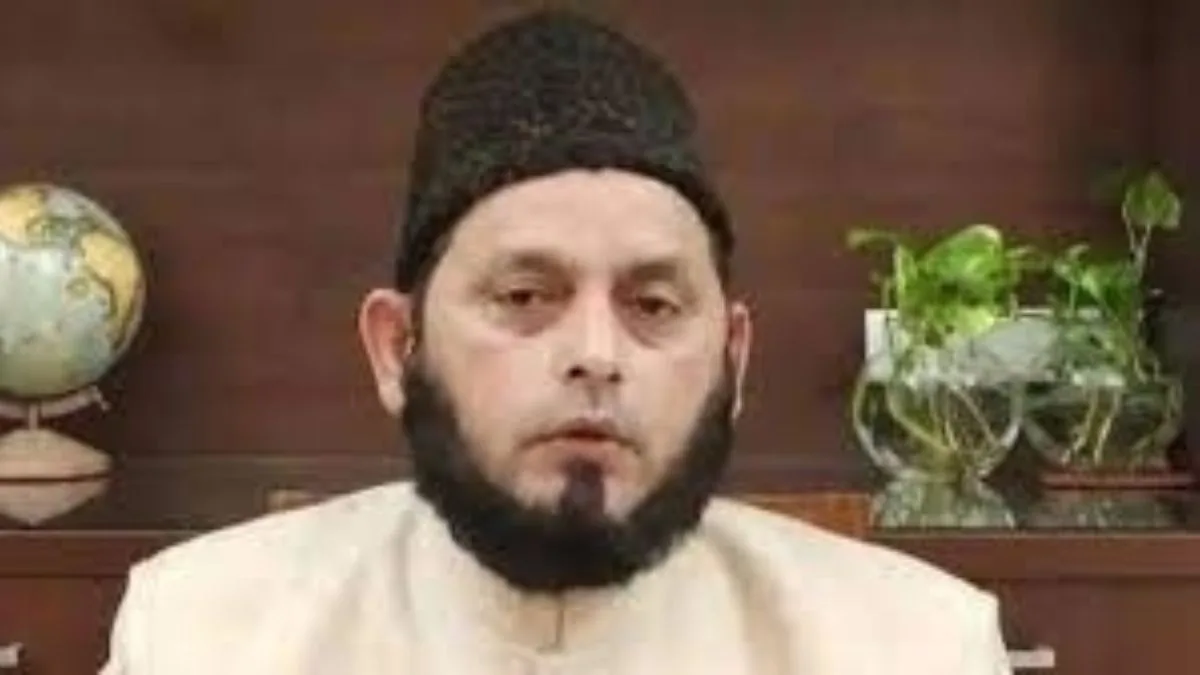
Eidgah Imam and All India Muslim Personal Law Board member Maulana Khalid Rashid Farangi Mahali on Monday welcomed the Supreme Court’s verdict staying key provisions of the Waqf (Amendment) Act, 2025, while expressing hope that the final judgment will provide “complete relief.”
The Supreme Court on Monday delivered a significant verdict on the Waqf (Amendment) Act 2025, staying certain provisions that were opposed by various parties.
Advertisement
“We welcome the court’s decision. Our demand was that the entire Act should be stayed, but the court has not given such an order. However, it has paused many provisions, and we welcome this step. We hope that in the final verdict, we will get 100 percent relief,” Maulana Khalid Rashid said.
The Supreme Court bench of Chief Justice of India BR Gavai and Justice Augustine George Masih declined to stay the entire law, noting that presumption favours the constitutionality of legislation.
However, the bench flagged certain provisions as potentially leading to “arbitrary” exercise of power and stayed them until further hearing.
Maulana said, “The court has also clarified that the CEO should be from the Muslim community, and the overriding powers given to the District Collector to decide whether a property is a Waqf or not have also been stayed. The stay on Sections 3 and 4 is a very welcome step, and we hope that whenever the final decision comes, we will get 100 percent relief.”
Among the provisions paused are:The clause requiring that only a person who has practised Islam for at least five years can create a Waqf.The clause granting overriding powers to the District Collector or any government-nominated officer to decide whether a property is Waqf or government land.Sections 3 and 4, which altered the definition of Waqf and its creation.
Key provisions in the Waqf (Amendment) Act, which sparked nationwide protests, have been paused as the Supreme Court flagged that some of them will lead to “arbitrary” exercise of power. The bench of Chief Justice of India BR Gavai and Justice AG Masih said it found no case was made out to stay the whole statute, but “some sections need some protection”.