Uttarakhand govt asks universities to focus on obtaining higher NIRF rankings
The Uttarakhand government wants to focus on improving the national rankings of the state's universities and educational institutions.
The RFID system will enable the administration to track the exact number of pilgrims present at any location at any given time, helping ensure safety during disasters and improving overall management of facilities.




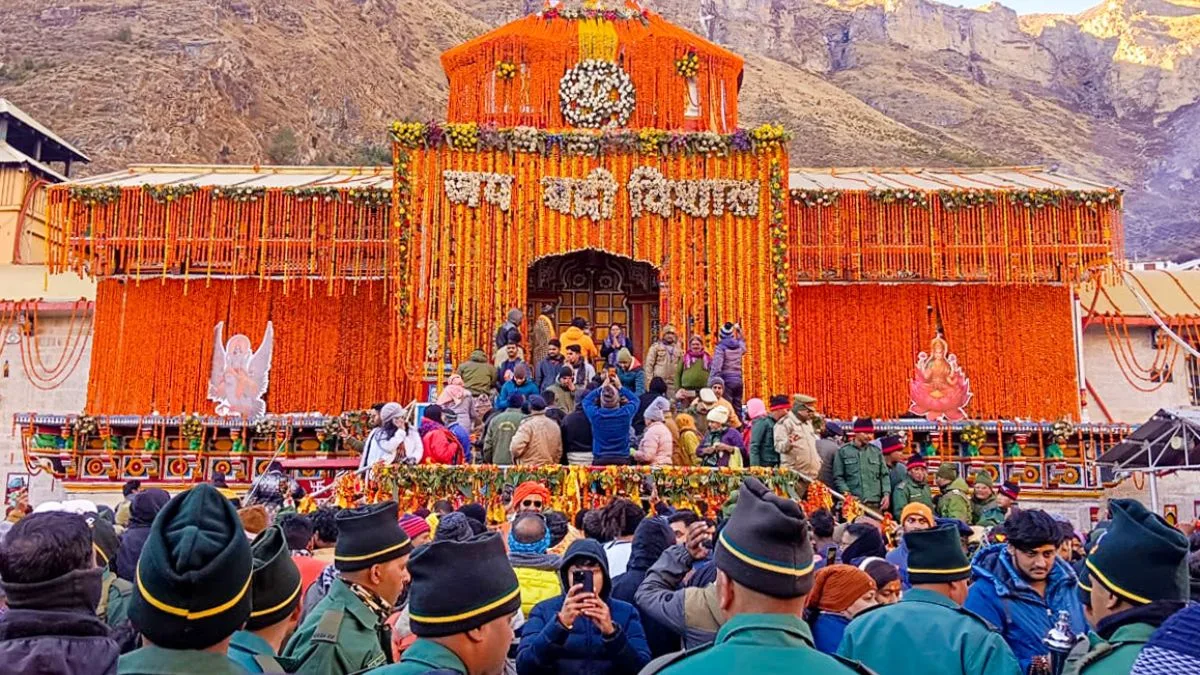
File Photo: IANS
The movement of Char Dham pilgrims in the Uttarakhand hills will now be tracked round the clock using Radio Frequency Identification (RFID) technology to enhance their safety, as the pilgrimage season begins on April 19. The National Disaster Management Authority (NDMA) has suggested that the Uttarakhand government provide RFID tags to pilgrims and devotees to implement the system.
The RFID system will enable the administration to track the exact number of pilgrims present at any location at any given time, helping ensure safety during disasters and improving overall management of facilities.
Advertisement
The NDMA has recommended to the State Disaster Management Minister, Madan Kaushik, that Char Dham pilgrims be issued RFID tags, similar to those used for Amarnath Yatra devotees.
Advertisement
During a meeting with the minister, NDMA officials suggested that RFID readers installed at various locations along the routes to the Char Dham shrines and other high-altitude areas would help authorities and enforcement agencies track pilgrims, especially during emergencies.
This system will provide precise information about travellers’ locations and assist in timely rescue operations when required.
Sharing the information, NDMA Chief Consultant Major General Sudhir Bahl told the media that a proposal has been submitted to the Disaster Management Department to provide RFID tags to all pilgrims.
He also stressed the need for mandatory medical certificates for tourists above 60 years undertaking high-altitude journeys, along with updated protocols in the Standard Operating Procedure (SOP) for helicopter-based rescue operations in the hills.
According to the NDMA, the existing mandatory registration system—requiring pilgrims to provide personal details, travel dates, and health information—already helps track movement. This will become more effective with the issuance of green cards for vehicles and trip cards for passengers to streamline traffic in the hills.
NDMA officials said RFID will enable real-time tracking of devotees, converting static registration data into a live monitoring system for enhanced security.
Apart from safety, the RFID system will also aid in crowd management by identifying high-density areas in real time. While Automatic Number Plate Recognition (ANPR) cameras track vehicles, RFID will focus on individuals, creating a two-layered security mechanism for the pilgrimage.
The NDMA has also recommended the use of Artificial Intelligence (AI) to analyse CCTV footage along Char Dham routes. This, it said, will help estimate pilgrim numbers at specific locations for better crowd management.
Responding to the suggestions, Secretary of the Uttarakhand Disaster Management and Rehabilitation Department, Vinod Kumar Suman, confirmed that the recommendations will be forwarded to the relevant departments for implementation.
Advertisement