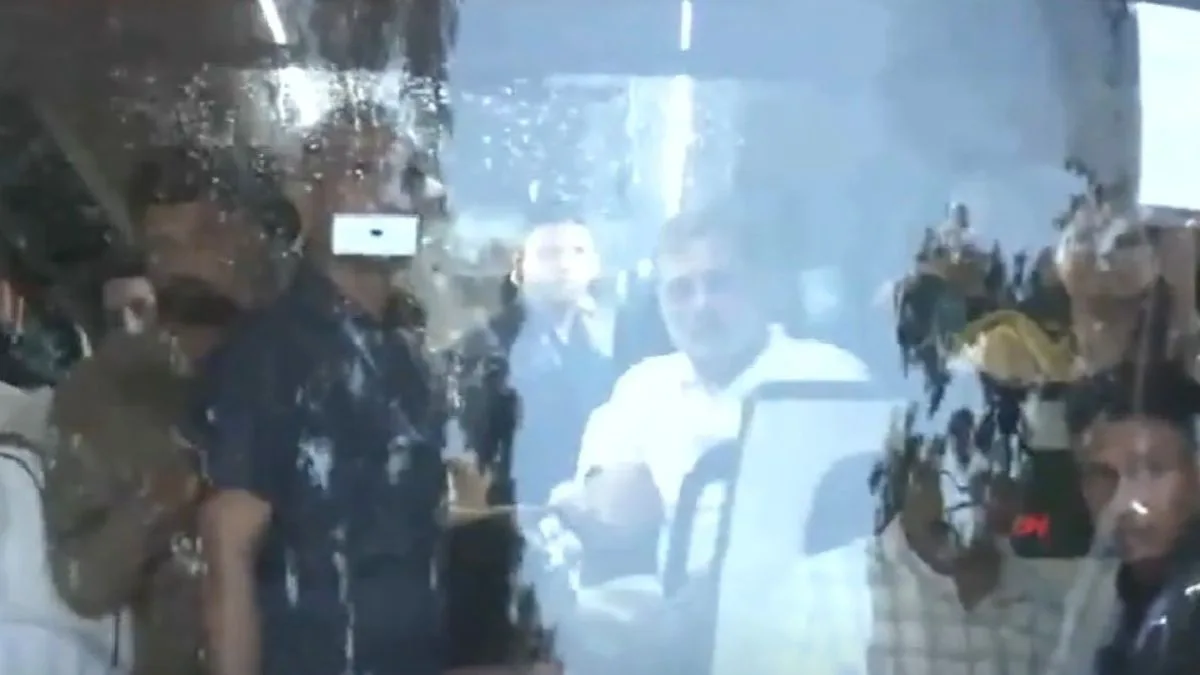
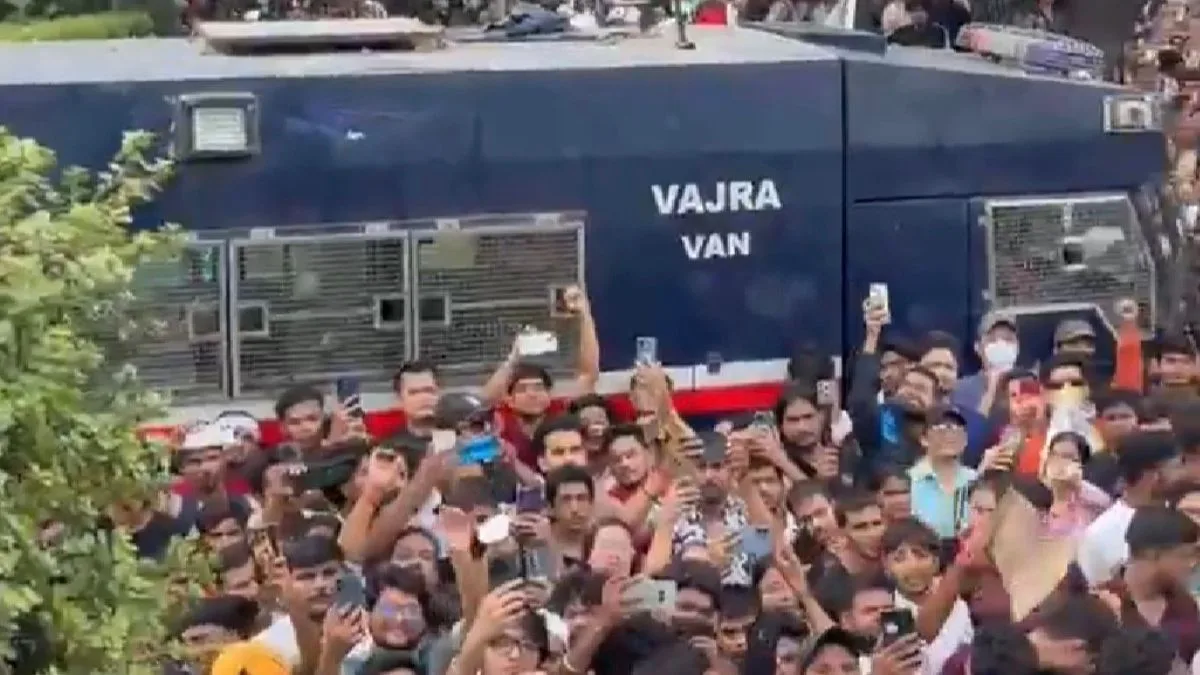
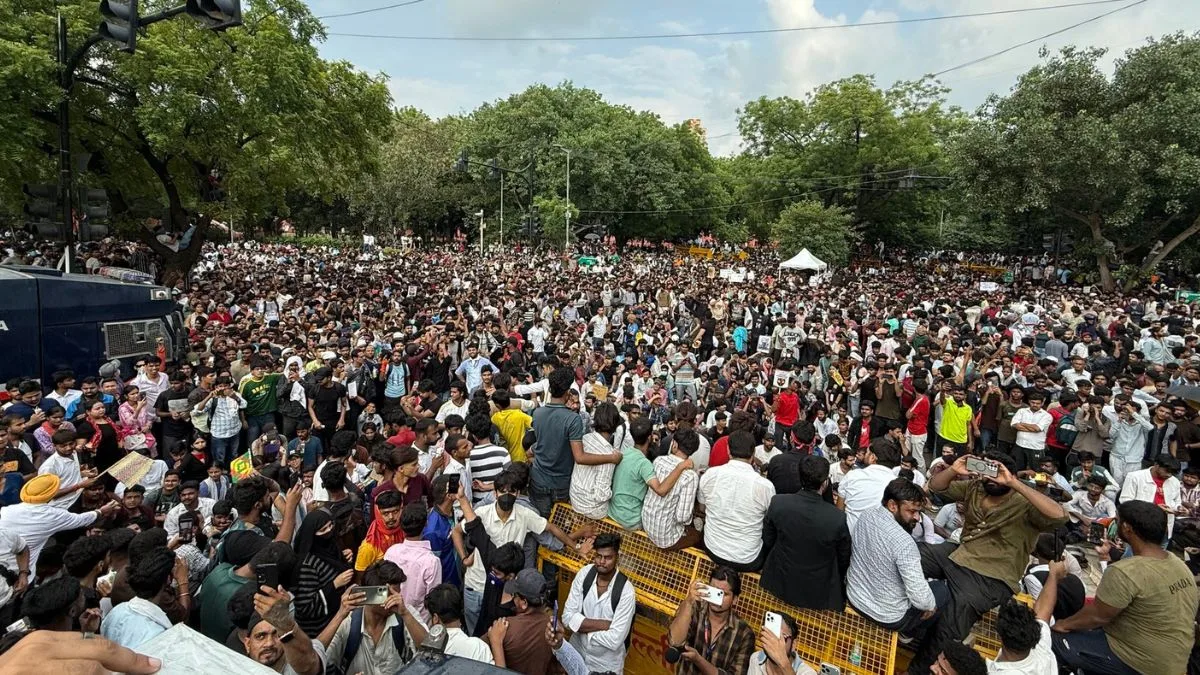
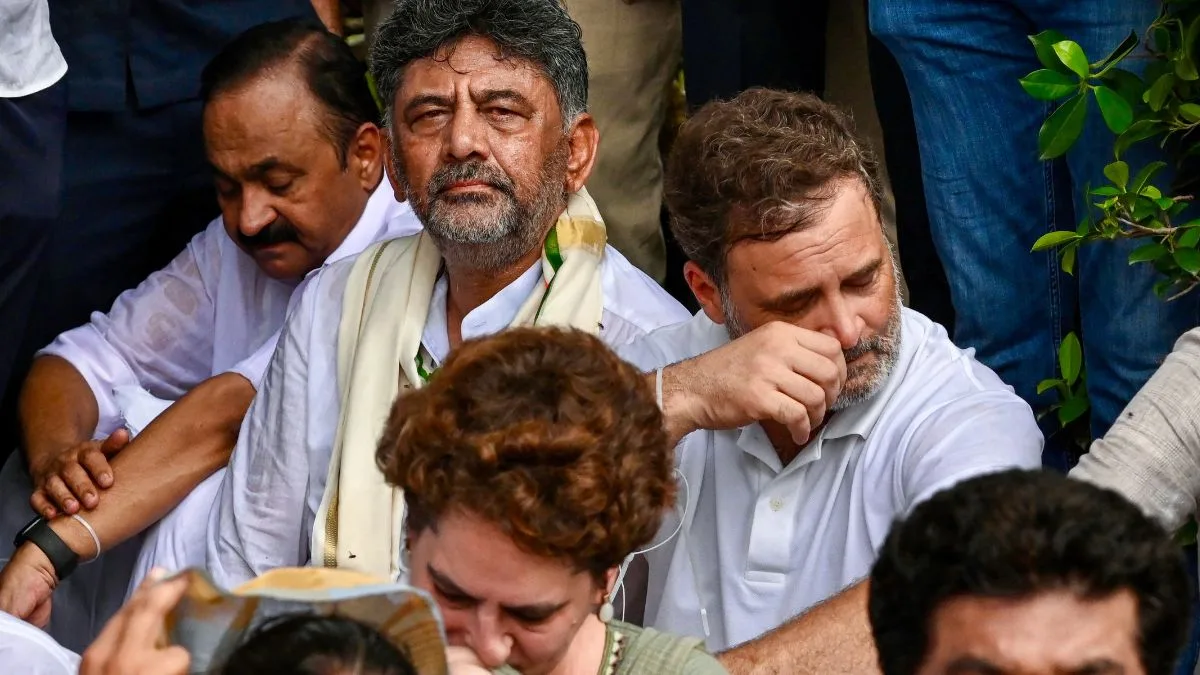
Tomatoes, eggs fly as BJP, Congress workers clash in Ranchi
A Congress march against the alleged NEET paper leak and police action on protesting students turned into a political street showdown in Ranchi on Thursday.
In a major step toward addressing the growing traffic and mobility challenges of Uttar Pradesh’s capital Lucknow, Sarojini Nagar BJP MLA Dr Rajeshwar Singh has submitted a 20-year Integrated Traffic Management and Urban Mobility Roadmap to Chief Minister Yogi Adityanath.




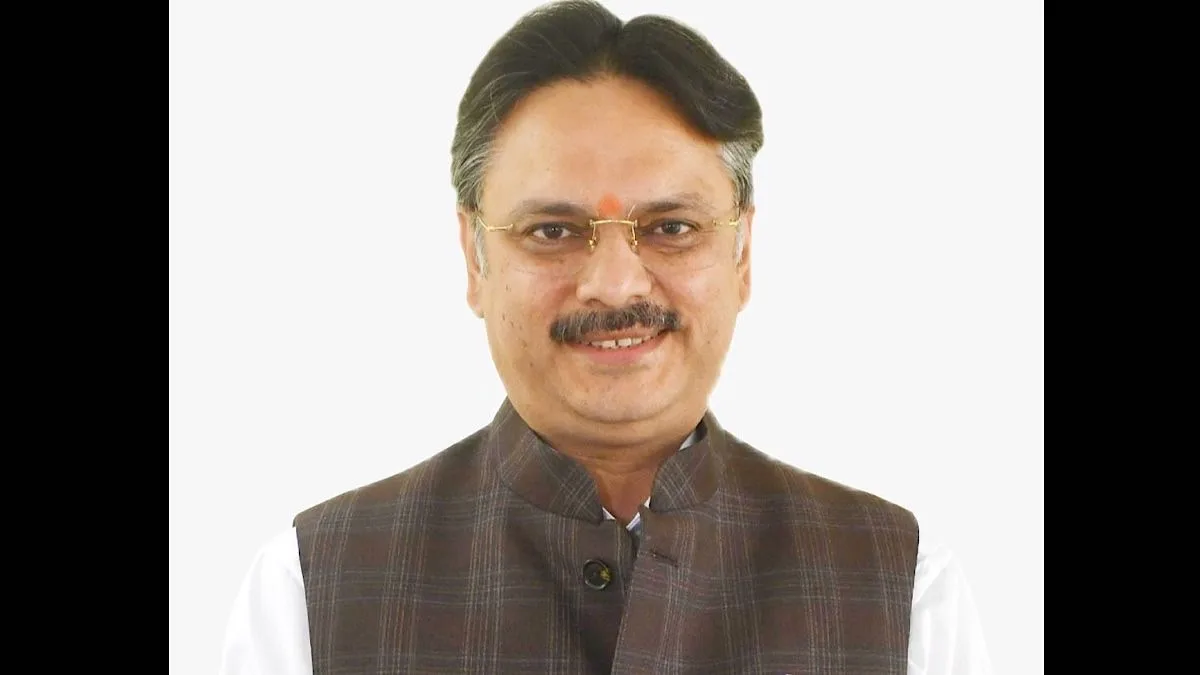
Photo:SNS
In a major step toward addressing the growing traffic and mobility challenges of Uttar Pradesh’s capital Lucknow, Sarojini Nagar BJP MLA Dr Rajeshwar Singh has submitted a 20-year Integrated Traffic Management and Urban Mobility Roadmap to Chief Minister Yogi Adityanath. He has proposed a long-term, technology-driven, and multi-departmental strategy to manage the city’s future traffic needs.
Describing the plan as a blueprint to transform Lucknow into a safe, well-organised, and seamlessly accessible metropolis, Dr Singh emphasised that traffic management must move beyond short-term enforcement measures and be developed as a coordinated, data-based public policy framework suited to the city’s rapid expansion.
Advertisement
Referring to VAHAN data, the proposal highlights that by 2025, Lucknow is expected to have around 3.18 million registered vehicles, with nearly 1.2 to 1.5 lakh new vehicles being added every year. This sharp rise, the proposal notes, has significantly increased traffic congestion, parking pressure, and the risk of road accidents, making long-term systemic planning essential.
Advertisement
A central recommendation of the roadmap is the formation of a Multi-Department Traffic Management Task Force, stressing that traffic governance should not remain limited to policing alone.
The proposed body would bring together the Traffic Police, Urban Development Department, Lucknow Development Authority, Municipal Corporation, Public Works Department, Transport Department, Metro authorities, and the Smart City Cell to ensure institutional coordination and faster execution of plans.
The proposal also calls for mandatory monthly review meetings of the task force to ensure decisions are data-driven, time-bound, and accountable, preventing projects from remaining confined to files and ensuring continuous monitoring and implementation.
The long-term roadmap prioritises the expansion of Metro and BRT networks, AI-based smart traffic signal systems, scientifically planned vending zones, permanent removal of illegal encroachments, pedestrian-friendly infrastructure, and the promotion of electric mobility and green transport as key pillars of modern urban mobility.
Speaking on the initiative, the former ED Joint Director on Sunday said that reactive measures are no longer sufficient given the rapid increase in vehicles, and that transforming Lucknow into a modern, disciplined, and traffic-ready capital requires integrated planning and multi-department coordination, which he described as essential for sustainable solutions and the city’s future readiness.
Advertisement