BMC warns fake housing beneficiaries of eviction, FIR
The houses were allotted through a transparent lottery conducted in the presence of all beneficiaries.
The second edition of the Swayamshree Conclave was held in Bhubaneswar on Wednesday, bringing together policymakers, development practitioners, industry leaders, civil society organisations and women’s collectives to deliberate on strategies for strengthening and scaling women-led livelihood models across Odisha.




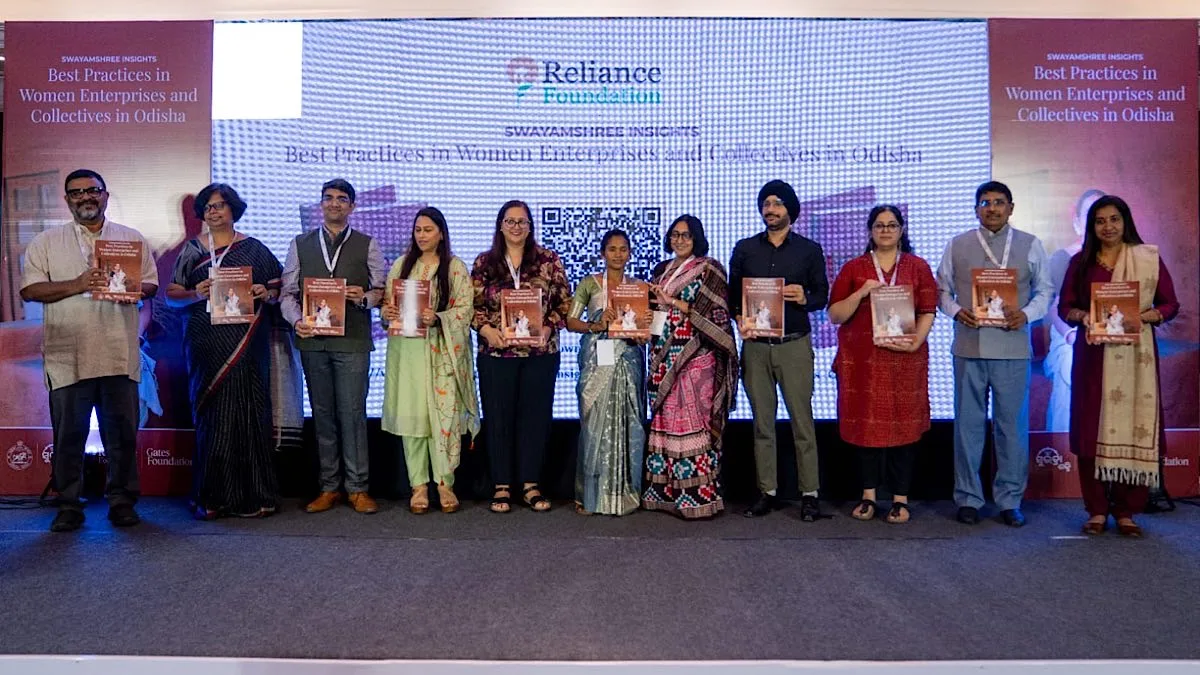
Photo:SNS
The second edition of the Swayamshree Conclave was held in Bhubaneswar on Wednesday, bringing together policymakers, development practitioners, industry leaders, civil society organisations and women’s collectives to deliberate on strategies for strengthening and scaling women-led livelihood models across Odisha.
Organised under the Swayamshree programme—a collaborative initiative of the Department of Mission Shakti, Reliance Foundation and the Gates Foundation—the conclave served as a platform to share field-level learnings, foster Public–Private–Community Partnerships (PPCPs), and explore pathways for expanding sustainable livelihood opportunities for women.
Advertisement
Speaking at the event, Jyotishankar Mohapatra, Additional Secretary, Department of Mission Shakti, underscored the importance of collaborative action in achieving large-scale socio-economic transformation.
Advertisement
“In a resource-constrained environment, collective efforts are essential for delivering meaningful outcomes. The learnings emerging from the Swayamshree programme offer valuable insights, and the government is keen to replicate successful models on a larger scale,” he said.
Highlighting the programme’s impact, N. Deepthi Reddy, Chief – Women Empowerment, Reliance Foundation, said Swayamshree has enabled more than 4.2 lakh women across seven districts of Odisha to transition from subsistence-based activities to enterprise-driven livelihoods.
She noted that women from diverse geographies—from the tribal hinterlands of Kandhamal to the handloom clusters of Bargarh—have adopted modern technologies, strengthened collective enterprises and gained improved access to markets. Through producer groups and institutional market linkages, women are increasingly emerging as entrepreneurs and community leaders, she added.
Saachi Bhalla, Deputy Director, Gender Equality, Gates Foundation, said the programme complements the national vision of creating “Lakhpati Didis” by building sustainable income opportunities for women through strategic partnerships among government agencies, philanthropy, the private sector and grassroots institutions.
A key highlight of the conclave was the launch of a compendium titled “Best Practices from Odisha for Strengthening Women’s Livelihoods.”
The compendium captures successful interventions across farm, off-farm and non-farm sectors, including paddy cultivation, vegetable farming, dairy, food processing, handloom, retail businesses and service-based enterprises. It is expected to serve as a practical resource for policymakers, development agencies and institutions seeking to replicate proven livelihood models.
An exhibition showcasing products developed by Self-Help Groups (SHGs) and Farmer Producer Organisations (FPOs) provided participants with a firsthand glimpse of the transformative impact of the programme.
As the Swayamshree initiative expands its footprint in Odisha, the conclave reinforced the importance of sustained collaboration among government, private sector, philanthropic organisations and community institutions in advancing women’s economic empowerment and building resilient, inclusive livelihood ecosystems across the state.
Advertisement