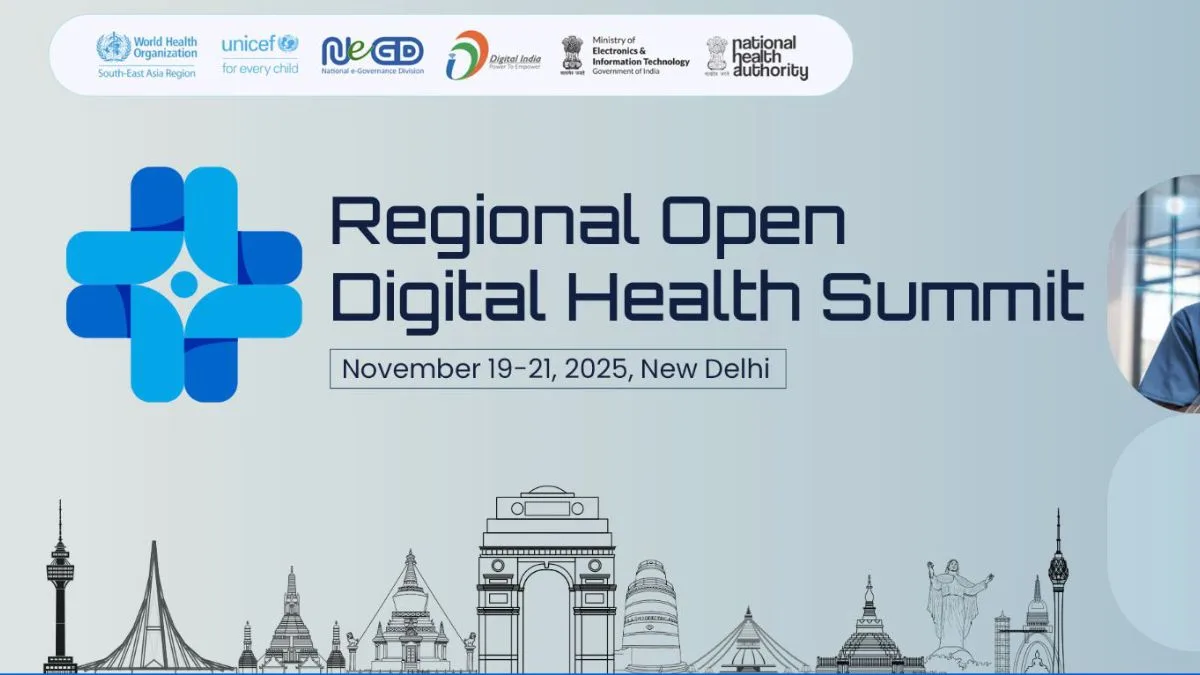
Putting health outcomes at the centre of digital transformation, the Regional Open Digital Health Summit 2025 (RODHS 2025) opened in the national capital on Wednesday with a clear message: stronger, interoperable digital systems are essential for achieving Universal Health Coverage (UHC) across South-East Asia.
At the inaugural session, speakers underscored that digital health must break institutional silos and prioritise equity, trust, and technical standards to deliver real improvements in care. “A joint governance model between the Ministry of Health and Family Welfare and Ministry of Electronics & IT is necessary to ensure that national systems like the Ayushman Bharat Digital Mission, CoWIN, Aadhaar and UPI remain secure and interoperable,” said Rajnish Kumar of the National e-Governance Division, framing collaboration as urgent for building robust health infrastructure.
Advertisement
WHO’s Manoj Jhalani stressed that digital platforms can strengthen regional health systems only if countries invest in technical capacity. Trust, consistency, and interoperability, he said, form the foundation for large-scale adoption of digital health tools. UNICEF highlighted that technology must ultimately serve communities, frontline health workers and children — especially the most vulnerable.
Speakers noted that India’s digital public infrastructure offers a template for how secure digital identity, payments and health data exchange can support resilient systems. The Health Ministry added that health outcomes depend on broader wellbeing factors, including sanitation, nutrition and social protection, and that digital platforms linking ministries can help close these gaps.
Technical sessions throughout the day highlighted consensus on moving from pilots to population-scale digital health systems. Experts from the region stressed that open standards, full-stack digital public infrastructure and data protection are vital for equitable scaling. Discussions on digital identity, AI-driven diagnostics, and generative AI showcased how countries are working to make health data interoperable and patient-centric.
The first day closed with a shared commitment: digital transformation must ultimately deliver better, safer and more accessible healthcare for everyone in the region.