CJP’s Parliament march loses its script at Jantar Mantar, splinters into scattered protests
Student groups and Opposition workers formed a sizeable crowd, but the promised procession towards Parliament never emerged as one organised march.
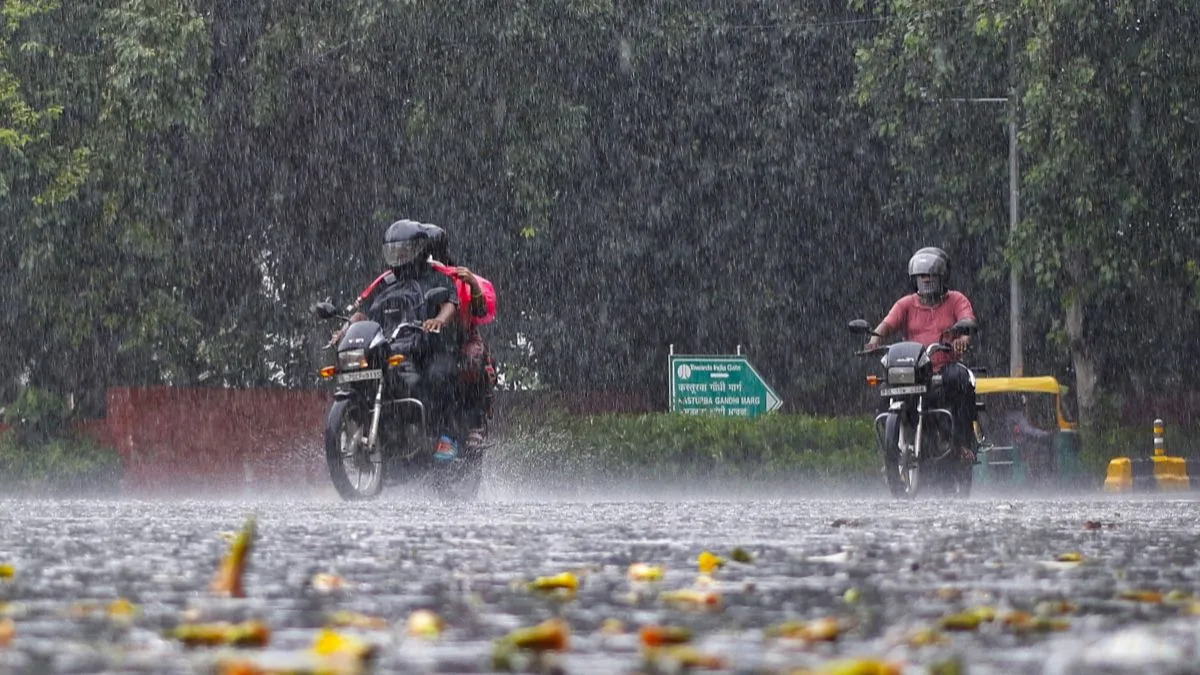
Delhi NCR receives heavy showers after a hot week, offering relief from heat and humidity. Light rain expected next two days; IMD issues yellow alert.




File Photo
After an unusually hot September week, Delhi and parts of the National Capital Region received heavy showers on Tuesday, bringing much-needed relief from the persistent heat and humidity.
Dark clouds gathered over the region in the morning, followed by an intense spell of rain in the afternoon that pulled down the mercury and offered residents a pleasant respite.
Advertisement
According to the India Meteorological Department (IMD), the city may see light rain or drizzle over the next two days, along with partly cloudy skies.
Advertisement
“We are giving the forecast of light rainfall in Delhi NCR from the last 2-3 days… We have given a yellow alert for Delhi NCR, with very light rainfall expected tomorrow. Over the next two days, light to moderate rainfall is likely to persist in northwest India…” IMD Scientist Naresh Kumar told a news agency.
Experts from the Met Department have attributed Tuesday’s rain to the trough from cyclonic circulation associated with low-pressure areas in northwest Rajasthan, which are likely to continue until October 2.
The forecast suggests maximum temperatures will hover around 34-35 degrees Celsius, while minimum temperatures will remain between 26-29 degrees Celsius. Skies will stay partly cloudy, with intermittent light rain or drizzle.
On Tuesday, Ayanagar recorded 72.6 mm of rainfall, placing it in the ‘heavy’ category, while most other weather stations reported ‘moderate’ showers. Rainfall levels included 52.9 mm at Ridge, 40.5 mm at Raj Ghat, 37.8 mm at Safdarjung, 36 mm at Pusa, 35 mm at Mayur Vihar, 29.8 mm at Lodhi Road, and 21.8 mm at Palam.
Despite the moderate rainfall reported across the city, rain caused traffic snarls and waterlogging in several areas, inconveniencing commuters during the morning rush hours.
Advertisement