The Supreme Court on Thursday declined to stay the ongoing Special Intensive Revision (SIR) of electoral rolls in Bihar ahead of the state assembly elections slated for November 2025, but asked the Election Commission of India (ECI) to consider accepting Aadhaar, ration cards, and voter ID cards as valid proof of identity.
A vacation Bench of Justice Sudhanshu Dhulia and Justice Joymalya Bagchi, while hearing a batch of petitions challenging the ECI’s June 24 directive, said the Commission must provide reasons if it chooses not to accept these widely held documents.
Advertisement
“After going through the documents, the ECI has pointed out that the list of documents for verification of voters includes 11 documents and is not exhaustive. Thus, in our opinion, it would be in the interest of justice if Aadhaar card, EPIC (voter ID), and ration card are included. It is for the ECI to still decide whether it wants to accept these documents. If not, it must give reasons,” the Bench stated.
Posting the matter for further hearing on July 28, the court granted the ECI time till July 21 to file its reply. The petitioners can file their rejoinder by July 28.
While noting that the petitioners had not pressed for an interim stay on the process, the court framed three key questions for adjudication which includes Whether the ECI has the power to conduct such a revision; Whether the procedure followed to exercise that power is legal and fair and whether the timeline, in light of impending elections, is adequate and just.
“We are prima facie of the opinion that there are three questions: Powers of ECI to conduct the process, the procedure to exercise the powers and the timeline which is very short and election due in November and notification will come in advance”, the vacation bench said in its order spelling out the issues on which the arguments will be advanced by both the sides.
The court questioned the rationale behind the exclusion of Aadhaar and EPIC from the list of acceptable identity proofs. “Suppose I want a caste certificate. I show my Aadhaar card and get it. So, Aadhaar is accepted there. But not here? This entire exercise is about identity,” Justice Dhulia remarked.
Justice Bagchi added, “Since Aadhaar is accepted for inclusion under Section 23, it should be included here as well. Your list includes documents like matriculation certificate—all identity related.”
Under the SIR, voters not included in the 2003 rolls must now furnish proof of citizenship. Those born after December 2004 must also provide documents of both parents, and if a parent is a foreign national, their passport and visa at the time of the applicant’s birth must be submitted.
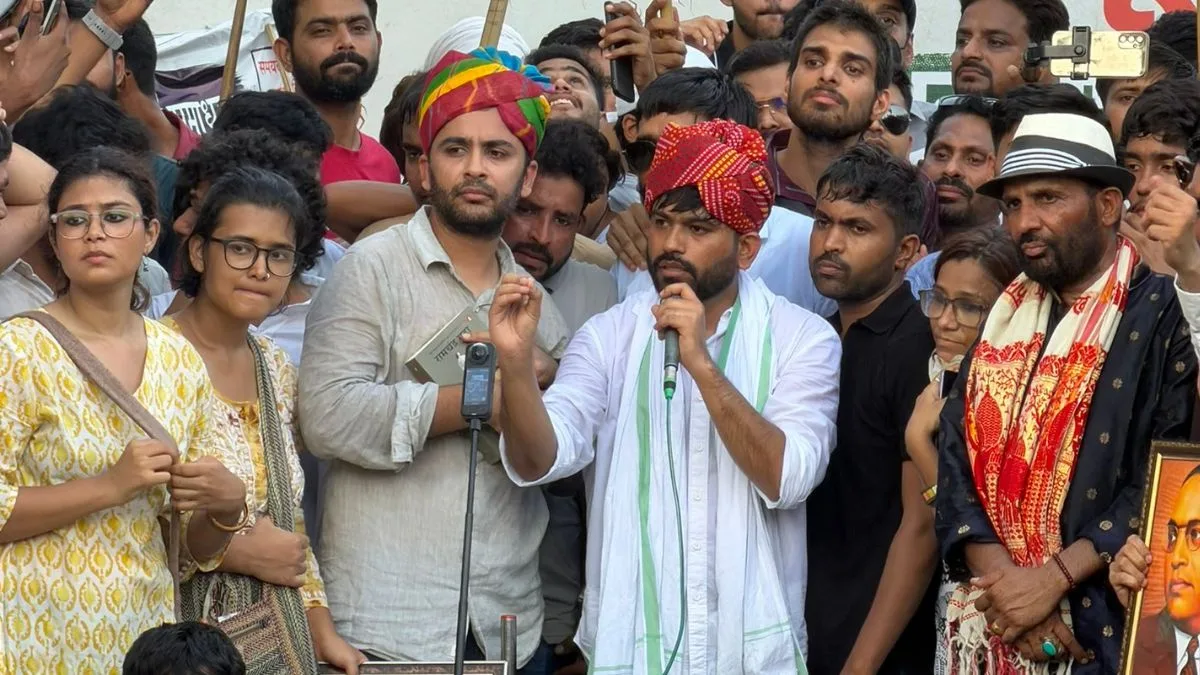
Petitioners, including NGOs the Association for Democratic Reforms (ADR), People’s Union for Civil Liberties (PUCL), and public figures like TMC MP Mahua Moitra, RJD MP Manoj Jha, and activist Yogendra Yadav, have argued that the directive violates Articles 14, 19, 21, 325, and 326 of the Constitution. They contend it also contravenes the Representation of the People Act, 1950 and Rule 21A of the Registration of Electors Rules, 1960.
The Court’s direction now puts the onus on the ECI to explain its stand if it chooses not to consider Aadhaar, voter ID, or ration cards as acceptable proof—documents already deeply embedded in the administrative machinery.