VHP demands probe into Opposition leaders’ allegations of Ram Mandir donation ‘theft’
Alok Kumar has demanded action against the Opposition leaders if the allegations are found to be false.
Alok Kumar, the international president of the Vishwa Hindu Parishad (VHP), in conversation with Ananya Dasgupta on the latest episode of ‘The Statesman Talk’ podcast.




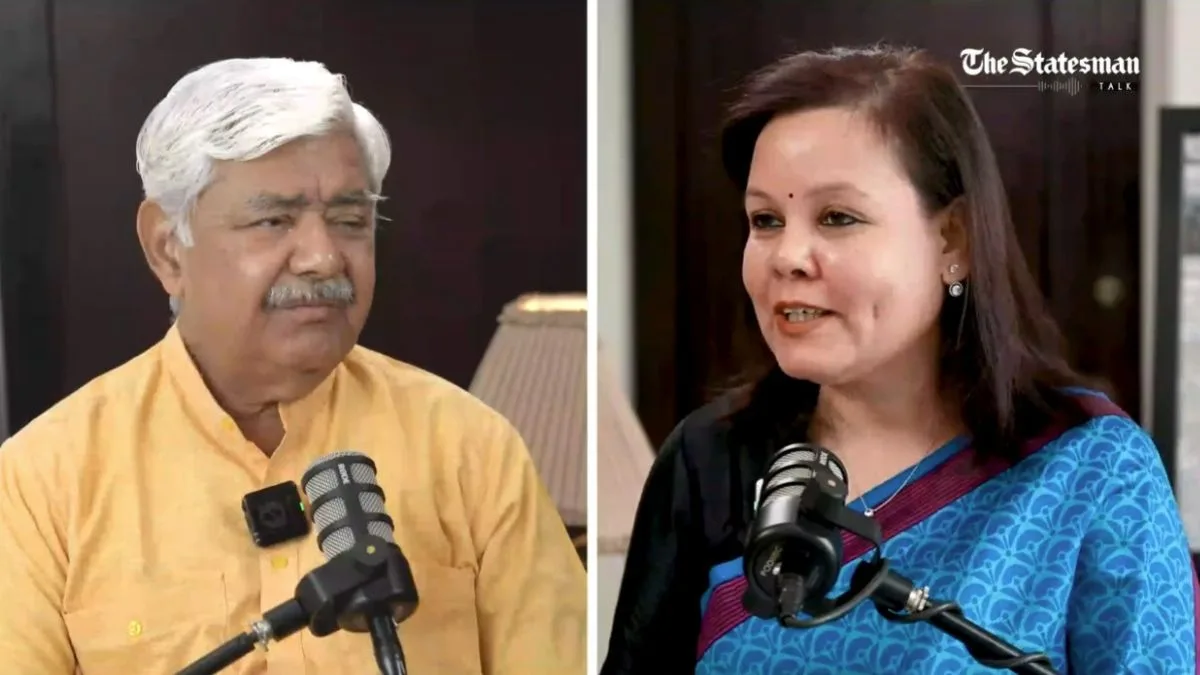
Alok Kumar, the international president of the Vishwa Hindu Parishad (VHP), in conversation with Ananya Dasgupta on the latest episode of ‘The Statesman Talk’ podcast.
Q: Sir, Ram Mandir is now a reality. Is the VHP’s original mission accomplished or are there things now still on your radar?
Advertisement
A: It was not the original mission. The VHP was established in 1964. We took up the Ram Mandir issue in 1984, 20 years later. So, we were not a single agenda organisation. But then, this has been one of the main projects for us. The structure, which was built to insult the Hindus, is now gone. There is now a magnificent temple, and to mark the completion of the temple on the 25th of this month, Hindus would assemble there, and the RSS chief and the Prime Minister would also be present. With the wishes of all Hindus, the saffron flag would be hoisted atop the temple.
Advertisement
The main agenda of the VHP is to ‘erect’ such a temple in the hearts of all Hindus, including the diaspora. For the Hindus of the world to unite, to live according to Dharma, to fashion their lives, thought and behaviour in accordance with the teachings of the Rama, Krishna, Buddha, and Guru Nanak; and to show the way to a happiness that stays and is eternal. The VHP would continue to tell all families to live a Hindu life and spend some time for God, for ‘gau raksha’, for Sanskrit, for Vedas, to stop love jihad and conversion, to strengthen our campaign for ‘ghar wapsi’, to maintain peace and tranquillity, and to have such a union which can defeat all the jihadi and other terrorist forces.
Q: You’ve raised the issue about bringing temples out of government control. Why does that matter? And what’s your action plan to make that happen?
A: The issue is about the inequity of the matter. Studies done by the British in relation to Punjab, Bengal and Tamil Nadu revealed that that in every temple, there used to be a gurukul and a gaushala. Social, cultural and religious events were held in the precincts of the temples. Family celebrations and prayer meetings were held. Temples were the lifeline of our social life. However, the Britishers started to take over them to make them ‘dead’, to turn them into spaces meant only for personal worship. Regarding the money received by temples; for example, in Tamil Nadu, 12 per cent of all offerings go to the government coffers in the name of administrative expenses. Temples also have to pay to the government audit fees. Most temples also have to appoint a CEO who is mostly a retired babu or a politician; and his emoluments, pay and perks are also paid from the temple funds. When the government does not control a gurudwara, a mosque or a church, then why should it get enriched by funds belonging to temples? So that is why, the VHP has declared that the time has come to take back temples from the government. For this reason, we will meet all the Chief Ministers this year to press upon this demand. If we are unable to meet CMs, then we will go to the Governors. We will also hold big public meetings of elites across the country to get more support for the cause. This is for 2025. And in the next couple of years, we hope the mandirs would come back to the Hindus.
Q: Several states are also now bringing anti-conversion laws and pushing for the Uniform Civil Code. From that perspective, what’s working and where is more action needed?
A: When we talk about anti-conversion, we mean the conversion that is brought about by promises, greed, deceit or fear. Those conversions are not by change of consciousness, but are brought about by external forces without any internal change and are fraudulent. We do believe that there are organized efforts, particularly by the Church, where allurement is the cause for conversion. In a secular country, it is necessary to have laws to stop such conversion. We have actively engaged with governments in the drafting of such laws, and we are helping governments in their implementation as well. We have also trained our workers to maintain vigil and ensure such laws are implemented. We have deployed workers in 8,500 blocks in the country, which are sensitive to conversion, to focus on stopping the practice, tackle love jihad, and bring back those who had left Hinduism in this generation or in the last few generations.
Q: You are also very vocal about demographic changes in border districts as well as there are concerns about infiltration. How seriously is the VHP treating this issue and what are you doing on the ground?
A: We were the ones who started this campaign, and not just in border areas. Even in Delhi, there is a huge population of illegal migrants from Bangladesh. They have changed the demography, and they try to change the results of elections. They consume resources and hinder development without having any rights. So, we keep a vigil, liaison with the government, and tell them these are the people who have come from Bangladesh and they should be sent back.
Q: There are concerns about Hindus who face attacks and are targeted in Bangladesh. Where and how do you think either the government or the VHP can step in?
A: Well, we did it very effectively. During earlier such instances of violence against them, the Hindus did not react and accepted it as their fate. This time, after the ouster of PM Sheikh Hasina, the VHP and the rest of the Hindu Samaj held demonstrations in more than 100 countries, and also met the heads of the state and government. We impressed upon them to take all possible diplomatic measures, including the stopping of aid, until Bangladesh restores law and order and safeguards the lives of Hindus. The VHP has active branches in Bangladesh and their members protested on the streets of Dhaka, holding saffron flags and demanding security, equal rights, and prosperity. Not for a day, but for three days. It had an impact and Muhammad Yunus told the press that the violence against Hindus has to stop. And when Hindus wanted to meet him, he said he would himself will come to the Dhakeshwari Temple. Also, our Foreign Secretary visited Dhaka and said this is not an internal issue of Bangladesh, but this concerns the whole of humanity. So, I am satisfied that this time the Hindus resisted and did not come to India as refugees. They asserted their right that they are Bangladeshis and they will stay there.
Q: You must be working in many other countries of the world as well, and must be interacting with a lot of young generation, Indian-origin Hindu kids who are growing up in the US, the UK and Australia. What do you think they forget about their roots and how are you addressing that?
A: In the last few years, there has been a revival of interest in younger generation of Indian-origin Hindus to understand their roots. They meet the gurus who visit their countries, and unite as Hindus. The VHP is present in about 100 countries, is very active in about 40, and organises weekly programmes for the kids and the youngsters. They come, meet, pray and discuss about Hindu values. We have also started an institute in Ayodhya to train purohits who can join temples in other countries. Some learn English, some computer and others learn musical instruments so that they can go to those countries and connect with the youngsters in their language, which is mostly English, sing bhajans, and answer their questions. This creates interest and curiosity among the younger generation people, and this is showing results.
Q: If any youngster in any of these countries wants to join the VHP, where do they start?
A: They are all active on social media, they can find out about us, visit our website and register. Someone from the VHP will contact them and take them into our fold.
Q: Let’s talk about now Pahalgam, where Hindus were targeted. The terrorists killed Hindus in the heart of India and Kashmir. What are you doing to spread this message against terror across the world?
A: The Pahalgam attack and the Delhi blast, these are jihadi activities, and these emanate from a certain ideology. I call it political Islam. An expansionist divides the world into two sections – Darul Islam (House of Islam) and Darul Harb (House of War). Muslims are one category and the rest are another category. And those in the other category have to be brought into the first category. For this purpose, violence is right for them. A jihadi is ready for all punishments. It is an ideological battle, and this ideological battle has to be fought ideologically – to understand what Islam is, to point out what is out-of-date in it, to point out which portions in it are anathema to democratic values, to liberties, and to freedom of speech and expression.
Q: What to you is that one simple Hindu value that can heal the world amidst this divisiveness globally?
A: Well, unity amongst diversity is a basic Hindu thought. We are not the rulers of nature, but a part of it. Not only humans, but all living species and the entire nature, everything is divine. To understand this, to feel this unity, simultaneously creating our own individuality and identity, is being Hindu. And spreading this to the world is a trust that has been bestowed upon Hindus. We are trying to execute that trust.
Q: You must be traveling across India and meeting a lot of youngsters. What’s the one most frequently asked question?
A: They are now aware of their Hindu identity, and they ask me about it. They ask me about the dangers of jihad. They ask what role can they play to mitigate the problems?. They are eager to know about Hinduism.
Q: Since we are talking about change and we are talking right after the Bihar election results, I wonder what is your view on the way this verdict played out and whether you think that this was finally a vote solely for development.
A: There are several things. Development is one, the rise of the women power is another. When a group actively pursues Muslims as a vote bank, it simultaneously creates a Hindu vote bank. It happened in Maharashtra and it has happened in Bihar. They thought all Muslims, and the people from the candidate’s caste would vote for them. And this, in combination with some additional votes, would help win them the election. It does not happen this way now, even in the constituencies where Muslims constitute more than 40 per cent. It is not Lalu’s party which is the main winner, but it was Owaisi. Earlier, there was a Muslim veto on the result of elections. They held the balance. That veto has gone away, they do not control the results now. Maybe a time will come when we all will vote as Indians without being a religious vote bank.
Q: What’s the nature of the work that the VHP is doing internationally? Are you building temples?
A: Building temples is not one of our main activity. We work with people in existing temples and other places. We talk to them about values, about the need to remain united. In all countries, Hindus have formed many associations based on the state to which they belong. We tell them to keep those running, but also unite as Hindus. And we are succeeding in that.
Advertisement