ECI holds first All-India Media Conference to enhance understanding of electoral process
ECI holds first All-India Media Conference to enhance understanding of electoral process
Chief Election Commissioner Gyanesh Kumar on Sunday announced the schedule for Assembly elections in four states — West Bengal, Tamil Nadu, Assam, and Kerala — and the Union Territory of Puducherry, assuring “inducement-free and violence-free” polls while stressing the importance of “pure electoral rolls”.




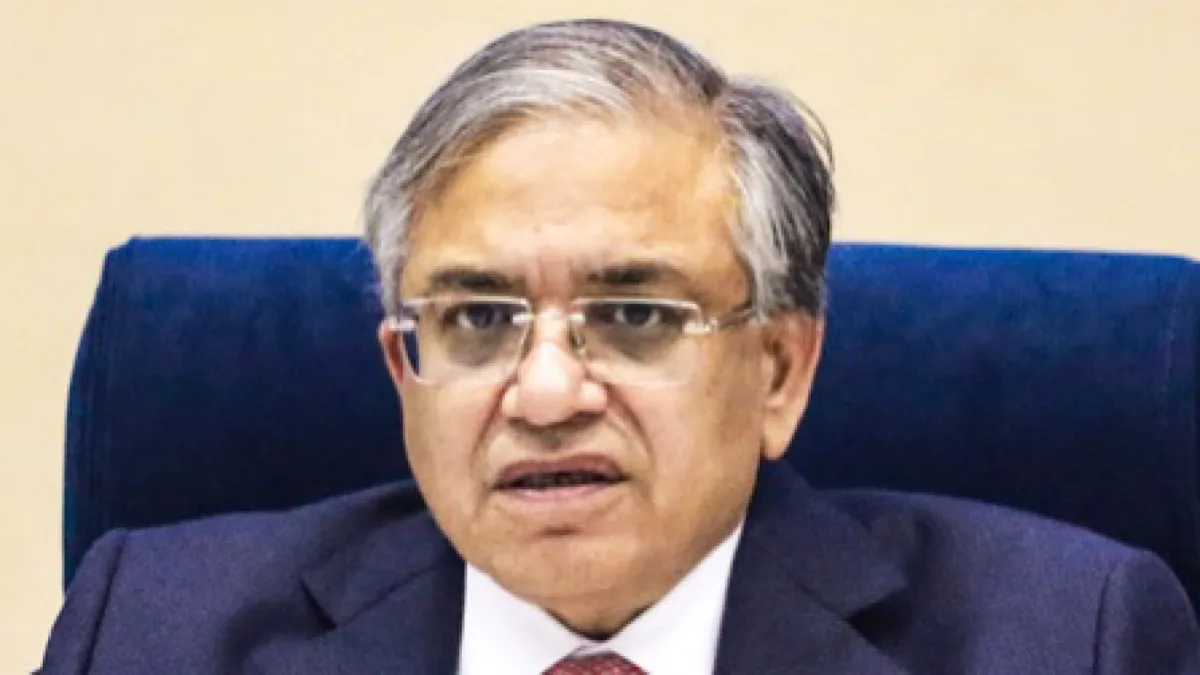
(Photo: IANS/Qamar Sibtain)
Chief Election Commissioner Gyanesh Kumar on Sunday announced the
schedule for Assembly elections in four states — West Bengal, Tamil
Nadu, Assam, and Kerala — and the Union Territory of Puducherry,
assuring “inducement-free and violence-free” polls while stressing the
importance of “pure electoral rolls”. Describing them as the bedrock
of any democracy, Kumar said the Special Intensive Revision (SIR) of
electoral rolls conducted under Article 326 of the Constitution
ensures that no eligible voter is excluded and no ineligible person is
included.
“The Election Commission of India is constitutionally bound by Article
326 to include electors above 18 years of age who are citizens of
India and ordinarily resident in the concerned assembly constituency.
The Commission undertakes this responsibility through the Special
Intensive Revision. With regard to political statements made by
leaders or parties, the Commission does not wish to engage in such
dialogues,” he said, addressing the media.
Advertisement
West Bengal will go to the polls in two phases, on April 23 and April
29. The other states and the Union Territory will have single-phase
elections. Assam, Kerala, and Puducherry will vote on April 9, and
Tamil Nadu on April 23. Kumar said the counting of votes for all 824
seats across four states and one Union Territory will be on May 4. As
many as 17.4 crore voters are eligible to participate to elect 824
MLAs at 2.19 lakh polling stations in these four states and one UT.
Advertisement
Kumar said clear directions had been issued to enforcement agencies to
ensure that the elections are conducted in a free, fair and peaceful
manner. District collectors and superintendents of police have been
instructed to act with complete impartiality and strictly enforce the
rule of law. Election observers will visit the poll-bound states, and
their details will be made public. Authorities have also been directed
to monitor social media closely to curb the spread of fake news and
take necessary action where required.
Regarding the decision to conduct the West Bengal election in just two
phases — down from eight phases in 2021 — Kumar said the Commission
held detailed deliberations before finalising the schedule. “In our
considered opinion, it was necessary to reduce the number of phases to
a level that is administratively feasible and convenient for voters
and officials,” he said.
On the issue of police officers allegedly involved in violence during
previous elections, the CEC said the Commission had sought details and
would take action in accordance with the law.
Regarding the supplementary electoral list, Kumar said that, in
accordance with Supreme Court directions, judicial officers working
under the supervision of the Calcutta High Court would prepare the
list. Names included in the supplementary list would be added to the
existing electoral rolls as and when they are finalised.
While for the BJP, the contests are an opportunity to consolidate
power in Assam and expand further beyond the Hindi heartland, for
opposition parties, these elections are a do-or-die.
For the INDIA bloc, the stakes are the highest given that two key
players — the TMC and the DMK — are in power in West Bengal and Tamil
Nadu, respectively. The states have sent a significant number of MPs
to the Lok Sabha and the results can influence the future trajectory
of the Opposition alliance. The elections will be specifically watched
for the three opposition chief ministers — Mamata Banerjee in West
Bengal, M K Stalin in Tamil Nadu and Pinarayi Vijyan in Kerala. In
Tamil Nadu, it is also an important contest for Edappadi K
Palaniswami-led AIADMK which is in alliance with the BJP.
As regards policy decisions announced by state governments just before
the Model Code of Conduct came into effect, Kumar said in a democratic
system, governments are free to take policy decisions in their wisdom,
however, once the Model Code of Conduct (MCC) is in force, any
decision that could influence the electoral outcome or serve as
inducement to voters is prohibited. “The Election Commission will not
tolerate political violence or inducements to influence voters and
will take the strictest action against those responsible,” he said.
By-elections in Goa, Karnataka, Gujarat and Maharashtra will also be
held alongside.
Advertisement