Delhi govt doubles parking charges under GRAP 3, 4 to discourage use of private vehicles
The decision comes to counter the situation of air pollution in the national capital, with the Air Quality Index (AQI) level at 324 at 7 pm.
As Himalayan glacial lakes pose a threat, the National Green Tribunal (NGT) has issued a notice to the National Institute of Hydrology (NIH) for suggestions and remedial measures.




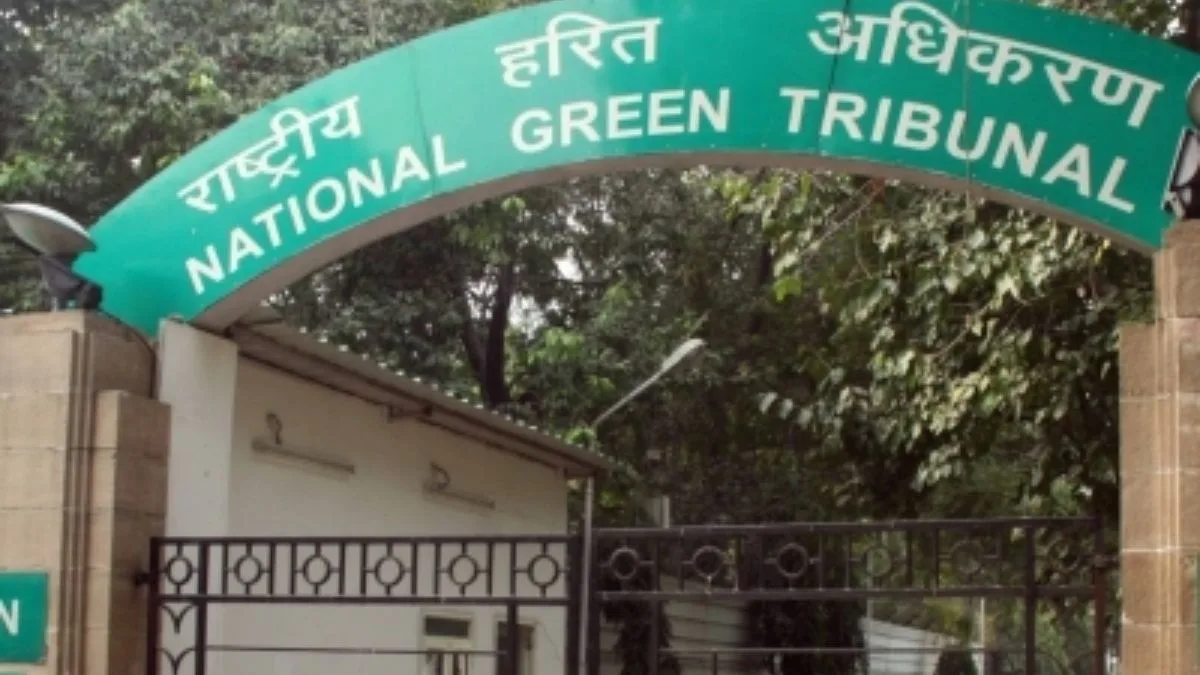
Photo: IANS
As Himalayan glacial lakes pose a threat, the National Green Tribunal (NGT) has issued a notice to the National Institute of Hydrology (NIH) for suggestions and remedial measures.
The Tribunal is considering the issues of melting glaciers, increasing the size of glacier lakes, and the danger of their overflowing or bursting, as well as the consequential effects.
Advertisement
Meanwhile, the Central Water Commission (CWC) has informed the National Green Tribunal (NGT) that it is monitoring 100 glacial lakes in the country of size greater than 10 hectares, out of which 34 exhibit an increasing trend, and 20 show a decreasing trend. There is no change in the 44 glacial lakes.
Advertisement
Also, there are 67 dams located on the path of these 100 glacial lakes.
Sikkim has the highest number of glacial lakes at 42, followed by 15 each in Ladakh and Jammu and Kashmir. There are 10 glacial lakes in Himachal Pradesh, and nine each are located in Uttarakhand and Arunachal Pradesh.
Earlier, the NGT had taken a suo motu notice of newspaper reports regarding glacial lakes and had asked CWC to file a reply.
Out of 42 lakes in Sikkim, 15 are showing an increasing trend, 10 are reflecting a decreasing trend, while no change is recorded in 17 lakes. In the case of Himachal Pradesh, six are showing an increasing trend, and one is showing a decreasing trend. In the remaining three, there is no change.
Five lakes in Jammu and Kashmir, four in Ladakh, one in Uttarakhand, and three in Arunachal Pradesh are showing an increasing trend.
The CWC has been conducting trend analysis of the water spread from these 100 glacial lakes using monthly monitoring data since 2011. It has prepared the state-wise flow path of these glacial lakes. The locations of major water resource projects and existing CWC hydrological observation stations in the vicinity have been mapped to facilitate visualization of the potential impact in the event of Glacial Lake Outburst Flood (GLOF) events, the CWC informed the NGT.
It has further stated that it has finalised the Criteria for Risk Indexing of Glacial Lakes, offering a structured approach for identifying and ranking these lakes based on their likelihood of failure and the potential damage they could cause in the event of GLOF.
It has been added that this has been done by evaluating key factors such as the size of the glacial lake, the change in size of the glacial lake, the stability of the side slope, the proximity to other glacial lakes, as well as considering downstream vulnerabilities like habitation, infrastructures like dams, bridges, etc.
When the criteria are applied to the glacial lakes, one in Sikkim falls in Category 1, while 16 in Category 2, with four in HP and 12 in Sikkim.
Twenty-nine lakes fall in Category 3, with four in HP, 11 in Sikkim, one in Arunachal Pradesh, three in Uttarakhand, eight in J&K, and two in Ladakh
Advertisement