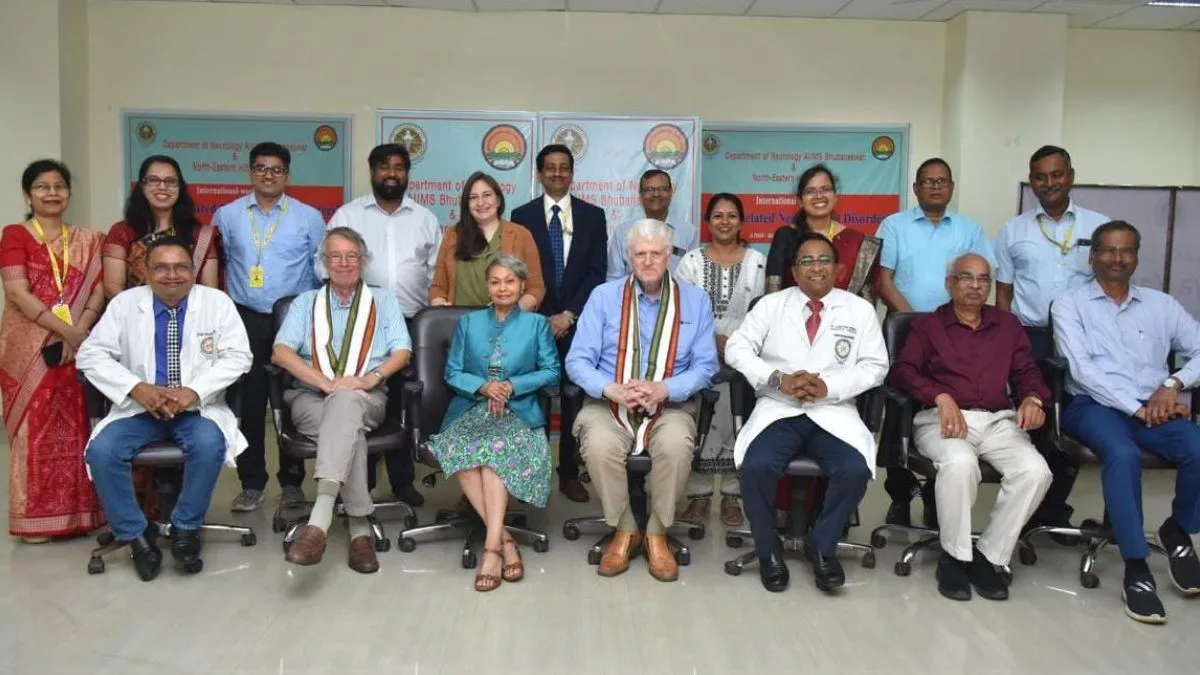
Scientists have identified BMAA, a neurotoxin produced by various microorganisms, in several species of the ancient cycad plant found in the forests of Odisha, raising alarms as certain segments of the local population continue ancestral traditions of consuming cycad plant products, such as pitha, as part of their diet and rituals, eminent researchers speaking at a workshop organized by AIIMS-Bhubaneswar said.
To address this burning query, a distinguished group of national and international scientists and medical experts convened in an international workshop titled “Cycad-Related Neurological Disorders: A Multi-Dimensional Approach to Its Remediation”.
Advertisement
The event was jointly organized by the Department of Neurology, AIIMS Bhubaneswar, and the North-Eastern Hill University (NEHU), Shillong.
The workshop highlighted the serious health risks associated with Cycads, an ancient plant species that coexisted with dinosaurs for over 300 million years. Often used today as ornamental flora, cycad species contain potent toxins, including Cycacin, BMAA (β-N-methylamino-L-alanine), and MAM (methylazoxymethanol). These toxins have been strongly associated with debilitating neurodegenerative diseases such as Parkinsonism, motor neuron disease, and dementia in other global regions, notably the Guam peninsula in the USA and the Kii peninsula in Japan, where the plant has been an indigenous part of traditional diets.
Renowned neuroscientist Prof. Peter S. Spencer, a pioneer in cycad neurotoxicology, and Prof. Valerie S. Palmer, both from Oregon Health & Science University, Portland, Oregon, shared their extensive experience from Guam and the Kii peninsula studies.
Besides the panel, which took part in the workshop, also included Prof. Jacques Reis, former Professor of Neurology, University of Strasbourg, France; Dr. Rajarshi Majumder and Dr. Jessica Pasqua from the University of California, Los Angeles; and national experts, including Prof. Manjari Tripathi, Head, Neurology Department, AIIMS, New Delhi.
As a crucial component of the workshop, experts conducted field visits to the villages of Dhuannali in the Khordha district and Gangamunda, Suaginali of Kamakhyanagar in the Dhenkanal district. In these areas, local tribal populations remain largely dependent on the Cycas plant (known locally as Veru; Odia name Aruguna) as a traditional food source.
Experts engaged directly with villagers, patients, and local healthcare providers to understand the potential neurological and related health problems arising from the consumption of cycad seeds.
The workshop concluded with a commitment to draw up a clear roadmap for advancing translational research, enhancing community awareness, and fostering interdisciplinary collaboration aimed at understanding and mitigating the significant health risks associated with cycad consumption in the region.