CJP’s Parliament march loses its script at Jantar Mantar, splinters into scattered protests
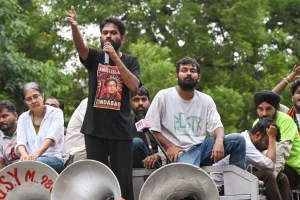
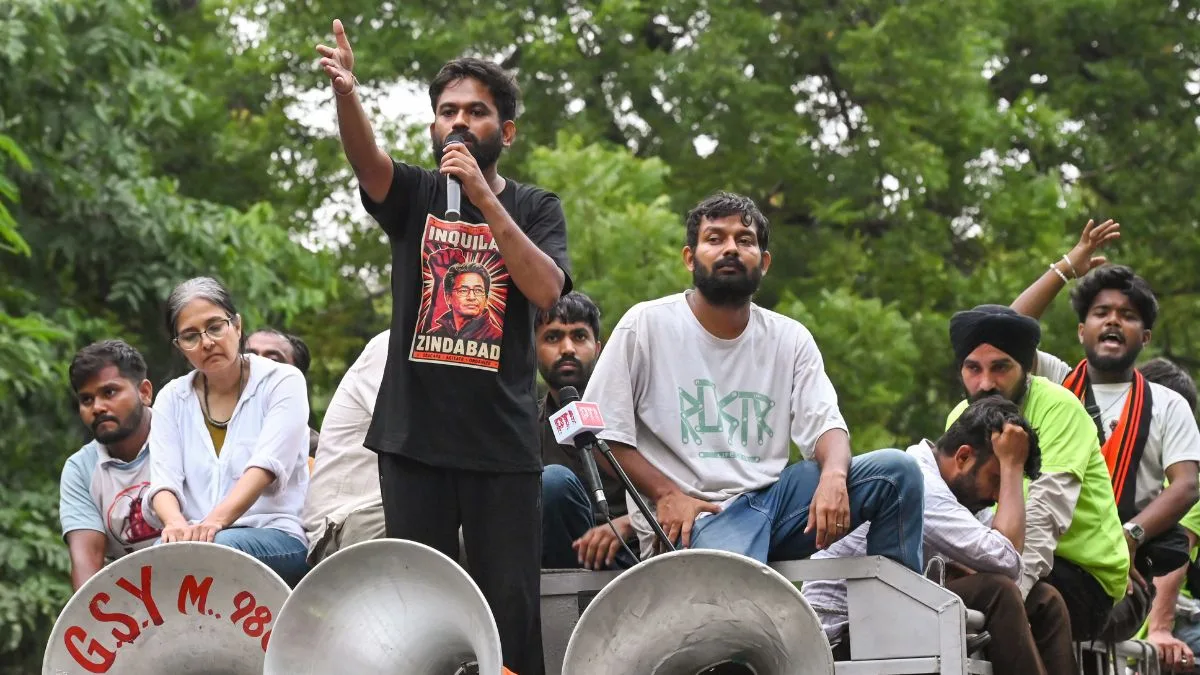
Student groups and Opposition workers formed a sizeable crowd, but the promised procession towards Parliament never emerged as one organised march.
During a session on Operation Sindoor at the ongoing United Nations Troop Contributing Countries (UNTCC) Chief’s Conclave 2025 here, he said the actions carried out by Munir and his army were to revive their reputation.




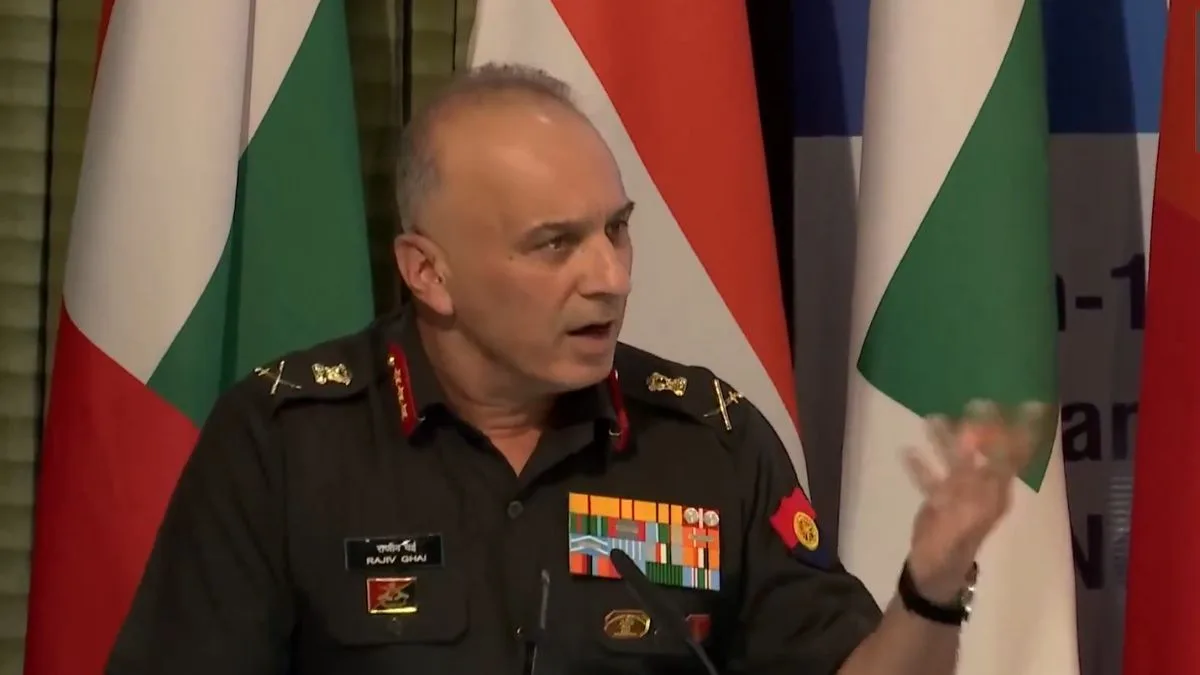
Screengrab: X/@ANI
Taking a sharp swipe at Pakistan Army chief Field Marshal Asim Munir in the wake of the Pahalgam terror attack, former Director General of Military Operations Lt Gen Rajiv on Tuesday accused him of acting under “immense duress” to salvage his declining image.
During a session on Operation Sindoor at the ongoing United Nations Troop Contributing Countries (UNTCC) Chief’s Conclave 2025 here, he said the actions carried out by Munir and his army were to revive their reputation.
Advertisement
“If you want to carry out an analysis of what happened and why it happened… The fact that the Pakistan army and its chief were under duress at the time it happened is known to everybody. And therefore, there was a need for him to revive not only his image, but that of the Pak Army itself.
Advertisement
“And I think the best way and the only way that is known to them was to do what they did, as cowardly as it may have been,” he remarked, while outlining India’s response to avenge the Pahalgam killings.
“And the inevitability of the Indian response, I think was very much there, if you want to, if you were going to carry out this kind of an action in the manner that it was perpetrated.
“And of course, it does not take much to claim victory, especially when there has not been kinetic contact. And that was more a result, because we were very clear as to what we were after,” he added.
Detailing the history of the turbulent times in Jammu and Kashmir, Ghai said that the problem of cross- border sponsored terrorism started in the 1980s.
“Since then, we have witnessed over 28,000 terror incidents. Since the 1990s, more than 100,000 people from minority communities have been forced to leave Jammu and Kashmir over 60,000 families displaced. Around 15,000 innocent civilians and more than 3,000 security personnel have been killed, and the source of this violence is well known,” he said.
Speaking about the Pahalgam attack, Ghai said that the victims were singled out based on their religion and killed point blank in front of their families.
“There were immediate claimers; this was ‘glory.’ However, when the Kashmir Resistance Front initially claimed the attack, they realised matters had possibly gone beyond their control and immediately withdrew,” he said.
Ghai said that between April 22 and the night of May 6–7, the actions had been continuously evolving and that they had been prioritising their targets. He added that inter-service coordination and intelligence sharing had played a key role in identifying and neutralising high-value targets.
He also mentioned that precautionary deployments had been made along the borders to deter further infiltrations and that the final selection of targets had been carried out after scrutinising a large number of options.
He stressed that Operation Sindoor was not a sudden development, recalling a long history of provocation.
“After the 2001 attack on our Parliament, we were compelled to mobilise our forces along the border and remained there for almost a year. Yet, wiser counsel prevailed and we did not escalate. In 2016, our personnel were barbarically ambushed and their tents set on fire; we responded with action near the LoC.
“In 2019, we conducted a precision strike across the LoC and limited it to that. But this time, the sheer intensity and magnitude of the events demanded a stronger response,” he added.
Advertisement