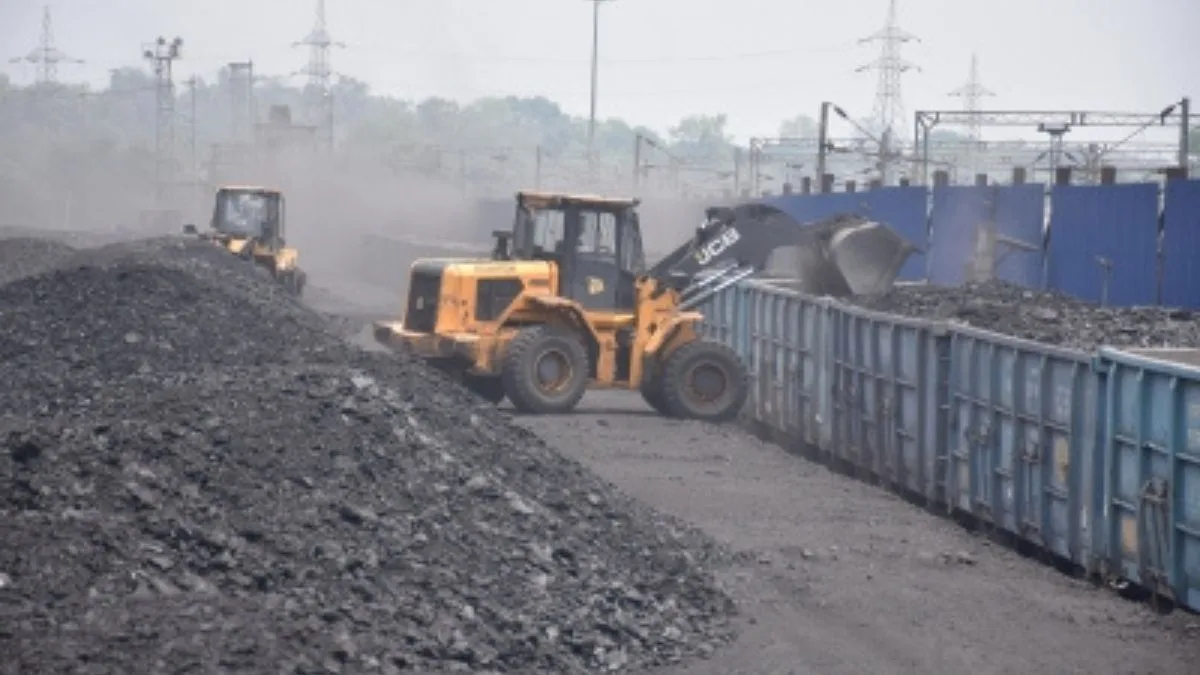
After a 10-year-long ban, Meghalaya has officially resumed coal mining under a strict scientific and regulated framework, marking what officials call a turning point for the state’s mineral economy.
The resumption comes after the National Green Tribunal (NGT) imposed a sweeping ban on April 17, 2014, citing severe environmental degradation, water contamination, and dangerous working conditions from the infamous “rat-hole” mining method.
Advertisement
The tribunal had found that unregulated mining violated multiple environmental laws, damaged fragile ecosystems, and posed grave risks to miners and nearby communities.
Two coal blocks — Saryngkham A in East Jaintia Hills district and Pyndengshahlang in West Khasi Hills district — are the first to begin operations under the new regime.
Both projects received statutory approvals from the Ministry of Coal after undergoing detailed environmental impact assessments and safety compliance checks.
According to the ministry, Saryngkham A was granted permission to open on March 10, 2025, and began production on June 3, 2025. Pyndengshahlang followed, receiving clearance on May 2, 2025, and commencing production on June 5, 2025.
“This milestone underscores the Ministry’s commitment to promoting legal, safe, and scientific mining practices while enhancing the North-East’s contribution to India’s energy needs,” according to a statement.
Officials stressed that the mining process will now adhere to stringent environmental safeguards, proper waste disposal systems, and mechanised extraction techniques to replace hazardous manual labour.
The decision to restart mining is the result of years of litigation, policy drafting, and coordination between the state and central governments to create a legal and environmentally sound framework.
The Coal Ministry has also urged all state governments to strengthen coal transportation infrastructure, which it says will improve energy security and boost economic growth across the North-East.
Coal mining has long been a politically and economically sensitive subject in Meghalaya. Before the 2014 ban, coal extraction was a major livelihood source for thousands, but also the cause of large-scale deforestation, river acidification, and a series of fatal mine collapses.