The Ministry of External Affairs (MEA) on Saturday dismissed a viral social media claim that alleged an Indian national had been detained in Saudi Arabia as part of an Israeli intelligence plot.
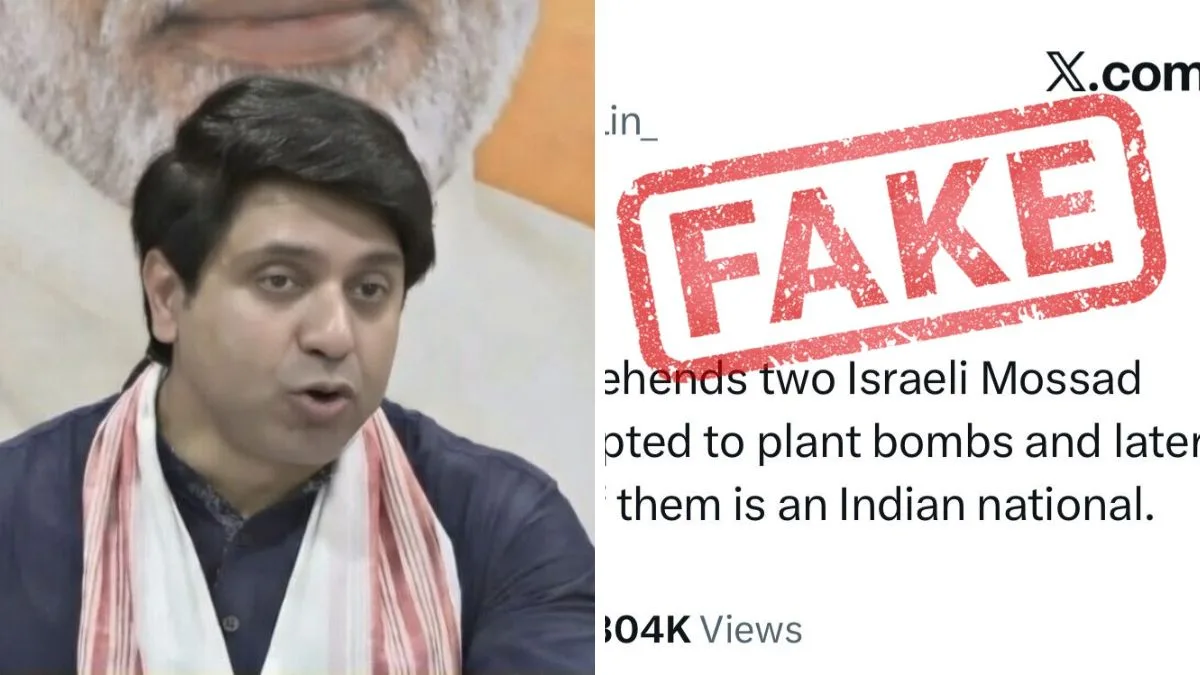
The claim, circulating widely on X (formerly Twitter), suggested that Saudi authorities had arrested two operatives linked to Israel’s intelligence agency Mossad, including an Indian national, accusing them of attempting to plant bombs and later blame Iran.
Advertisement
The MEA rejected the allegation as baseless. Issuing a clarification, the ministry urged people to stay cautious about such misinformation circulating online.
“Please stay alert against such preposterous and unsubstantiated claims on social media!” the ministry said in a fact-check post addressing the viral message.
Viral post traced to anonymous X account
According to government officials, the claim originated from an account on X operating under the name “Amoxicillin”, which posted the allegation that Saudi Arabia had detained the two alleged Mossad agents.
Officials said there has been no credible confirmation from any official or verified source to support the claim that an Indian national was arrested in Saudi Arabia in connection with such an incident.
The misleading information comes amid heightened geopolitical tensions in West Asia, a period during which unverified claims often spread rapidly across social media platforms.
Political reactions surface online
The issue also triggered reactions on social media, with BJP spokesperson Shehzad Poonawalla accusing the Congress ecosystem of spreading misinformation.
In a post on X, Poonawalla claimed that the Congress IT cell had circulated fake news, alleging that Indians were involved in a false-flag operation in Saudi Arabia.
“Congress IT cell caught spreading fake news that Indians are doing false flag operations in Saudi Arabia… Congress is yet again hurting India for its political objectives,” he wrote in his post.
He further alleged that such claims could potentially endanger Indians working in the Gulf region.
Authorities have repeatedly warned that misinformation circulating online, particularly during periods of international tension, can fuel confusion and damage diplomatic sensitivities if left unchecked.