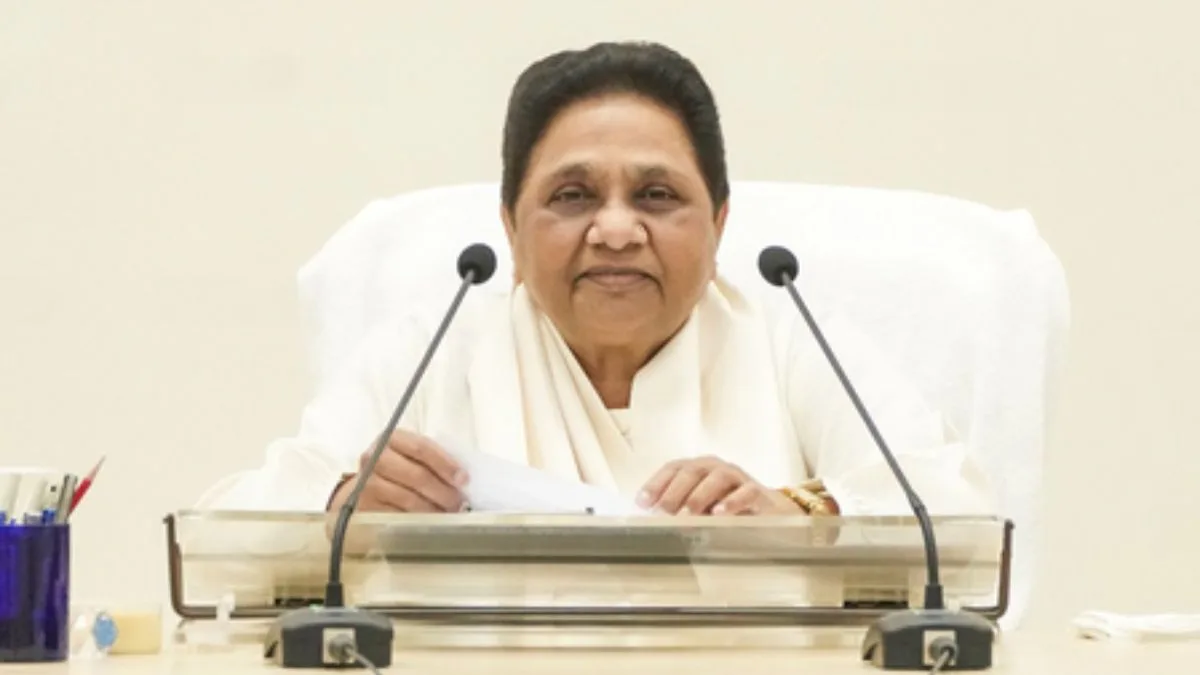
Bahujan Samaj Party (BSP) chief Mayawati Wednesday expressed support for the University Grants Commission’s (UGC) decision to mandate the formation of “Equity Committees” in government colleges and private universities to address caste-based discrimination in higher educational institutions.
In a statement posted on X, Mayawati said that opposition to the move by certain sections of the general category, who view the policy as discriminatory or conspiratorial against them, is “completely unjustified.” She emphasised that the objective of the Equity Committees is to ensure fairness and social justice in educational spaces, not to target any particular group.
Advertisement
However, the BSP chief also noted that the situation could have been handled better. She said that if the government and authorities had taken all stakeholders into confidence before implementing the rules, it might have helped avoid social tension and misunderstandings. She urged governments and educational institutions to be more sensitive and inclusive while introducing such policies.
At the same time, Mayawati appealed to Dalits and backward classes to remain cautious and not fall prey to provocative statements made by what she described as “self-serving and opportunistic leaders.” She warned that such leaders often indulge in divisive politics under the pretext of representing marginalised communities.
The BSP supremo called for awareness and restraint among all sections of society to ensure that measures aimed at social equity do not become tools for political polarisation.
The UGC has made structural changes and mandated the formation of an Equality Committee in all universities and colleges. Students belonging to SC, ST and OBC communities can now file complaints of caste discrimination before this committee. Earlier, only SC and ST students were eligible to file such complaints, but OBC students have now been included.
The rules specify mandatory representation from SC, ST and OBC categories in the committee, but upper-caste representation is not compulsory. This exclusion has become a major point of contention.