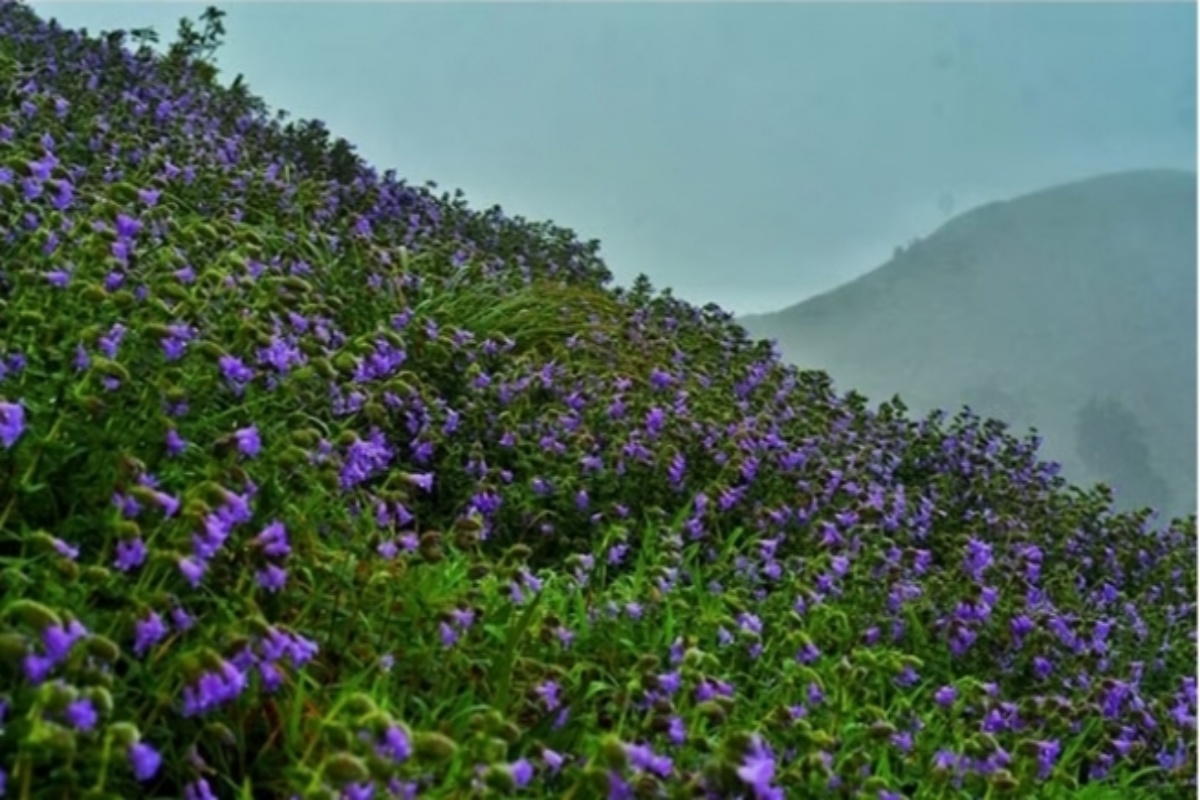
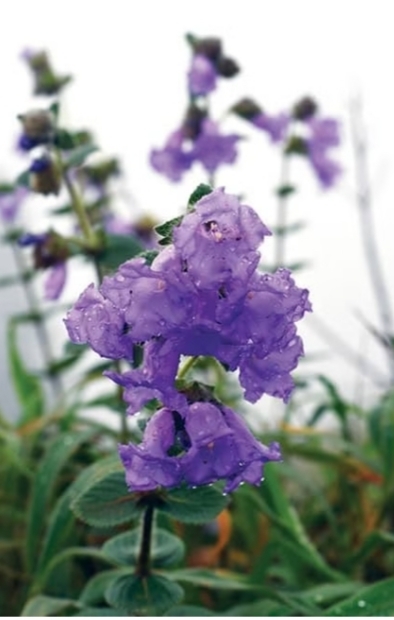
For those who love to witness the hills of Coorg (Madikeri) bathed in a dreamy shade of blue, the Neelakurinji (Strobilanthes kunthiana), a flower which blooms once in 12 years are already giving sight to behold.
The two hillocks of Mandalpatti and Kote Betta and Kumara Parvata have witnessed the flowering of Neelakurinji for the last few days, and the region is painted a vibrant bluish-purple hue. Nature’s feat in Madikeri, known as Kashmir of Karnataka is witnessed and celebrated by nature-lovers across the country.
Advertisement
Thousands of tourists from across the state and native district are making a beeline to witness the beauty of nature amid Covid fears on weekdays as restrictions are imposed during weekends.
Advertisement
The blooming of flowers started in the last one week and the entire hillock region will be covered with rare flowers in a few more days.
The flower symbolises love and is also called the ‘flower of love’. Locally, they are called ‘Kurinji’ flowers.
Visitors often take journeys to have a surreal experience of nature’s feat. The Neelakurinji’s name originated from the River Kunthi.
The flower has 250 varieties and they bloom at different times. Some bloom in a gap of 5 years, 12 years and some varieties take 14 years to bloom, say experts. A total of 46 varieties of Neelakurinji flowers are found in India. The plant has also got medicinal value.
It’s selfie time in Coorg hillock region which is witnessing Neelakurinji flower bloom for tourists. “Covid fears are real. Though the border of Kerala is very close, we don’t want to miss out on witnessing nature’s beauty. I am visiting the place with children,” said Dharmesh Kumar from Mysuru.
Madikeri hills witness Neelakurinji bloom after 12 years.
As I stood watching the overwhelming rush of people gathere d for religious rituals in many temples, what struck me most was not devotion, but the silent suffering hidden beneath the noise - the rows of goats waiting to be sacrificed in the name of faith, their lives valued not as sentient beings but as symbols of offerings.
In an age when our interaction with nature is usually at a transactional or mental level, it is instructive and fascinating to see the kind of communion the great poet Rabindranath Tagore had with nature.
Mother Nature is the greatest of all incredible wonders. It refers to the physical world and everything within it, encompassing all living and non-living things that exist naturally.