Extraction of minerals from the Indian offshore: Opportunities and challenges
The mineral economy of India is at a crucial moment of structural transition.
The breakthrough marks the country’s entry into advanced gene-editing therapeutics, an area so far dominated by a handful of global companies.




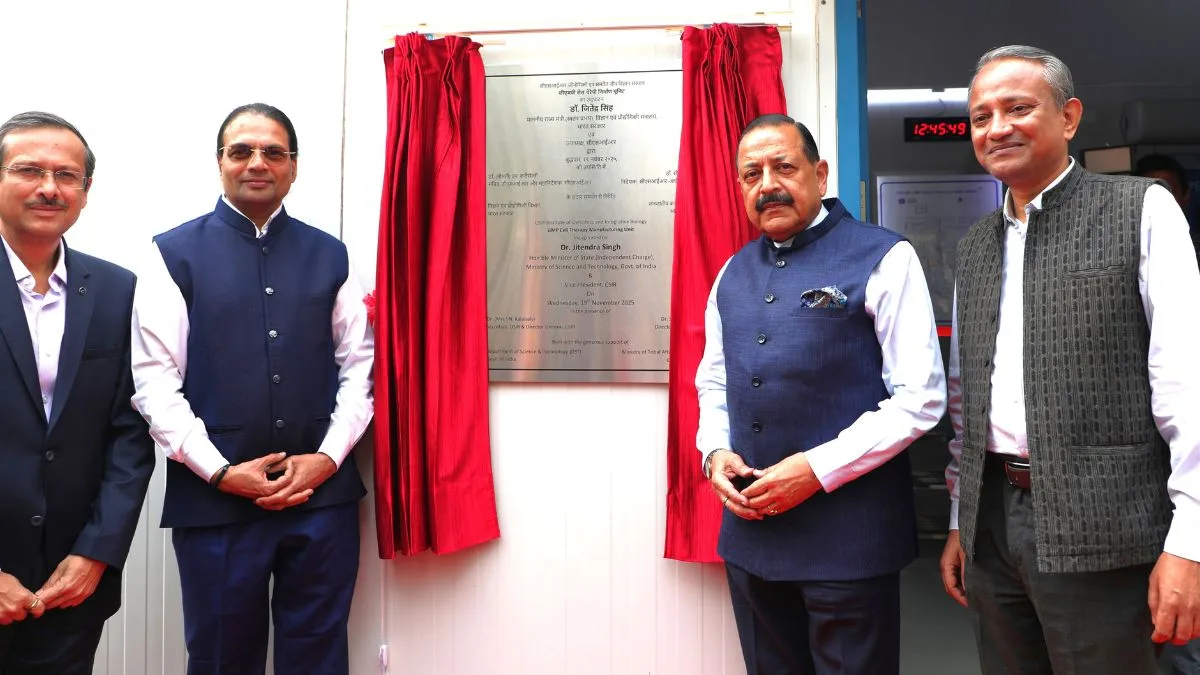
Photo: X/@DrJitendraSingh
India on Tuesday announced its first indigenous CRISPR-based gene therapy for sickle cell disease, a severe hereditary blood disorder that disproportionately affects tribal populations. The treatment, named BIRSA 101, was launched by Union Science and Technology Minister Jitendra Singh at the CSIR–Institute of Genomics and Integrative Biology (IGIB) in Delhi.
The breakthrough marks the country’s entry into advanced gene-editing therapeutics, an area so far dominated by a handful of global companies. Existing gene therapies abroad can cost more than Rs 20 crore, putting them out of reach for most patients. The minister claimed the indigenous platform can slash costs significantly, though he did not specify an estimate.
Advertisement
Sickle cell disease is a major public health concern in central and eastern India, particularly among Adivasi communities. The government has pledged to eliminate the disease by 2047, and officials described the new therapy as a step toward that goal. Explaining the gene-editing approach in simple terms, he said the technology works like a “precise genetic surgery”, capable not only of curing Sickle Cell Disease but also transforming treatment pathways for several hereditary disorders.
Advertisement
The launch was accompanied by the signing of a technology-transfer agreement between IGIB and the Serum Institute of India, which will further develop and manufacture the therapy. The partnership mirrors earlier public–private collaborations that enabled large-scale production of vaccines during the COVID-19 pandemic.
The Minister further added that the CRISPR platform used in BIRSA 101, known as enFnCas9, could eventually be adapted for other inherited disorders.
Singh also inaugurated a new research facility at IGIB and urged scientific institutions to communicate complex breakthroughs more simply to the public, tapping the potential of social media.
Advertisement