CM Yogi gives children the message of self-discipline and hard work through Japan’s example
Uttar Pradesh Chief Minister Yogi Adityanath gave students the mantra of self-discipline and hard work by citing the example of Japan.
Due to the efforts being made at the government level against this communicable disease, JE is moving towards being declared under the ‘eradication’ category.




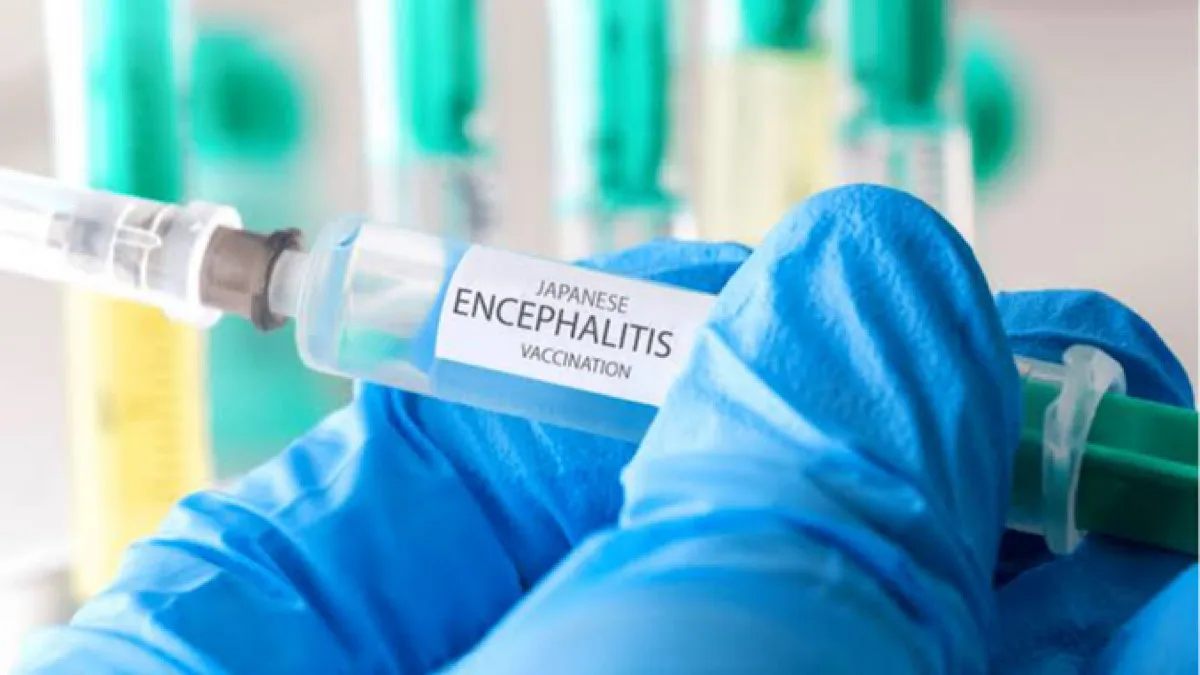
Japanese Encephalitis
Japanese Encephalitis, which was an epidemic in Purvanchal of Uttar Pradesh till 2017, has currently come down to a single digit. The spread of Acute Encephalitis (AES), another form of JE, has also reduced in the state.
Due to the efforts being made at the government level against this communicable disease, JE is moving towards being declared under the ‘eradication’ category.
Advertisement
For the last more than five decades, this disease was synonymous with death in Purvanchal. Every year, thousands of children died prematurely.
Advertisement
But after taking over the reins of the state in 2017, Chief Minister Yogi Adityanath gave the eradication of the disease the form of a mass movement. For this, a coordination committee of 17 departments was formed, by keeping the Health Department as the nodal one.
The departments Urban Development, Rural Development, Panchayati Raj, Education Department, and Jal Jeevan Mission, among others, coordinated for the cause.
Like every year, this time under the Communicable Disease Campaign, which ran from July 1 to July 31 in the state, a cleanliness campaign along with awareness was run in JE and AES-affected districts like Gorakhpur, Kushinagar, Maharajganj, Deoria, Basti, Sant Kabir Nagar, Siddharth Nagar, Azamgarh, and Mau. The result of which is that today the scope of this disease has further shrunk.
According to State Surveillance Officer Dr Vikasendu Agarwal, this time from January till now, 137 cases of AES have been reported. Whereas there have been zero deaths. Last year, 332 AES cases were reported, whereas only four cases of Japanese Encephalitis have been reported this time. Last year, 18 cases of JE were reported.
Similarly, this time, only one case of Kala Azar has been found in the state. Whereas 827 cases of dengue have been found. Last year, this figure was 451. Similarly, this time, 129 cases of Chikungunya have been reported, whereas last year, this figure was 128. This time, 7,419 cases of malaria have been reported compared to 3,013 last year.
Regarding the increase in dengue cases, doctors say that it increases every third year. Therefore, there are chances of an increase this time. The rainy season is cited as the reason behind rising malaria cases.
Advertisement