Mayapur witnesses magical Ratha Yatra led by children
The temple premises wore a festive makeover as the young participants pulled the beautifully decorated chariot of Lord Jagannath.
Reaffirming the long-standing legal principle that the deity is a perpetual minor, the court dismissed an Interlocutory Application (IA) pertaining to the ownership dispute over the land of the 12th Century temple.




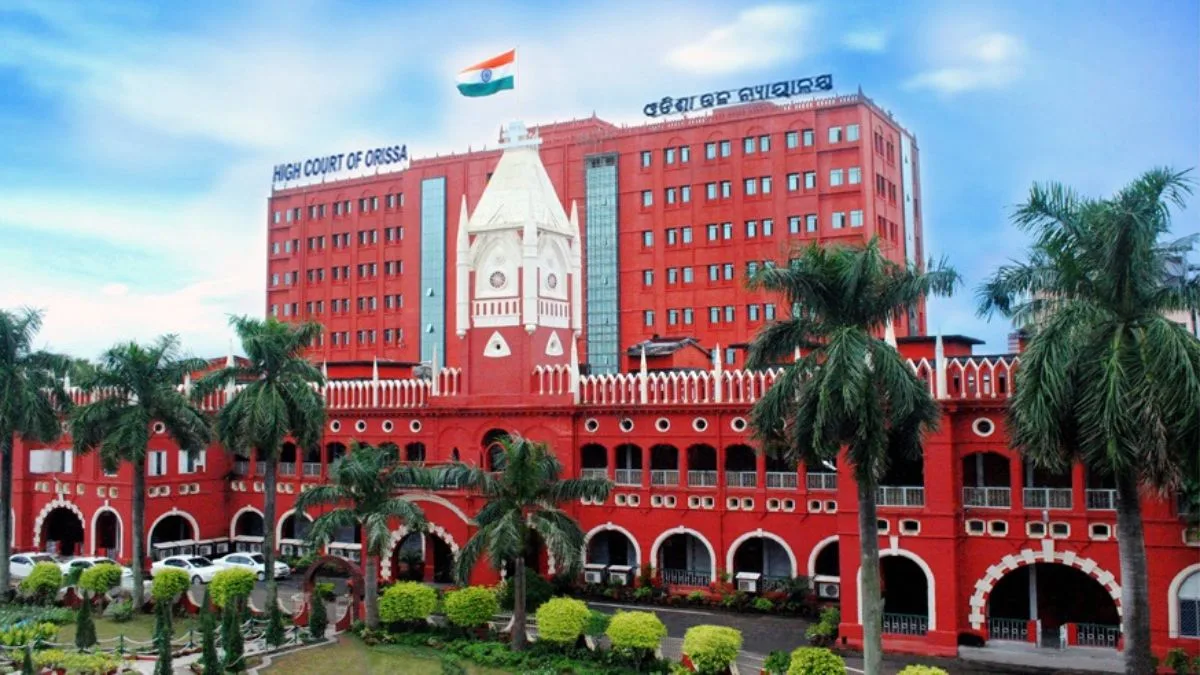
File Photo: IANS
In an order reinforcing the principle that temple lands are meant for the deity and devotees rather than private claimants, the Orissa High Court has dismissed an Interlocutory Application (IA) pertaining to the ownership dispute over the land of the 12th Century Puri Lord Jagannath temple.
The interest of Lord Jagannath, who is a perpetual minor, has to be safeguarded by the state as well as the courts, the Division Bench of Justice K R Mohapatra and Justice Savitri Ratho held while dismissing the IA.
Advertisement
The applicants had sought the execution of a sale deed in their favour, as directed in earlier court orders. However, the Division Bench held that the relief was neither maintainable nor justified in light of subsequent legal and administrative developments.
Advertisement
The court clarified that an interlocutory application in a disposed-of review petition is maintainable only for limited purposes, such as clarification or implementation of relief already granted. Since several developments had occurred after the disposal of the review petition, the relief sought was no longer viable, the court stated in an order uploaded on 16 September.
The Shri Jagannath Temple Administration (SJTA) had, on 13 July 2017, passed a resolution earmarking the disputed land for the construction of a guest house for pilgrims. This decision was in consonance with public interest and with the Supreme Court’s directives on safeguarding temple properties and improving pilgrim facilities.
Reaffirming the long-standing legal principle that Lord Jagannath is a perpetual minor, the court emphasized that temple lands cannot be alienated in favour of private individuals if they can serve public and religious purposes. The construction of a guest house was deemed a step that better protects the interests of the deity and pilgrims.
The apex court had earlier acknowledged the 2017 SJTA resolution while dismissing Special Leave Petitions (SLPs) filed in February 2024 as infructuous. This effectively validated the guest house project and rendered the claim of the applicants redundant.
The high court relied on established precedents in litigations where the Supreme Court directed protection of temple assets and improving facilities for devotees. Its decision underscores that the welfare of pilgrims and the sanctity of temple property take precedence over individual claims.
The proposed guest house will provide affordable accommodation to devotees visiting Puri, directly addressing concerns raised by the Supreme Court regarding pilgrim welfare and temple management. The judgment is an affirmation of the judiciary’s role in safeguarding temple lands. By prioritizing public interest, pilgrim welfare, and the deity’s ownership rights, the Court has once again reinforced that Shri Jagannath’s property is inalienable and must serve the needs of millions of devotees rather than private claimants, said legal fraternities.
Advertisement