Should Be a Core Subject in India’s Classrooms
Every generation prepares its children for the world they are likely to inherit.
The release follows India’s proposal on the subject, leading to the development of WHO’s first-ever roadmap for applying AI in traditional medicine.




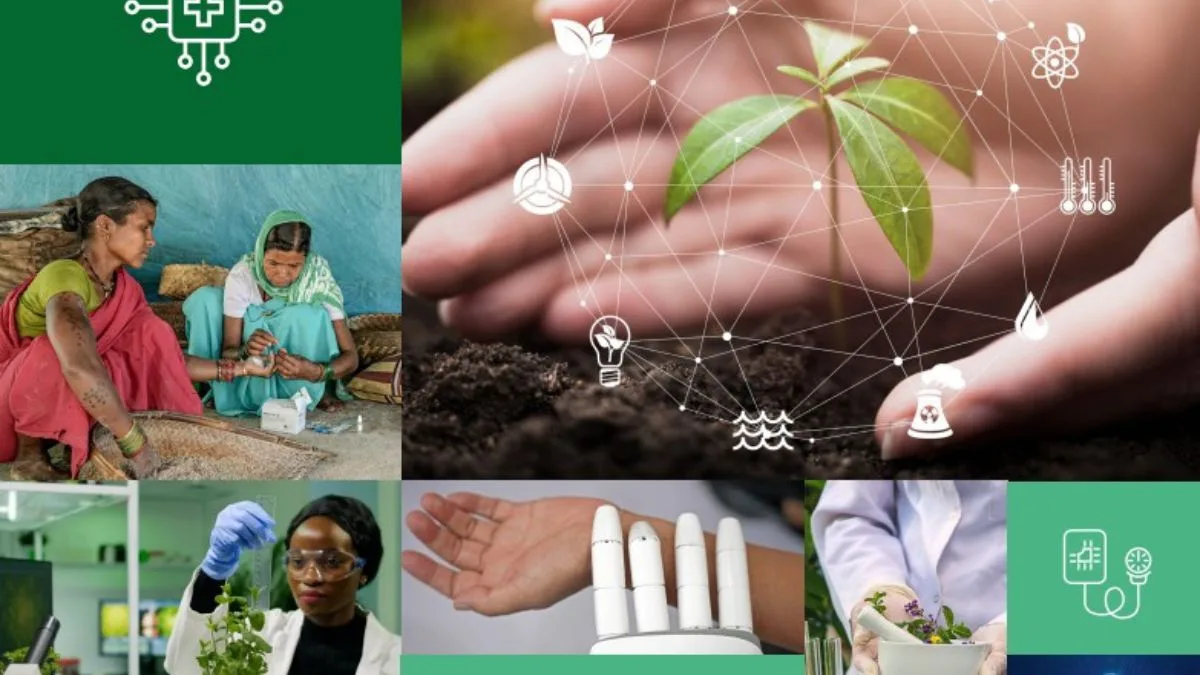
Photo: IANS
In a significant milestone for global healthcare innovation, the WHO has released a technical brief titled “Mapping the Application of Artificial Intelligence in Traditional Medicine”, acknowledging India’s pioneering efforts in integrating Artificial Intelligence (AI) with traditional medicine systems, particularly Ayush systems.
The release follows India’s proposal on the subject, leading to the development of WHO’s first-ever roadmap for applying AI in traditional medicine.
Advertisement
India’s efforts to harness the potential of Artificial Intelligence (AI) to advance and amplify the strengths of its Ayush systems reflect the broader vision of the government, which seeks to position the country as a global leader in digital health innovation and the integration of traditional medicine.
Advertisement
Speaking at the inauguration of the Global Partnership on Artificial Intelligence (GPAI) Summit in 2023, Prime Minister Narendra Modi remarked, “We have developed government policies and programmes inspired by the spirit of ‘AI for all’. Our endeavour is to take full advantage of the capabilities of AI for social development and inclusive growth.”
Union Minister of State (Independent Charge) for Ayush Prataprao Jadhav said India’s AI-led initiatives, mentioned in WHO’s technical brief, reflect the deep commitment of Indian scientists to advancing traditional medicine through cutting-edge technology.
“This recognition underscores our alignment with Prime Minister Narendra Modi ji’s visionary call to harness emerging technologies like Artificial Intelligence to expand the global relevance of Traditional Medicine. By integrating AI with Ayush systems—and through pioneering digital platforms such as the SAHI portal, NAMASTE portal, and the Ayush Research Portal—India is not only safeguarding its centuries-old medical wisdom but also leading the way in shaping a future of personalised, evidence-based, and globally accessible healthcare,” he said.
One of the standout features in the WHO brief is the mention of Ayurgenomics, a scientific breakthrough that combines genomics with Ayurvedic principles. This initiative aims to identify predictive disease markers and personalise health recommendations using AI-based analysis of Ayurvedic constitution types. The document also highlights efforts to decode the genomic and molecular basis of herbal formulations for repurposing in modern disease conditions—a major leap in integrating traditional wisdom with contemporary science.
India’s initiatives to digitise traditional knowledge, such as the Traditional Knowledge Digital Library (TKDL), are praised as global models for the preservation and responsible use of indigenous medical heritage. Furthermore, AI-powered tools are being used for cataloguing and semantic analysis of ancient texts, enabling easier access to time-tested therapeutic knowledge.
Another critical aspect recognised by the WHO is the use of AI for drug action pathway identification, comparative studies across systems like Ayurveda, TCM, and Unani, and the development of artificial chemical sensors to assess traditional parameters such as Rasa, Guna, and Virya. These technological interventions are helping validate and modernise traditional formulations.
The document also applauds India’s broader efforts in incorporating digital platforms for online consultations, promoting digital literacy among Ayush practitioners, and building interoperable systems to integrate traditional medicine with mainstream healthcare.
Advertisement