This year’s India International Centre (IIC) festival is themed around the ‘Voices of Women’ and showcases their contributions to India’s cultural, intellectual, and political landscape. From Bharatnatyam performances to thought-provoking panels on women in journalism and politics and a unique exhibition blending mathematics and art, the festival celebrates India’s diversity and global connections.
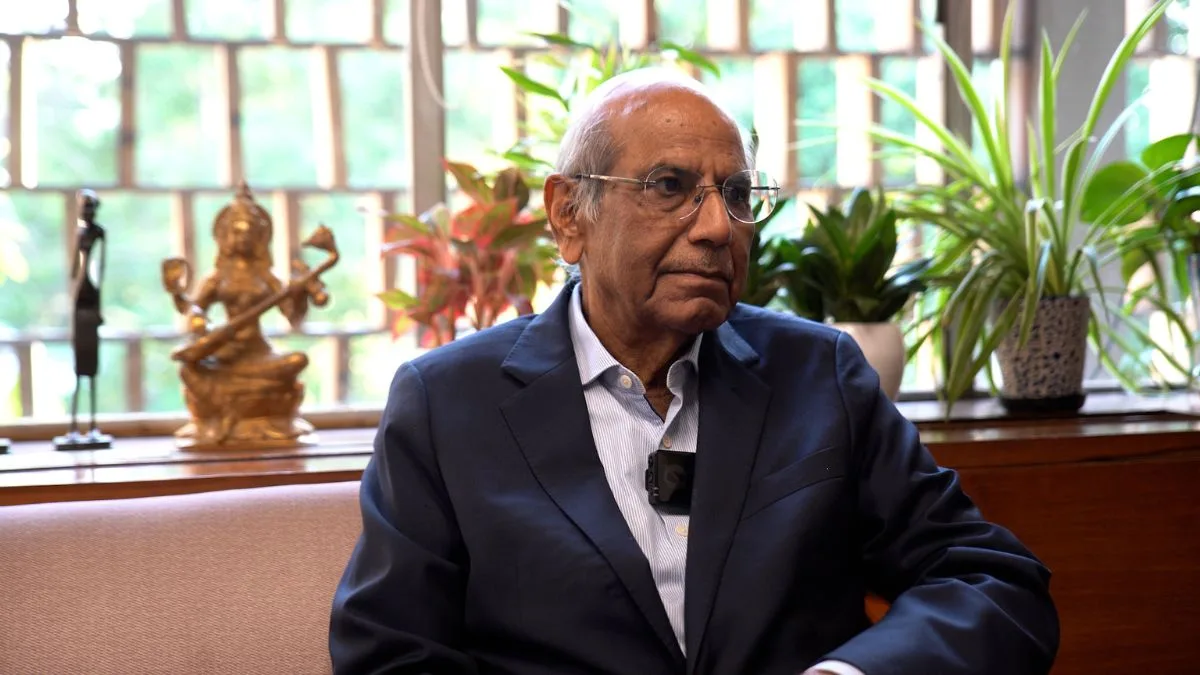
In an exclusive interview with The Statesman, Shyam Saran, President of the IIC in Delhi, discusses the ‘IIC Festival Sā-Vanitā: Thus, She Speaks’, set for October 10-14, 2025. Former Foreign Secretary of India, Mr Saran, shared that it’s a week-long celebration of diverse ideas, art, and heritage, connecting India with the world.
Advertisement
Q: The IIC Festival of Arts promises a vibrant mix of arts and culture. How does it reflect the IIC’s mission in today’s world?
A: Very eminent figures like the then Vice President Dr S Radhakrishnan, former Prime Minister Jawaharlal Nehru, and other dignitaries have been associated with the founding of the India International Centre. Their vision was to create a space in the nation’s capital for intellectual and cultural exchanges, open discussions, and even dissent—a platform aligned with the inclusive vision of India’s Constitution makers. Over the past 65 years, we’ve strived to maintain this space. The IIC Festival, which began over 20 years ago, embodies this mission by showcasing India’s cultural and intellectual heritage while fostering conversations with global perspectives.
Q: This year’s festival focuses on the theme ‘Voices of Women’. Can you elaborate on how it highlights women’s contributions?
A: The theme ‘Voices of Women’ underscores the historical and contemporary roles women have played in nation-building and how they have shaped India’s rich cultural and intellectual heritage. We’re exploring their contributions through various lenses. For instance, we have panels on women in journalism and politics, featuring younger, articulate women from diverse political backgrounds, such as Bansuri Swaraj and Atishi. They’ll share their experiences and perspectives on their roles in nation-building. The keynote address by renowned journalist and author Mrinal Pande will trace the trajectory of Indian women, highlighting how they’ve overcome constraints in a patriarchal society to express their creativity. Additionally, cultural programmes like Bharatnatyam by Malavika Sarukkai will showcase choreography centred on women’s emotions and experiences, reinforcing their significant contributions.
Q: The festival includes an exhibition called Shunya, which explores women’s untold stories through mathematics and art. What makes this exhibit stand out?
A: Shunya, meaning ‘zero’, is a fascinating exploration of India’s mathematical heritage and its intersections with art and culture. Few people know that fundamental concepts like zero, the decimal system, and the numeral system originated in India, enabling complex numerical thinking. This exhibition builds on a recent IIC conference and exhibit on India’s mathematical legacy, connecting it to modern fields like IT and artificial intelligence, which rely heavily on mathematics. What’s unique is how Shunya draws parallels between mathematics and other disciplines. For example, Indian music, with its rhythmic patterns like ek taal or teen taal, is deeply mathematical. Similarly, traditional architecture, from altar designs to intricate geometrical patterns, reflects mathematical precision.
The exhibit also traces the global journey of these concepts—from India to Central Asia, the Arab world, and eventually the West, where Indian numerals were mistakenly called “Arabic numerals”. By focusing on women’s untold stories within this framework, Shunya highlights their contributions to these intellectual traditions, blending art and science in a compelling narrative.
Q: About the panel discussion with women politicians, including Bansuri Swaraj and Atishi, how will their stories inspire new perspectives on women in Indian politics?
A: As Mao Zedong said, “Women hold up half the heavens”. This panel aims to spotlight the growing role of women in Indian politics, particularly the younger generation. These women are well-educated, articulate, and active across the political spectrum, representing diverse parties. Their stories will shed light on their contributions to nation-building and the challenges they’ve faced in a traditionally male-dominated field.
Q: The IIC EXPERIENCE 2025 also features a food festival. How does incorporating gastronomy alongside literature and film enhance the overall experience?
A: The food festival is integral to the IIC Festival, not an add-on. India’s culinary traditions are a vital part of our cultural heritage, reflecting the country’s diversity and plurality. By showcasing cuisines from different regions of India and even abroad, we celebrate this variety as a form of cultural sharing. Food, like art or literature, tells stories of tradition, community, and innovation. It connects people, making the festival a holistic celebration of life’s many dimensions.
Q: What is the one big takeaway you hope attendees will carry home from the IIC Festival this year?
A: I hope attendees leave with a deeper appreciation of the immense contributions of Indian women to our cultural and intellectual heritage, both historically and in contemporary times. The festival celebrates their role in shaping India’s past and their promise for its future. It’s not just about delivering a message—it’s about creating an enjoyable, enriching experience that highlights the richness of Indian culture, from dance and music to intellectual discourse. We want people to feel inspired by this celebration of diversity and creativity.
Q: As President of the IIC, what excites you most about this year’s eclectic line-up?
A: What excites me is the festival’s ability to bring out the best of Indian culture and intellectual heritage. India’s civilisation is marked by its plurality and richness, which is often underappreciated even by its own people. This event serves as a platform to showcase that heritage—through dance, music, mathematics, and discussions—and to remind us of its relevance as a foundation for future achievements.