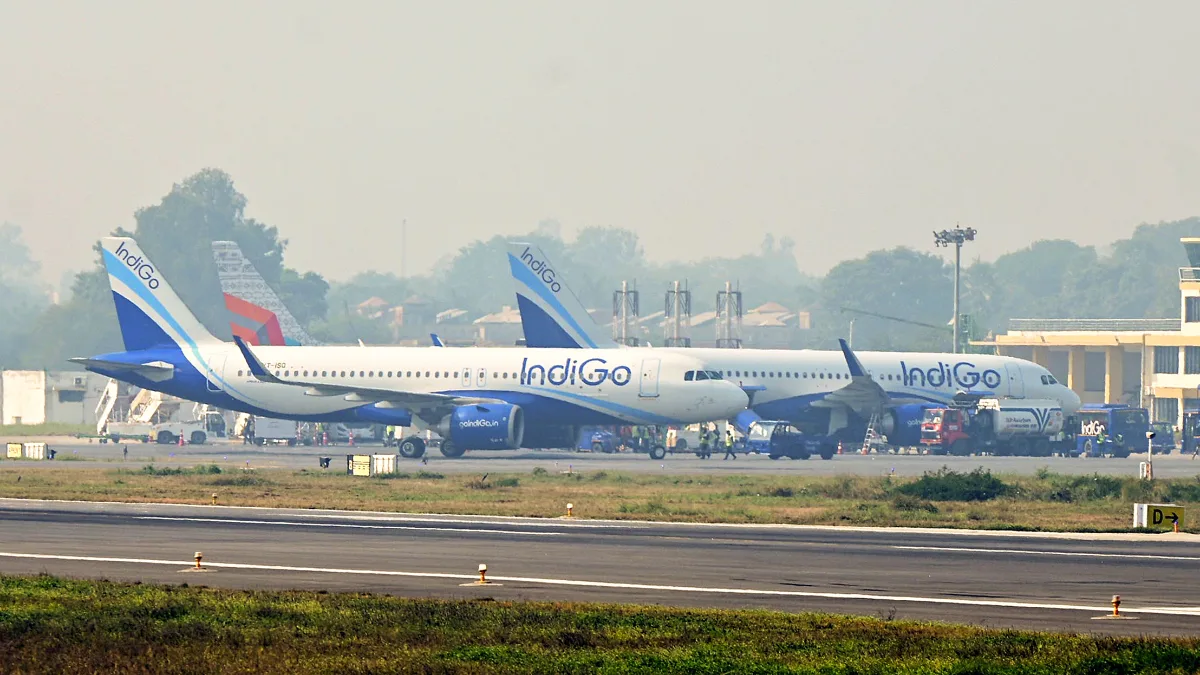
The IndiGo airline crisis continued into its fifth day on Saturday, with the government stepping in with fresh measures to help normalise the situation. However, one factor that is now being highlighted again and again is the alleged monopoly or duopoly in the Indian skies.
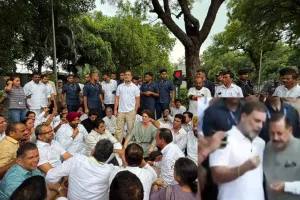
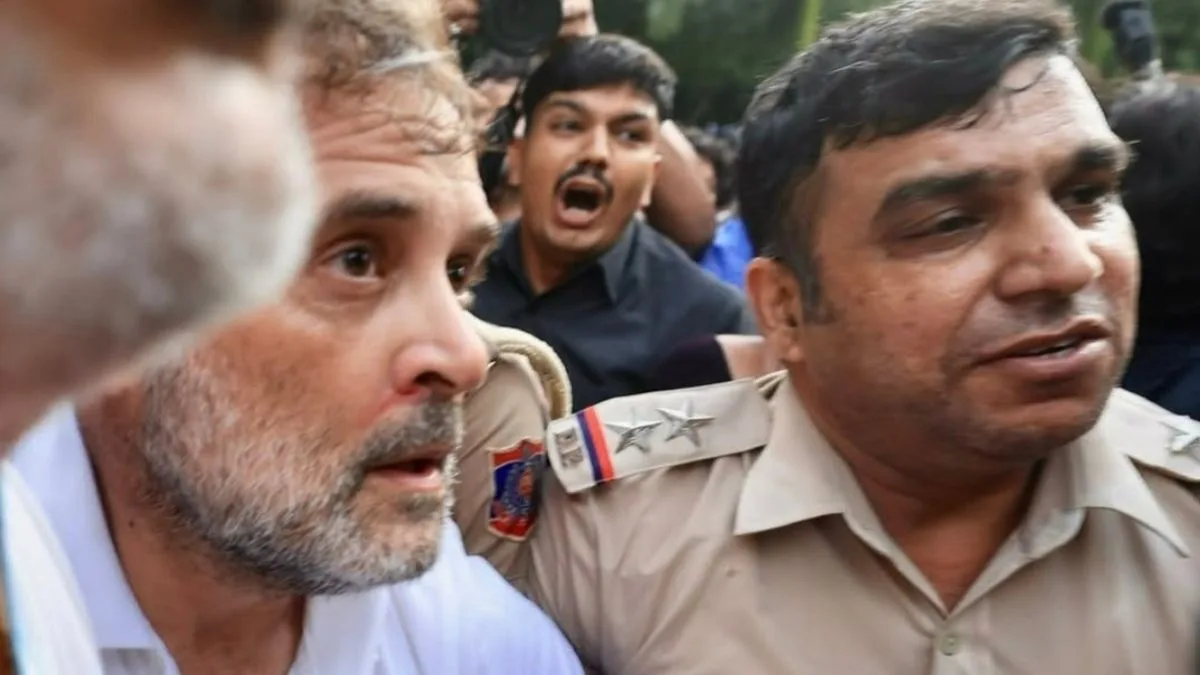
Rahul Gandhi, the Leader of Opposition and former Congress president, appears to have triggered the debate on Friday by posting on X that the IndiGo crisis was a creation of the Narendra Modi government’s alleged monopoly-driven economic model. He alleged that ordinary Indians were paying the price for the monopolistic practices of the government.
Advertisement
“IndiGo fiasco is the cost of this Govt’s monopoly model. Once again, it’s ordinary Indians who pay the price – in delays, cancellations and helplessness. India deserves fair competition in every sector, not match-fixing monopolies. Match-fixing monopoly groups vs fair-play businesses – moment has come to choose freedom over fear,” Rahul posted.
IndiGo news today
In Parliament, opposition members yesterday sought to corner the government with allegations of “monopolistic practices” and accused the “government of regulatory laxity”. “The problem has arisen due to the monopoly of one airline,” Congress MP Pramod Tiwari said.
Responding to the MPs, Parliamentary Affairs Minister Kiren Rijiju responded without answering the monopoly charge: “The government is considering the technical problems the airline faces. A detailed response will be prepared as members are concerned.”
Opposition’s Monopoly and Duopoly charge
Congress MP Shashikant Senthil today asked the government at a press conference whether IndiGo was protected from the enforcement of the Flight Duty Time Limitation (FDTL) rules altogether? The IndiGo crisis has largely been caused by the enforcement of the FDTL rules from November 1.
“Why has the BJP government in the last 11 years allowed aviation to shrink into a monopoly and duopoly instead of building a competitive, diverse sector? Why did the DGCA fail to ensure IndiGo complied with the FDTL rules released in January 2024 and partially implemented from July 2025 and fully on 1 November 2025? Did the government ever issue warnings or compliance notices to IndiGo, or was the airline protected from enforcement altogether? Given the electoral bond disclosures showing massive purchases by InterGlobe group entities and its promoter, is the BJP’s financial proximity to IndiGo the real reason behind this extraordinary leniency at the cost of passengers’ safety?” Senthil said.
Another senior Congress leader and former Union Minister P Chidambaram described the widespread flight cancellations as a result of the “duopolistic” market. “Liberalisation and Open Economy are based on competition. Absent competition, there will be baneful consequences as we are witnessing now in the airline industry. People must ponder over HOW a vibrant and competitive airline industry in India was reduced to a two-player business, and WHY,” he asked on X.
Why IndiGo flights are being cancelled
NCP(SP) MP Supriya Sule also today highlighted the fact that had it not been a case of monopoly in the Indian skies, such a situation would not have happened. She told reporters: “We condemn what has happened with IndiGo. Just look at the situation over the last two days. Yet the Government of India has not issued a single statement, even though Parliament has been in session for two days. I hope that before Monday’s discussion, the government will respond to the country and to Parliament about what happened with IndiGo. If we had four or five airlines, this situation caused by IndiGo would not have affected everyone like this. Competition is good, and the customer is king.”
Shiv Sena (UBT) MP Priyanka Chaturvedi too highlighted the dangers of monopoly and duopoly in the wake of the IndiGo crisis. She told ANI: “IndiGo has captured the entire market, its market share is more than 60%. The inconvenience they have caused the passengers – neither food nor water was provided to passengers, and they were not being given any information. Even the IndiGo staff had to face difficulty as they were receiving no information from the management. It is they who were facing the anger of the public. So, it is unfortunate. This is a lesson to the government that in the time to come, such monopoly and duopoly should not be created.”
Aam Aadmi Party (AAP) MP Raghav Chadha claimed that IndiGo has almost 70 per cent market share. Chadha told the media, “This is a situation that never happened before, due to which today lakhs of passengers are affected. The Indian Aviation sector is a victim of duopoly. In the Indian Aviation sector, only two major airlines have captured the market. Indigo and Air India. IndiGo has almost 70% share of the market. If such a big airline shuts down, obviously, the passengers are facing a lot of trouble.”
The situation in Indian skies
The Opposition is not entirely wrong in alleging monopoly and duopoly in the Indian aviation sector. The Indian skies are largely dominated by IndiGo and Air India, with the former commanding a dominant market share of over 60 per cent.
According to a media report published in July this year, IndiGo operates on a whopping 79.6 per cent of all routes in India (900 of 1,131 sectors). Air India Express, on the other hand, caters to 247 routes in India, while Air India flies on 159 routes.
While the duopoly charge holds to an extent, IndiGo’s monopoly is clearly highlighted by further dissecting into data. As per the report, of the 900 routes which IndiGo caters to, 514 are ones on which no other airline flies. This effectively means that on these 514 domestic sectors, only IndiGo flights are available.
IndiGo flight status update
While the country’s largest private airline is effectively ensuring people on these sectors are getting the option to undertake air travel, it is also leading to a situation where any turbulence with the airline operator is leading to a complete shutdown of services on these routes.
The report further highlights that of all the 1,131 domestic sectors, 737 are monopoly routes, meaning only one airline, whether IndiGo or any other carrier, has flights on these.
The IndiGo crisis will definitely fade away soon and operations will normalise, with the government intervening with several measures, including putting in abeyance the FDTL rules. But it will definitely leave behind lessons for the future – that the skies belong to many species of birds, not just one or a couple.