“What about tranquility in eastern sector…” Congress MP Tewari asks government on India-China border clash
The Congress leader cross-questioned about the Yangtse clash of December 9 that took place in the eastern Sector.
Parliamentary Affairs Minister Kiren Rijiju says the Henderson Brooks-Bhagat Commission report indicting the Nehru government has remained classified since the 1962 India-China war.




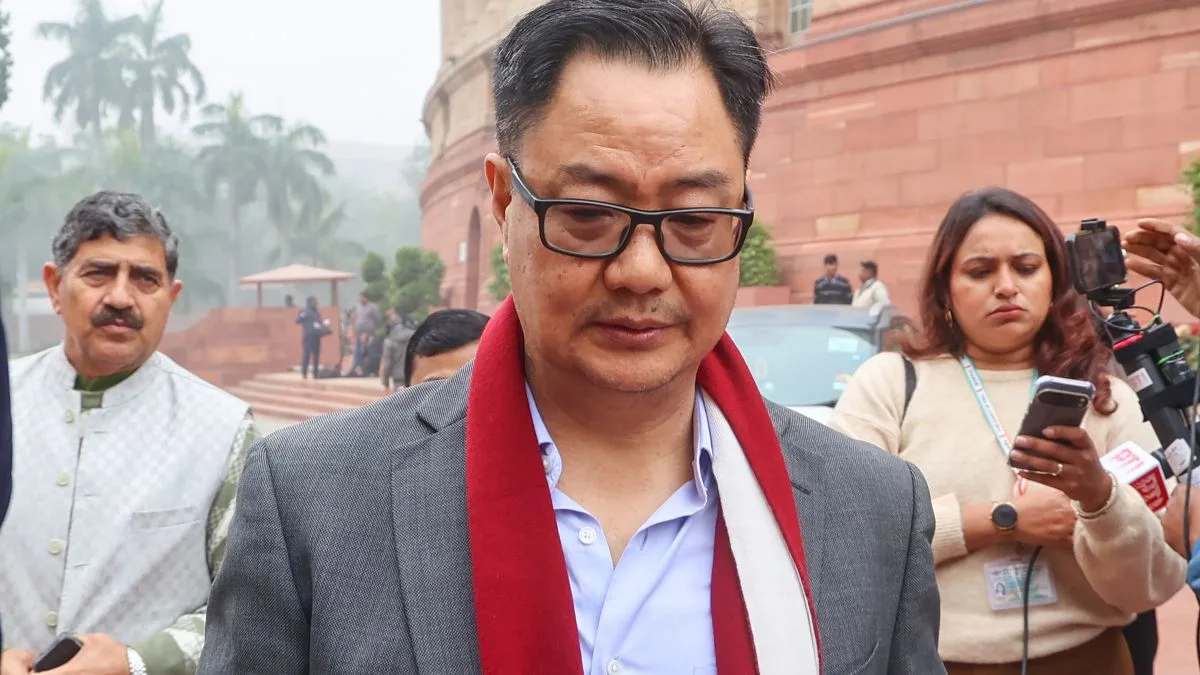
File Photo
Parliamentary Affairs Minister Kiren Rijiju on Friday said that the Henderson Brooks-Bhagat Commission report, which reviewed India’s defeat in the 1962 war with China, has remained classified for over six decades, describing it as a defence matter that should not be used for political purposes.
Posting on X, Rijiju said the report had indicted the then Nehru government for what he called a “humiliating defeat” at the hands of the Chinese People’s Liberation Army, but added that successive governments had not declassified it. “Our govt is led by a matured leader. Since 1962, Henderson Brooks-Bhagat Commission report has remained secret… Our Govt has never declassified it as defence matter can’t be used as political tools,” he wrote.
Advertisement
The Henderson Brooks-Bhagat report was prepared by Lieutenant General Henderson Brooks and Brigadier General Premindra Singh Bhagat and was commissioned by then Acting Army Chief General JN Chaudhuri after the 1962 India-China war. The report reviewed the Indian Army’s operational failures during the conflict and has remained classified since it was submitted.
Advertisement
Alongside his remarks, Rijiju also reshared a post from November 1, 2024, highlighting infrastructure development along India’s borders. Referring to his visit to Arunachal Pradesh, he wrote, “After talking to Chinese soldiers and seeing the infrastructures, everyone will feel proud of India’s border development now. Celebrated Diwali at Bumla with our Army Jawans in Arunachal Pradesh.”
Rijiju’s comments come amid heightened political tensions in Parliament following repeated disruptions during the motion of thanks on the President’s Address. The row erupted after Leader of the Opposition Rahul Gandhi was stopped from quoting what was described as an “unpublished memoir” of General MM Naravane, who served as India’s Army Chief from 2019 to 2022, in the Lok Sabha.
Gandhi was repeatedly interrupted while attempting to read excerpts from the book during Monday’s debate. He later said the memoir mentioned that as Chinese tanks advanced towards Indian positions, Naravane had been told “to do what he deemed appropriate”.
Members of the BJP, including Defence Minister Rajnath Singh and Home Minister Amit Shah, objected to the references, accusing Gandhi of violating parliamentary rules by quoting from an unpublished book and misleading the House.
The Defence Minister said, “Rahul Gandhi should present before the House the book he is quoting from, because the book he is referring to has not been published”.
The impasse led to repeated adjournments and protests. On Tuesday, Gandhi again attempted to raise the issue but was stopped, triggering further disruption. Eight Congress MPs were later suspended for disorderly conduct.
For the first time in 22 years, the Lok Sabha on Thursday passed the motion of thanks on the President’s address without the customary reply by the Prime Minister. The developments followed remarks by Lok Sabha Speaker Om Birla, who said he had advised the Prime Minister not to attend the House after receiving information about possible protests by Congress MPs.
On Wednesday, Gandhi displayed a copy of the unpublished book to reporters outside Parliament, contesting claims that the memoir did not exist.
Naravane’s memoir, expected to be published in 2024, has reportedly been delayed amid concerns that it contains sensitive operational details related to the military standoff with China.
India and China last clashed along their disputed Himalayan border in the Galwan River valley in Ladakh in the summer of 2020, marking the first fatal confrontation between the two sides since 1975.
Advertisement