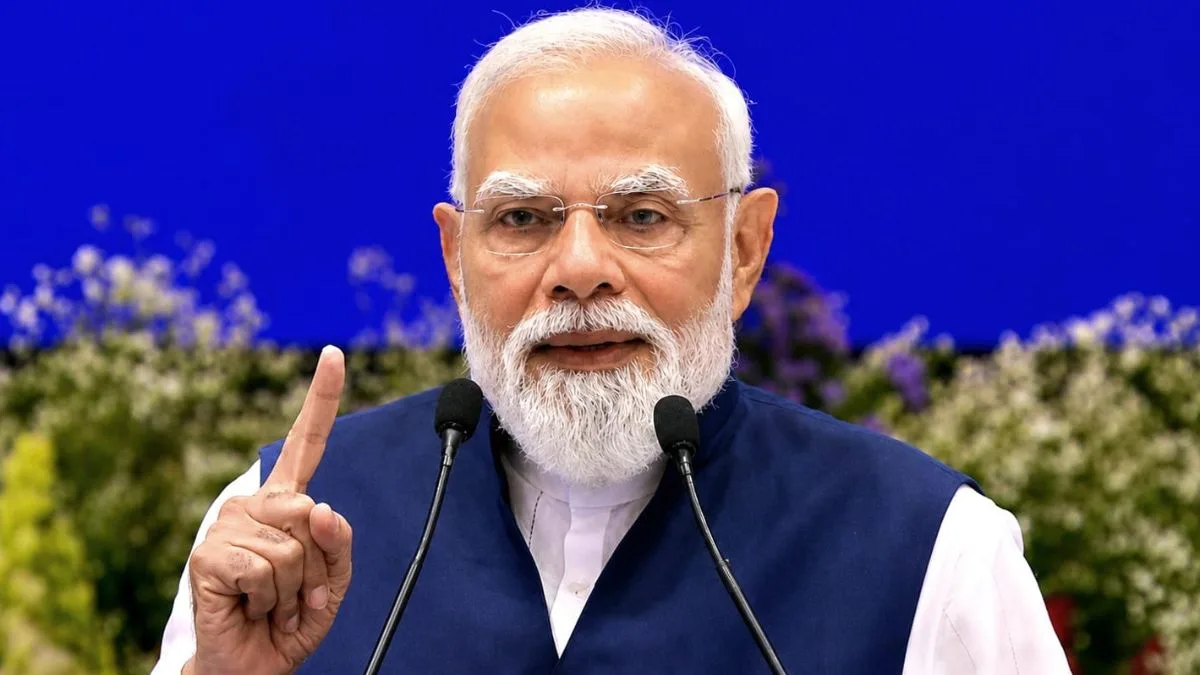
Congress leader Jairam Ramesh on Thursday questioned the role of the GST Council after Prime Minister Narendra Modi announced GST reforms during his Independence Day speech on August 15, ahead of the council’s meeting.
Ramesh said the council’s decisions appear to be reduced to a formality given the Prime Minister’s prior announcement.
Advertisement
“Is the GST Council to be reduced to a formality?” Ramesh asked in a post on X, stressing that the council’s role seems compromised.
He added, “Faced with a lack of buoyancy in private consumption, subdued rates of private investment, and endless classification disputes, the Union Finance Minister has finally recognised that GST 1.0 had reached a dead end.”
The GST Council, which held a marathon meeting on Wednesday under the chairmanship of Finance Minister Nirmala Sitharaman, approved a dual tax rate structure of 5 percent and 18 percent, eliminating the slabs of 12 percent and 28 percent.
The Congress has long advocated for a GST 2.0 that reduces the number of rates, cuts taxes on mass-consumption items, minimizes evasion and disputes, and eases compliance burdens for MSMEs. The Congress leader reiterated that the design of GST 1.0 was flawed and had raised the issue in July 2017.
He described GST 1.0 as a “Growth Suppressing Tax” rather than a “Good and Simple Tax.” He said that while the recent announcements have made headlines, the wait for a true GST 2.0 continues. “Whether this new GST 1.5, if it can be called that, stimulates private investment – especially in manufacturing – remains to be seen,” Ramesh said.
Ramesh also highlighted that one key demand of the states, made in the true spirit of cooperative federalism, remains unaddressed: the extension of compensation for another five years to fully protect their revenues. He stressed that this demand has become even more urgent in light of the latest announcements.